Quick Answer
The better-value answer to RTX 5060 Ti is usually Radeon RX 9060 XT 16GB (R8,500-R12,000), with Radeon RX 9070 16GB (R13,500-R17,500) and Intel Arc B580 12GB (R6,000-R8,500) as the cards to compare next. For video editing, the saving over RTX 5060 Ti (R9,500-R13,500) is better spent on the parts around the GPU once the card already clears smooth 4K timeline scrubbing and fast exports in DaVinci Resolve and Premiere Pro, where 16GB of VRAM and a strong encoder matter most. These are cautious planning bands, not live prices, so confirm the current Evetech listing before you order.
Shortlist the alternatives
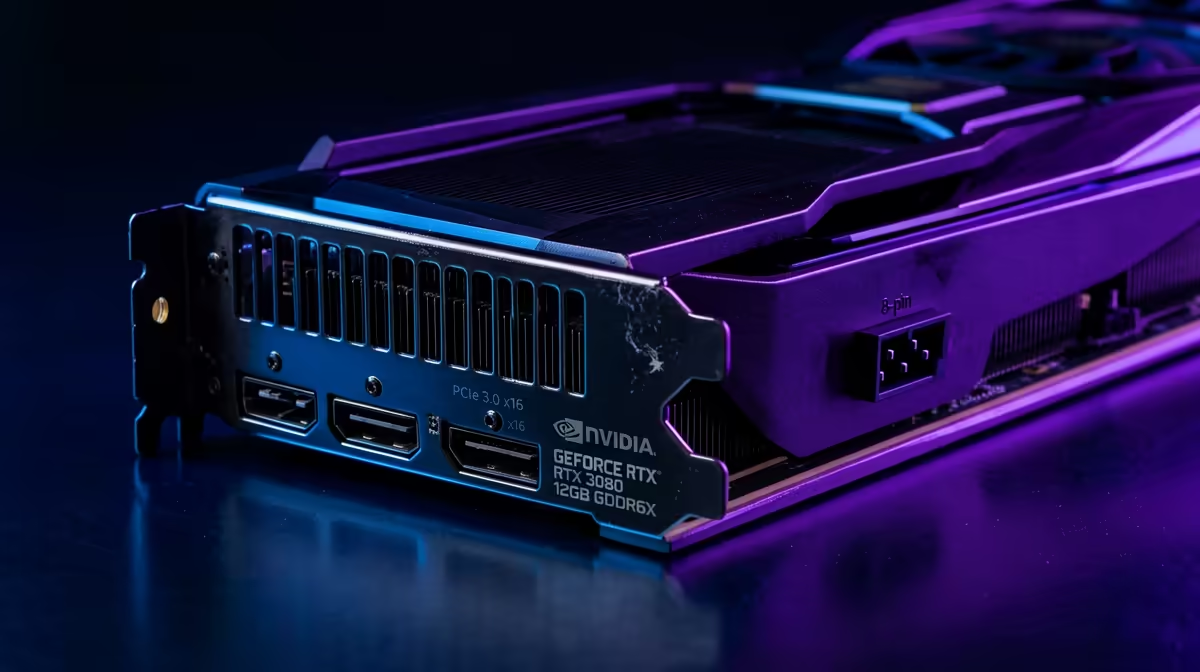
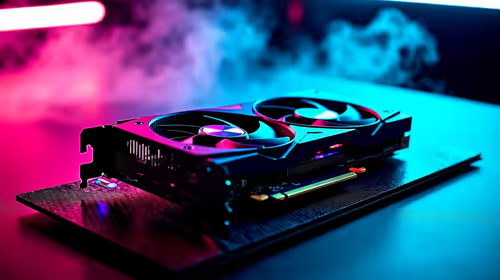
Use these three cards as your value shortlist against the RTX 5060 Ti: Radeon RX 9060 XT 16GB around R8,500-R12,000; Radeon RX 9070 16GB around R13,500-R17,500; Intel Arc B580 12GB around R6,000-R8,500. Treat these as broad category bands, not live prices, and confirm the exact figure in your Evetech basket on the day you buy. Where board-partner models are stocked, compare ASUS TUF, MSI Ventus, Gigabyte Gaming OC and Sapphire Pulse variants for cooler size, noise and the local warranty route.
Each of these clears the video editing target, so the real question is what the saving over the RTX 5060 Ti buys elsewhere in the build.
Why video editing should lead the choice
Video editing leans on VRAM, the hardware encoder and timeline acceleration, not gaming frame rates. NVIDIA's NVENC and CUDA acceleration speed up Resolve and Premiere exports, while 16GB+ VRAM keeps 4K and multicam timelines fluid. Set your goal first: smooth 4K timeline scrubbing and fast exports in DaVinci Resolve and Premiere Pro, where 16GB of VRAM and a strong encoder matter most. Once a card clears that, extra GPU tier adds little to daily use for this workload.
SA fit, power and cooling checks
Before you commit, measure the case: many triple-fan RTX 5060 Ti-class alternatives are 250-320mm long, so clearance matters. Treat 650W as the minimum quality PSU to check for this class, with 750W more comfortable once the rest of the system is counted. Confirm the power connectors your PSU already has, your monitor resolution and refresh rate, current CPU, and case airflow. Local warranty support and same-day stock are part of the buy too, so do not chase one benchmark if the practical fit is weak.
FAQ
Which RTX 5060 Ti alternative should I compare first?
Start with Radeon RX 9060 XT 16GB for the closest practical fit, then check Radeon RX 9070 16GB and Intel Arc B580 12GB on price, VRAM and PSU match. Pick by your monitor resolution and your video editing needs, not by model name alone.
How much should I budget instead of the RTX 5060 Ti?
Treat the RTX 5060 Ti as roughly R9,500-R13,500 and compare alternatives against current Evetech listings. Even a R3,000 saving can fund 32GB RAM, a 1TB NVMe SSD or a better monitor that improves daily use more than the badge.
How much VRAM for 4K video editing?
16GB is a comfortable floor for 4K timelines and multicam; 24GB helps with 8K or heavy effects. Pair it with NVENC-capable hardware and fast NVMe scratch storage for the best export times.
Compare the RTX 5060 Ti alternatives for video editing before you commit.
Browse the Evetech graphics card range with your monitor, case and PSU notes ready, then pick the card that clears your video editing target with the most budget left for the rest of the build.