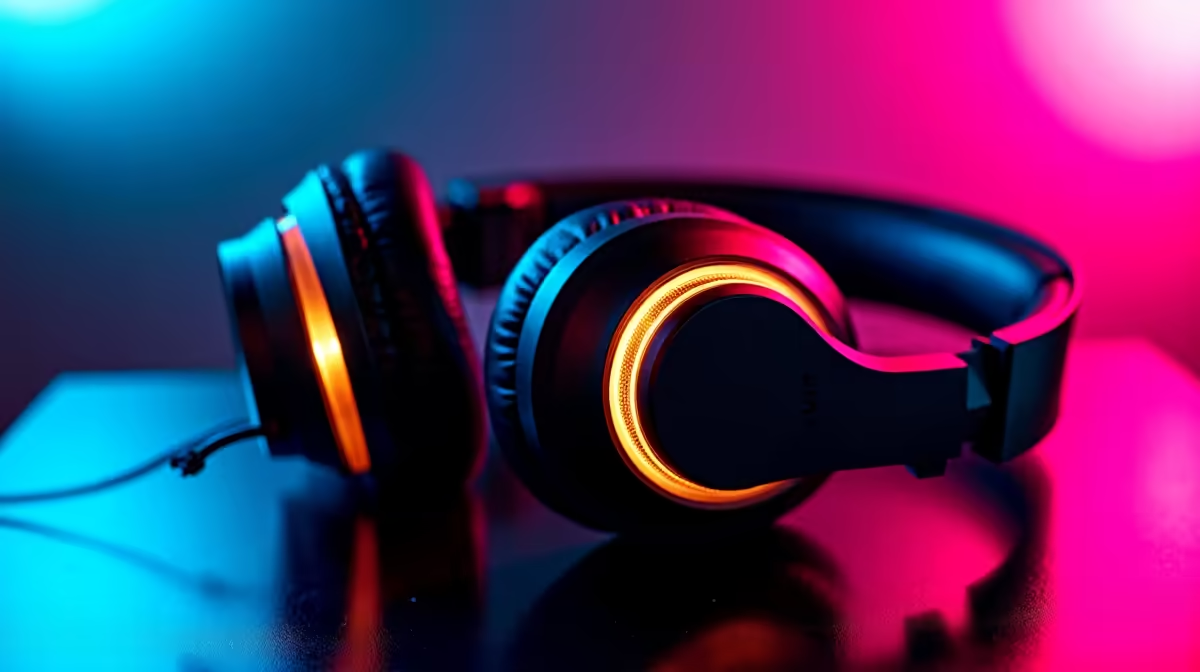
You’re pinned down in a tense Valorant clutch. You hear footsteps... but the sound arrives a split-second too late. Sound familiar? That dreaded audio lag can ruin a perfect play. In the world of wireless gaming, the big showdown is Bluetooth vs 2.4GHz gaming audio. But which one truly delivers the lag-free performance South African gamers demand? This 2026 guide breaks down the tech so you can make the winning choice for your setup. 🎧
Understanding the Wireless Contenders
Before we declare a winner, let's quickly get to grips with the two technologies battling for a spot on your desk. They might both cut the cord, but they work in fundamentally different ways.
2.4GHz Wireless: Think of this as a private, high-speed lane for your audio. It uses a dedicated USB dongle to create a direct, stable connection between your headset and your PC or console. This technology is optimised for one thing: transmitting a lot of data very quickly with minimal interference.
Bluetooth: This is the universal standard you know from your phone, car, and speakers. It’s designed for convenience and broad compatibility, allowing a single device to connect to almost anything without needing a special dongle. It's a jack-of-all-trades... but is it a master of gaming?
Bluetooth vs 2.4GHz for Gaming: The Head-to-Head
Now for the main event. We'll compare 2.4GHz vs Bluetooth gaming performance across the three categories that matter most to gamers.
Latency: The Deciding Factor ⚡
In gaming, latency is everything. It's the delay between an action happening on-screen and you hearing the corresponding sound. High latency means the audio for an explosion or an enemy's reload reaches your ears after you see it, giving you a massive disadvantage.
- 2.4GHz: This is where the dedicated dongle shines. 2.4GHz connections offer ultra-low latency, typically between 10-30 milliseconds (ms). This is virtually imperceptible and is considered "gaming grade."
- Bluetooth: Standard Bluetooth latency can be a deal-breaker, often hovering between 100-200ms. While newer codecs like aptX Low Latency can reduce this, it's still significantly higher than 2.4GHz and not always supported by PCs or consoles.
The Winner: For competitive gaming where every millisecond counts, 2.4GHz is the undisputed champion. If you're serious about your performance, the choice between Bluetooth vs 2.4GHz gaming audio is clear, and you'll want to check out purpose-built premium gaming headsets that use this tech.
Audio Quality & Comms
Raw audio fidelity is crucial for immersive single-player games, while clear communication is key in team-based shooters.
2.4GHz technology has more available bandwidth, which allows it to transmit uncompressed, high-fidelity audio. This means richer soundscapes and more detailed audio cues. For your teammates to hear you clearly, pairing your headset with one of our crystal-clear microphones ensures your callouts are never missed.
Bluetooth, on the other hand, always compresses audio to some degree. While codecs like LDAC sound fantastic for listening to Spotify, they often introduce more latency, creating a trade-off that isn't ideal for gaming.
Check Your Codecs! 🤔
If you must use Bluetooth for gaming, dive into your device's settings. On Windows 11, you can enable "Audio enhancements" to potentially access better codecs like aptX. On Android, you can force a specific codec in Developer Options. This won't beat 2.4GHz, but it can make a noticeable difference.
Convenience & Compatibility
This is where Bluetooth gets its revenge. The sheer convenience of a Bluetooth headset is undeniable. You can pair it with your gaming PC, your laptop for work, your phone for music on the go, and your Nintendo Switch... all without swapping a single dongle.
A 2.4GHz headset is tethered to its USB dongle. Want to use it on your PlayStation? You need to move the dongle. On your PC? Move the dongle again. This is a minor hassle, but it's a hassle nonetheless. This dongle-based approach is also common in other peripherals like high-performance wireless gaming controllers, where a stable, low-latency connection is just as vital.
The Verdict: Which is Right for You in 2026? 🏆
So, after breaking it all down, what's the final call in the Bluetooth vs 2.4GHz gaming audio debate for a South African gamer? It comes down to your primary use case.
- For the Competitive & Serious Gamer: 2.4GHz is the only answer. The low-latency performance is non-negotiable for games like CS2, Warzone, and Apex Legends. You need to hear what's happening, as it's happening.
- For the Casual & All-Rounder: If you play mostly single-player games, need one headset for everything (music, calls, gaming), and value convenience above all, a modern Bluetooth headset can be a great choice.
- For the Content Creator: If you're a streamer, audio quality and reliability are paramount. A 2.4GHz headset ensures there's no distracting audio-video sync issue for your viewers, which is a key part of upgrading your streaming setup.
While Bluetooth technology is always improving, for the gaming landscape of today and the near future, 2.4GHz wireless remains the gold standard for performance.
Ready to Hear Every Footstep?
The Bluetooth vs 2.4GHz gaming audio debate has a clear winner for competitive play. For that instant, lag-free advantage, 2.4GHz is king. Explore our massive range of premium gaming headsets and find the perfect audio solution to conquer your game.