

GTA 6 Max Settings on RTX 5070: Complete Guide
GTA 6 Max Settings on RTX 5070. Tested & verified settings for best FPS and visual quality on SA hardware budgets.
Read more🚀 Very Fast PC Setup: Acquire the skills to maximize your machine's efficiency and maintain peak performance.
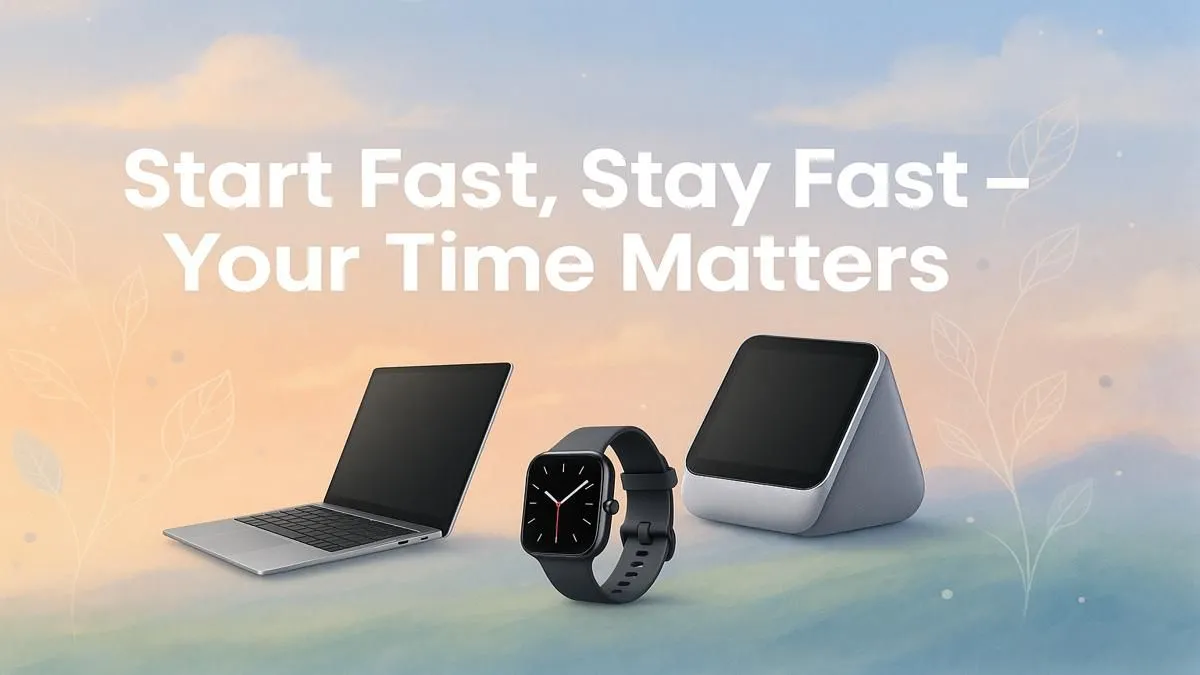
Is your PC taking longer to boot than it does to make a cup of rooibos? We’ve all been there. That frustrating lag between hitting the power button and actually launching a game can ruin a session before it even starts. But what if you could not only get a fast start but also maintain that snappy performance for the long haul? Let's dive into some practical, no-nonsense ways to boost PC speed and get you back in the game faster. 🚀
A slow boot is often the first sign that your PC needs attention. Over time, countless applications set themselves to launch at startup, draining resources before you've even clicked an icon. Taming this digital crowd is your first step to a faster machine.
Start by opening your Task Manager (Ctrl+Shift+Esc) and navigating to the "Startup" tab. Here you'll see a list of every program that launches with Windows, along with its startup impact. Be ruthless. Do you really need Discord, Spotify, and three different game launchers running the second you log in? Disable anything non-essential. This simple clean-up can dramatically improve your boot time and is a fundamental way to boost PC speed without spending a cent.
A fast start is great, but keeping that momentum is what truly matters. For sustained performance, you need to look beyond startup apps and focus on system hygiene and efficiency.
First, uninstall software you no longer use. These programs can run background processes that consume valuable CPU cycles and RAM. Next, ensure your graphics drivers (NVIDIA or AMD) and Windows are always up to date. These updates often include crucial performance optimisations that directly impact your gaming experience. A well-maintained software environment is key for consistent speed.
Keep at least 15-20% of your primary drive (especially if it's an SSD) free. A full drive slows down significantly. Run Windows' built-in Disk Cleanup tool monthly to remove temporary files and other digital clutter that can hamper your PC's performance.
Sometimes, the issue isn't just software bloat but outdated hardware architecture. Modern systems are designed for efficiency from the ground up. For example, many high-performance Minisforum PCs offer incredible power in a compact form factor, optimised to deliver sustained performance without the thermal throttling or background drag of older, bulkier setups.
You've disabled startup apps, updated your drivers, and cleaned your drive... but your PC still feels sluggish. At this point, it’s time to consider a hardware upgrade. No amount of software tweaking can make up for a fundamental bottleneck.
An upgrade from a traditional hard disk drive (HDD) to a solid-state drive (SSD) is the single most effective way to boost PC speed. The difference in boot times and application loading is staggering. Similarly, ensuring you have enough RAM (16GB is the sweet spot for most gamers today) prevents your system from bogging down during intense multitasking or demanding games.
If your whole system is showing its age, exploring modern alternatives like the latest Mini PCs can be a surprisingly powerful and cost-effective solution. They pack serious processing power into an efficient, space-saving design, giving you that 'new PC' snap without the giant tower.
Ready for a Real Speed Upgrade? If you've tried the tweaks and your rig still feels slow, it might be time for a fresh start. Explore our curated range of powerful and compact Mini PCs for performance that leaves lag in the dust.
Upgrade hardware components, defragment drives, and clean up boot processes for improved performance.
Disable unnecessary startup programs, use an SSD, and optimize BIOS settings for quicker boot times.
Yes, defragmenting improves speed by reorganizing files on your HDD for faster access.
Use reliable tools like CCleaner, Defraggler, or Windows built-in utilities to maintain fast performance.
Enable automatic updates, monitor disk health, and regularly clean up system junk files to sustain speed.
Prioritize hardware upgrades, keep drivers updated, and avoid resource-heavy applications for optimal efficiency.
Absolutely—SSDs drastically reduce load times and provide reliable, long-term performance boosts.
GTA 6 Max Settings on RTX 5070. Tested & verified settings for best FPS and visual quality on SA hardware budgets.
Read more
Cyberpunk 2077 Max Settings on RTX 5080. Tested & verified settings for best FPS and visual quality on SA hardware budgets.
Read more
Starfield Max Settings on RTX 5070 Ti. Tested & verified settings for best FPS and visual quality on SA hardware budgets.
Read more
AMD RX 9050 XT: Rumoured Specs, Price & Release. SA-focused analysis with local pricing data, real-world insights & actionable buying advice.
Can RTX 4080 Super Run AI Workloads for SA Developers Detailed answer with SA data, expert analysis & practical recommendations for local buyers.
Can RTX 4090 Run AI Workloads for SA Developers Detailed answer with SA data, expert analysis & practical recommendations for local buyers.
Top Settings for Intel Arc B580 at Ultrawide 1440p picks evaluated on performance, value & SA availability with current Rand pricing from Evetech.
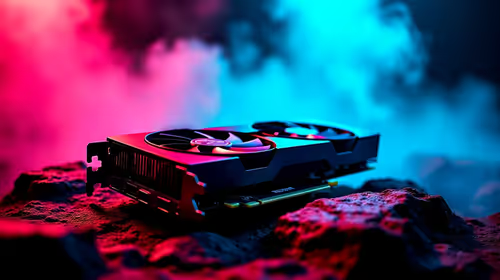
RTX 4060 CS2 Low Settings at 1080p: FPS Results. Real-world benchmark data, FPS numbers & performance analysis. What SA gamers can actually expect.
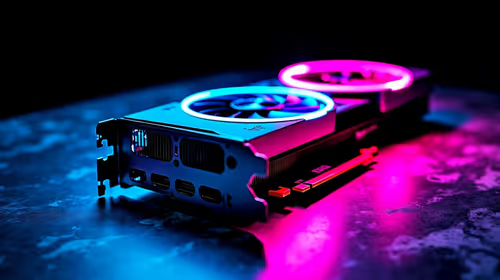
Visual Artifacts: Possible GPU Issue Issue #1. Diagnosis steps, proven fixes & when to seek professional help. SA-specific support info included.
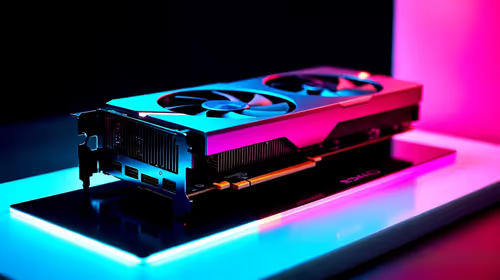
Can the RTX 4090 Handle 1440p 144Hz Gaming. Performance testing verdict with real data & practical recommendations for SA buyers.
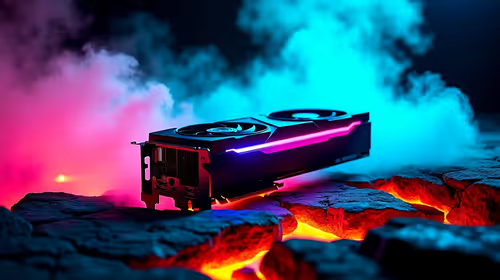
Top ASUS GPU Under R15000 picks evaluated on performance, value & SA availability with current Rand pricing from Evetech.
GTA 6 Max Settings on RTX 5070. Tested & verified settings for best FPS and visual quality on SA hardware budgets.
Cyberpunk 2077 Max Settings on RTX 5080. Tested & verified settings for best FPS and visual quality on SA hardware budgets.
Starfield Max Settings on RTX 5070 Ti. Tested & verified settings for best FPS and visual quality on SA hardware budgets.
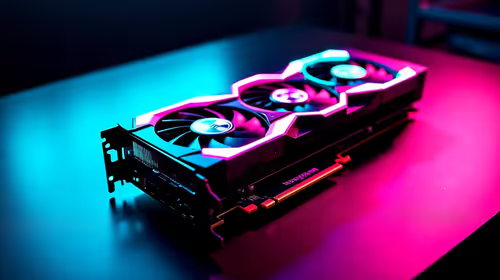
Top RTX 5090 Under R5000 picks evaluated on performance, value & SA availability with current Rand pricing from Evetech.