There is a window closing for anyone planning a value gaming build this year, and it has nothing to do with new GPU launches. The budget builder's move in 2026 is to secure your graphics card now, before the memory shortage feeding into GDDR7 and DRAM pricing pushes mid-range cards meaningfully higher. The squeeze is already visible at the component level, and Rand-priced budget GPUs are the most exposed to it.
Quick Answer
Buy your mid-range GPU sooner rather than later in 2026. Memory shortages are forecast to push mid-range card prices roughly 10% to 25% higher as GDDR7 and DRAM supply tightens, with 16GB cards already absorbing around a 30 USD increase in memory cost per unit. In SA, where GPU prices track the Rand against rising global costs, budget cards feel this first and hardest.
Why Memory, Not the GPU Itself, Is the Problem
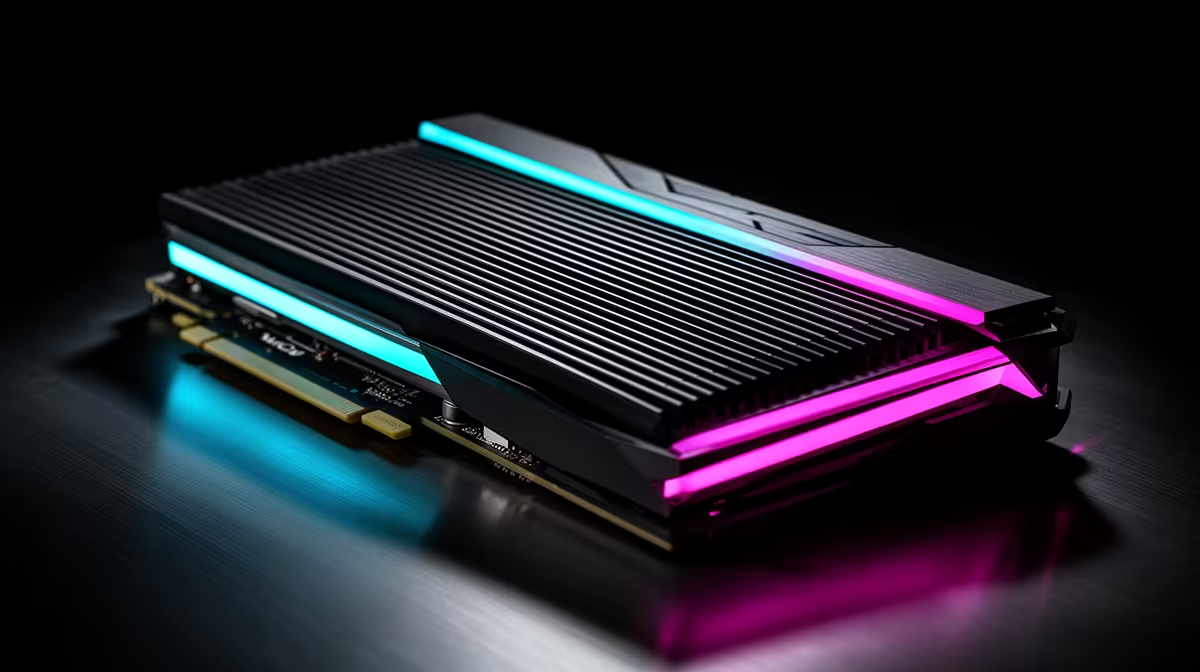
A graphics card is more than its processor. Every card carries a bank of fast memory, and on modern cards that is increasingly GDDR7. That memory is made in the same factories, and from the same wafers, as the DRAM going into servers, AI accelerators, and everything else hungry for fast memory right now. When demand for that supply spikes, the price of the memory on your gaming card rises even if the GPU chip itself has not changed.
That is the heart of the issue. The card's silicon might cost the same to make, but the memory bolted to it is getting more expensive, and that cost flows straight to the sticker price.
How Big Is the Increase
Forecasts point to mid-range GPUs rising roughly 10% to 25% as the shortage works through the supply chain. At the component level, 16GB cards are reportedly seeing around a 30 USD increase in memory cost alone, and cards with more memory carry more of that exposure. A budget card that leans on a generous VRAM buffer to stay relevant for years is, ironically, the most affected by a memory-driven price hike.
Why Budget Cards Feel It Worst
On an expensive flagship, a memory cost increase is a small fraction of a large price. On a budget card the memory is a much bigger share of the total bill of materials, so the same dollar increase lands as a larger percentage of the final price. The cards that value-focused SA builders rely on are exactly the ones where memory pricing moves the needle most.
The VRAM Irony
There is a twist worth understanding. The advice for years has been to buy a card with generous VRAM so it stays useful for longer, and that advice still holds for longevity. But it cuts the other way on price during a shortage: a card that carries more memory carries more of the cost increase. So the very feature that makes a budget card a smart long-term buy, a healthy VRAM buffer, is also what exposes it most to a memory-driven price rise. The conclusion is not to buy less VRAM, since you still want the card to last; it is to buy the well-specced card sooner, before that cost fully lands in the Rand price.
The SA Angle
South African pricing has two pressures stacked on top of each other. The first is the global memory cost rising. The second is the Rand, which sets how that global cost translates locally. When both move the wrong way at once, a budget card that was comfortably affordable can drift out of reach within a single buying cycle.
This is why timing matters more here than in markets with stronger currencies. A builder who waits for a sale that may not come can end up paying more for the same card a few months later. Watching the graphics card range at Evetech for current Rand pricing, rather than assuming prices only fall over time, is the rational stance in 2026.
What This Means for Your Build
If you have been planning a budget build and have the funds ready, the case for acting now is straightforward: the GPU is the component most likely to get more expensive, and it is usually the most expensive single part of the build. Securing it locks in the current price before the memory shortage feeds through.
Where to Spend and Where to Wait
The GPU is the priority to buy early. Other components face less acute memory pressure on the GPU side, though system RAM is part of the same DRAM story, so a sensible RAM kit is worth grabbing alongside the card. Parts like the case, power supply, and cooling are not memory-driven and can wait for a deal without the same risk of price creep.
Do Not Panic-Buy the Wrong Card
Acting early does not mean buying blind. Pick the card that genuinely suits your target resolution and the games you play, then buy that card now rather than a more expensive one out of fear. The goal is to lock in the right card at today's price, not to overspend ahead of a shortage. Checking the GPU best sellers at Evetech is a quick way to see which mid-range cards offer the strongest value before prices shift.
Reading the Timing Honestly
It is fair to ask whether this is just the usual scarcity talk that surrounds every hardware cycle. The difference this time is that the pressure traces to a real, structural cause: the same memory production feeding servers and AI hardware is the memory going onto gaming cards, and that demand is not a short spike. When the root cause is supply being pulled toward higher-value buyers, the pressure tends to persist rather than ease in a few weeks.
That does not mean prices can only ever go up, or that a specific card will never see a promotion. It means the base trend through the year leans toward higher mid-range pricing, so the default assumption that waiting always saves money is the riskier bet right now. For a builder with a plan and the funds, buying the right card today removes that uncertainty entirely.
A Sensible Plan of Action
Work out your target resolution first, since that decides the GPU tier you actually need. Settle on a specific card in that tier rather than a wishlist. Check its current Rand price, and if it fits your budget, buy it and move on. Treat the case, power supply, cooling, and storage as parts you can shop patiently for, since they are not in the memory firing line. The discipline is simple: prioritise the component most likely to climb, and do not let a hunt for a perfect deal turn into paying more months later.
Frequently Asked Questions
Why are GPU prices expected to rise in 2026?
The increase is driven by memory, not the GPU chip. GDDR7 and DRAM supply is tight as demand from servers and AI hardware competes for the same production, pushing the cost of the memory on graphics cards up by a forecast 10% to 25% on mid-range models.
Should I buy a GPU now or wait for a sale?
If you have the funds and a clear build plan, buying now is the safer move. The memory shortage is more likely to push budget GPU prices up than down through 2026, so waiting risks paying more later for the same card.
Why do budget cards rise more in percentage terms?
Memory makes up a larger share of a budget card's total cost than it does on a flagship. So the same dollar increase in memory cost translates into a bigger percentage jump on an affordable card than on an expensive one.
Does this affect system RAM as well?
Yes, to a degree. System RAM uses DRAM from the same constrained supply, so memory kits face their own upward pressure. If you are building soon, grabbing a sensible RAM kit alongside the GPU is a reasonable hedge.
Is it worth buying a more expensive GPU to get ahead of price rises?
No. Buy the card that matches your resolution and games at today's price rather than overspending out of fear. The win is locking in the right card early, not jumping to a tier you do not need.
Planning a value build before memory prices bite? Compare current Rand pricing on mid-range cards in the graphics card range at Evetech and secure your GPU while the timing favours you.