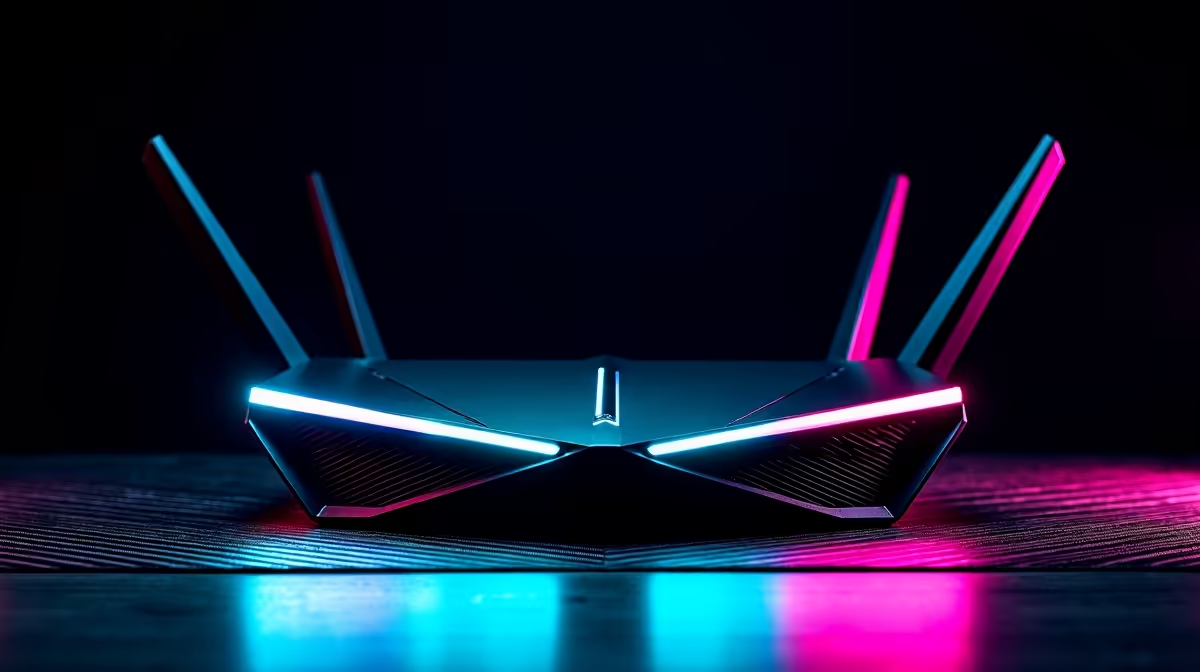
Two 5G routers can sit side by side at very different prices and pull in the same signal in a strong-coverage suburb. The gap between budget and premium 5G routers shows up at the edges: the number of bands they support, whether you can bolt on an external antenna, and how good the WiFi side is once the signal is inside your home. Knowing where your money goes stops you overpaying or underbuying.
Quick Answer
You pay more for a premium 5G router to get external antenna ports, support for more 5G bands and carrier aggregation, and a stronger WiFi 6 stage that spreads coverage further. In strong-signal metro areas a budget unit often performs identically. Premium pays off in fringe or rural coverage and in homes with many devices.
Where budget and premium genuinely differ
The 5G modem inside both classes can be similar, so in a city with solid coverage your real-world speed may barely change. The differences live elsewhere, and they are worth understanding before you spend.
Premium units typically support more 5G frequency bands and carrier aggregation, combining multiple bands for higher peak speeds, sometimes into the gigabit range. Budget units cover fewer bands, so if your network leans on a band the cheaper router omits, you simply will not reach the faster speeds. They also add external antenna connectors, which budget routers usually leave off, and that single feature is the difference between unusable and solid in a weak-signal area.
The WiFi half of the equation
A 5G router does two jobs: pull in the mobile signal, then broadcast it as WiFi around your home. The second job is where premium models often justify themselves. Many add WiFi 6, more capable antennas, and better simultaneous-device handling, so a busy household with phones, TVs, and laptops all connected stays responsive.
WiFi 6 specifically helps in crowded home networks because OFDMA scheduling lets the router serve multiple devices in a single transmission slot, reducing the contention that causes jitter. In a flat with a couple of devices that is a marginal benefit. In a house where several people are streaming, gaming, and on video calls simultaneously, it is the difference between a smooth evening and a frustrating one.
Budget routers tend to run a simpler WiFi stage. In a small flat with a handful of devices that is perfectly fine. In a larger home where the router sits in one room and devices spread across several, the cheaper WiFi side becomes the bottleneck long before the 5G signal does. The current networking range at Evetech spans both ends, so it is easy to match the WiFi capability to your home size.
What premium buys in the SA context
In South Africa, the practical premium features worth paying for are: multi-carrier aggregation, which pulls together multiple sub-6GHz channels on the n78 band and its neighbours for meaningfully higher throughput in covered metros; external antenna ports, which are non-negotiable for anyone on the edge of coverage; and WiFi 6 with a real MIMO antenna array rather than a stripped-down chipset. A WiFi 6E or WiFi 7 stage costs more again but delivers future headroom for newer devices and the 6GHz band, which is worth it for device-heavy households.
Locked vs unlocked: a hidden cost factor
One variable that cuts across both budget and premium categories is whether the device is carrier-locked. Budget CPE units sold at low prices by operators are almost always locked to that provider's SIM. Premium unlocked units cost more upfront but work with any SA network and give you the freedom to switch without replacing the hardware. If you are buying a router to own long-term and want to change providers, factor the lock status into the total cost picture before deciding which tier makes more sense.
When the premium price actually pays off
Spend up if you are on the fringe of 5G coverage, in a rural or peri-urban area, where external antenna ports and wider band support turn a marginal signal into a usable one. Spend up too if you have a device-heavy household, because the stronger WiFi 6 stage is what keeps everything smooth at peak times.
Stick with budget if you live in a strong-coverage metro suburb with a modest number of devices in a compact space. In that scenario a premium router's extra bands and antenna ports sit unused, and you are paying for headroom you will never touch. Be honest about your signal and your home before reaching for the pricier box. To see which units SA buyers are actually choosing across price points, the accessories best sellers give a quick real-world read.
Frequently Asked Questions
Do I need a premium 5G router in a city with good coverage?
Usually not. In a strong-signal metro area a budget router pulls in much the same speed, and its extra bands and antenna ports go unused. Premium features earn their keep mainly in weak-signal or device-heavy situations.
What does an external antenna port actually do?
It lets you attach a directional or higher-gain antenna to capture a weak 5G signal, which can noticeably improve speed and stability in fringe areas. Most budget routers leave this port off, so you are stuck with the built-in antennas.
Is WiFi 6 worth paying extra for on a 5G router?
If you have many devices or a larger home, yes. WiFi 6 handles crowded networks more gracefully and spreads coverage better, so the broadcast side keeps up with a fast 5G connection instead of becoming the bottleneck.
What is carrier aggregation and do I need it?
Carrier aggregation combines several 5G bands for higher peak speeds. It helps where your network supports it and you want maximum throughput, but a single-band budget router is fine for everyday browsing and streaming in good coverage.
How much should I expect to pay for a quality 5G router in SA?
Mid-range WiFi 6 capable 5G CPE units start around R2,000 to R3,500. Premium units with carrier aggregation, external antenna ports and WiFi 6E or WiFi 7 sit above R4,000, and some unlocked units with wide band support run higher. Bundled ISP routers are free to use but tied to the plan.
Picking a 5G router and want to match the spend to your coverage and home size? The right choice depends on your signal strength and device count, not the highest price tag. Browse the networking range at Evetech to find a 5G router that fits your situation.