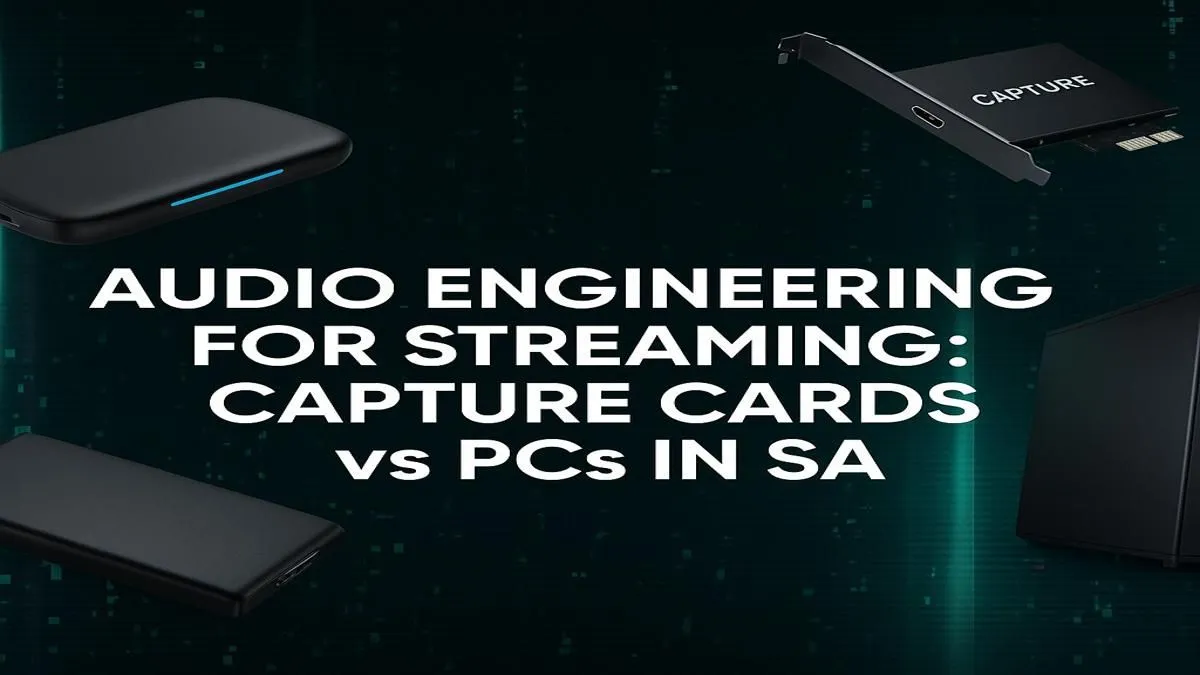
Ready to go live, but your audio sounds like a mess? You've got the gameplay, the personality, but your stream's audio quality is holding you back. It’s a classic problem for South African streamers. The big debate often comes down to hardware: capture card vs dual PC streaming. Which path gives you that crisp, professional sound without tanking your frames or your budget? Let's break down the audio side of this tech tussle. 🚀
The Single PC + Capture Card Approach
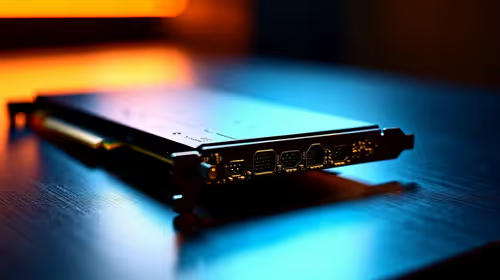
A capture card is a device that takes your gameplay footage and prepares it for streaming, offloading the heavy encoding work from your graphics card. This means your GPU can focus on what it does best: rendering your game at high frame rates.
How It Works & Why It's Popular
The setup is relatively simple. You plug the capture card into your gaming PC—either internally via PCIe or externally via USB—and it acts as a dedicated video processor. It's a fantastic middle-ground, offering a significant quality boost over streaming directly from your GPU's encoder (like NVENC or AMF) without the complexity of a second machine. For many streamers, this is the most logical upgrade, especially when working with one of the many powerful PCs under R20k available today.
Pros:
- Cost-Effective: Far cheaper than buying a whole second computer.
- Simpler Setup: Less wiring and software configuration.
- Performance Boost: Frees up significant GPU resources for smoother gameplay.
Cons:
- Still Uses PC Resources: It uses CPU cycles and system bandwidth.
- Audio Can Be Tricky: Mixing game audio, Discord, and your mic can require software like Voicemeeter.
The Ultimate Dual PC Streaming Setup
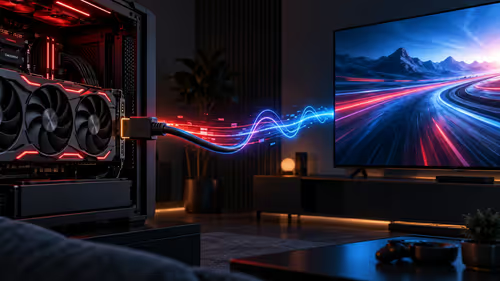
This is the pinnacle for serious streamers. You have one powerful PC dedicated entirely to gaming and a second PC whose only job is to run OBS/Streamlabs, encode the video, and manage the stream. The two machines are connected via a capture card in the streaming PC.
Zero Compromise Performance ✨
With a dual PC streaming setup, your gaming rig runs completely unhindered. You get maximum frames, can play at the highest settings, and never have to worry about a background process causing a stutter. The streaming PC handles all the hard work. This is the setup you see with most professional esports players and top-tier content creators, often pairing a dedicated AMD Ryzen gaming rig with a capable streaming machine.
Pros:
- Maximum Gaming Performance: Zero impact on your game's frame rate.
- Highest Stream Quality: The dedicated PC can encode at slower, higher-quality presets.
- Ultimate Flexibility: Total control over every audio and video source.
Cons:
- Expensive: You're buying and maintaining two computers.
- Complex: Audio and video routing requires more technical know-how.
- Space: It requires double the desk space.
Solving the Audio Puzzle: Capture Card vs Dual PC Streaming
Here’s where the real challenge lies. Getting clean, multi-source audio is crucial, and each setup tackles it differently.
Audio on a Capture Card Setup
With a single PC, you typically route all your audio (game, mic, Discord, music) through software. The capture card itself usually just grabs the final HDMI audio mix. This can sometimes lead to buzzing or humming known as a ground loop, especially with external USB devices.
Audio Pro Tip 🔧
To get clean audio on a dual PC setup without a physical mixer, use Voicemeeter Potato on both PCs. Enable the VBAN feature to send your microphone and game audio streams over your local network from your gaming PC to your streaming PC with almost zero latency. It’s a powerful and free way to manage complex audio!
Audio on a Dual PC Setup
This is where things can get complicated... or incredibly powerful. To properly mix audio, you need to send your game audio, microphone audio, and chat audio from the gaming PC to the streaming PC separately. The best way is with a physical audio mixer or an interface like the GoXLR. This gives you physical faders to control every source on the fly. Many streamers start with one of Evetech's powerful pre-built PCs as their primary gaming machine before adding a second PC to handle the stream.
The Verdict: Which Streaming Setup is for You?
So, what's the final word in the capture card vs dual PC streaming debate for South African creators?
- Choose a Capture Card if: You're starting out or upgrading from GPU encoding. You want a noticeable quality bump and smoother gameplay without breaking the bank. It’s the perfect, balanced choice for 90% of streamers. A modern Intel-based PC has more than enough power to handle gaming and streaming with a good capture card.
- Choose a Dual PC Setup if: You are serious about a career in streaming, demand zero performance loss in competitive games, and want absolute control over your production quality. It’s a significant investment, but for professionals, it's non-negotiable.
Ultimately, both paths lead to a better stream. Your choice depends on your budget, your technical comfort level, and your long-term goals.
Ready to Build Your Ultimate Stream?
Whether you're adding a capture card to your current rig or building a dedicated streaming PC, having the right components is key. Explore our massive range of PC components and find the perfect hardware to take your stream to the next level.