

GPU Setup Guide for SA Gamers
GPU Setup Guide Gamers. Clear setup instructions with SA-specific considerations, troubleshooting tips & recommended components.
Read moreCase fan thickness shapes static pressure and airflow — learn how thin vs thick fans affect radiator push, intake/exhaust balance, and cooling performance for PC builds. 🛠️💨
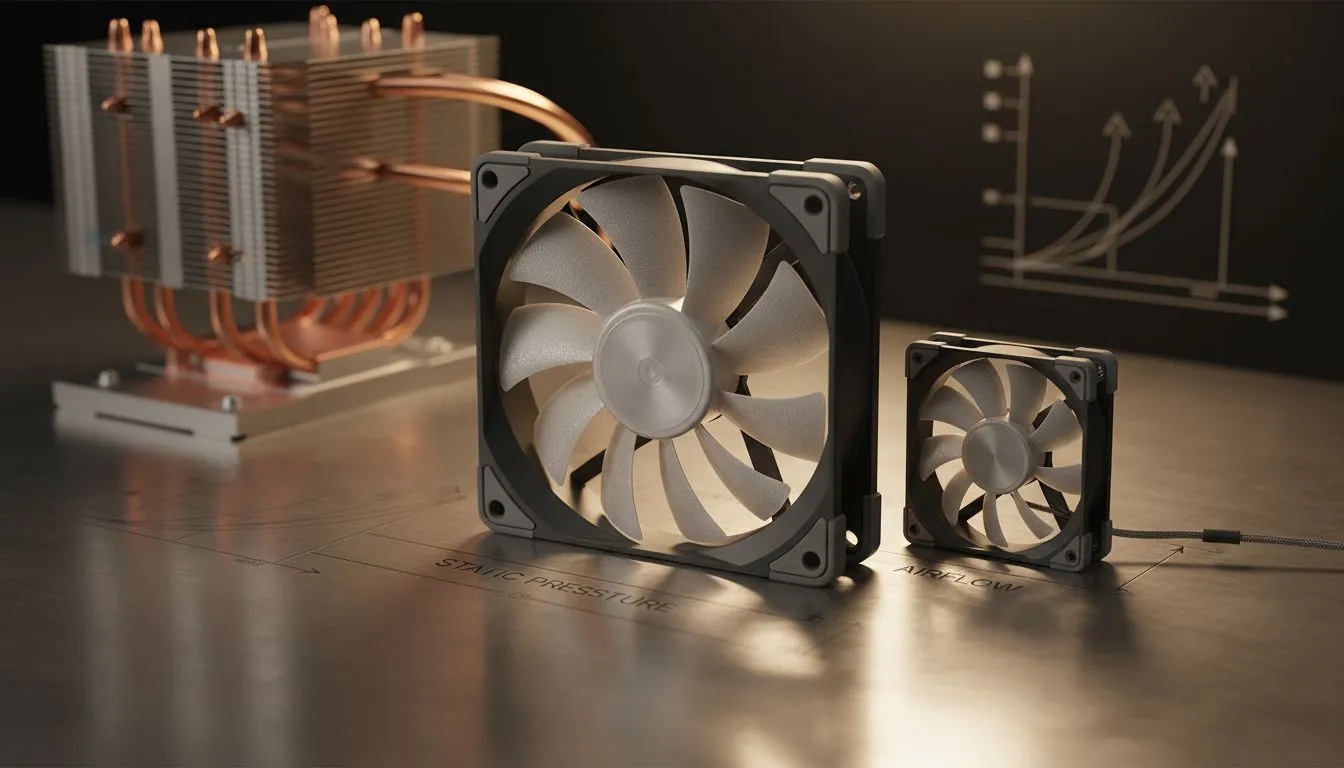
Ever wondered why some PC fans look chunkier than others? In South Africa’s sweltering summer heat, choosing the right case fan thickness can be the difference between a cool, quiet rig and a thermal throttling nightmare. It is not just about aesthetics... it is about how those extra millimetres impact your static pressure and airflow to keep your hardware safe. 🔧
Most builders default to the standard 120mm fans because they fit almost anywhere. These usually come in a 25mm thickness. However, the industry is shifting. We are seeing more 28mm and 30mm options entering the market. While a 5mm difference sounds tiny, it significantly changes the blade pitch and surface area.
Airflow is the total volume of air moved... measured in CFM. Static pressure is the ability of that air to push through resistance. If you have a thick mesh filter or a radiator, you need high static pressure. Larger 140mm fans often provide great airflow at lower speeds. But when you increase the thickness of the fan frame, the blades can be deeper. Deeper blades move more air per rotation and create more force.
Brands like Deepcool have mastered this balance. Their designs often focus on keeping noise levels low while maximising the "push" through cramped chassis. If your PC case feels like an oven during a Cape Town heatwave, thicker fans might be your best bet for intake.
If you use an All-in-One liquid cooler, fan thickness is vital. A thicker fan can overcome the resistance of the radiator fins more effectively than a slim one. High-performance options from CORSAIR often utilise advanced bearing tech and optimised blade geometry to handle these high-resistance scenarios. ⚡
If you are mounting fans to a radiator or behind a very restrictive front mesh panel, look for fans with a 'Static Pressure' rating above 2.0 mmH2O. This ensures the air actually reaches your components instead of just bouncing off the obstruction and creating extra noise.
Not every builder wants a light show. While many gamers love RGB lighting effects to match their setup, some prefer a stealthier look. You can find high-performance thick fans with no lighting effects that focus purely on industrial-grade cooling. 🚀
Before you buy, always check your case clearance. Some small form factor cases might not have the extra 5mm of room needed for "chonky" fans. Always measure twice to avoid a frustrating building experience. You can browse our full range of case fans to see which dimensions fit your specific chassis. ✨
Ready to Chill Your Rig? Choosing the right fan thickness is the secret to a silent and cool PC. Whether you need high static pressure for a radiator or massive airflow for your case, we have the stock you need. Explore our massive range of case fans and find the perfect match to keep your South African gaming rig running at peak performance.
Case fan thickness is the depth of the fan frame. It affects blade size, RPM, static pressure and airflow, so it changes radiator and intake performance.
Thicker fans often house larger blades and motors that can generate higher static pressure, improving push through radiators and dense filters.
Thin fans (15mm) can fit tight spots but usually offer lower static pressure and airflow than standard 25mm fans, affecting radiator and GPU cooling.
25mm and thicker fans typically perform better on radiators due to higher static pressure; look for high static pressure thin fan models if space is limited.
Thicker fans can move more air at lower RPM, often reducing noise, while thin fans may need higher RPM to match performance, increasing noise.
Yes. Upgrading to higher-demand hardware may require fans with greater static pressure or thicker blades to maintain airflow and temps.
Run temperature and airflow benchmarks with different fan thicknesses on the radiator or intake and compare delta-T and RPM/noise readings.
GPU Setup Guide Gamers. Clear setup instructions with SA-specific considerations, troubleshooting tips & recommended components.
Read more
When Will the RTX 6090 Launch in South Africa Detailed answer with SA data, expert analysis & practical recommendations for local buyers.
Top Valorant Settings for RTX 5070: FPS Optimisation picks evaluated on performance, value & SA availability with current Rand pricing from Evetech.

RDNA 3.5 Graphics in Ryzen AI 400? Can You Game. Plain-English explanation of what it means, why it matters & how it affects your buying decisions in SA.

GPU Price Index : December Report. Current stock data & price tracking for SA buyers. See what is available and where prices are heading.

Core i5-14600K + B760 + RTX 5060 Build Under. Full parts list, Rand pricing & expected performance. Build confidently with SA-available components.
RX 7600 Apex Legends at 4K: FPS Benchmark. Real-world benchmark data, FPS numbers & performance analysis. What SA gamers can actually expect.

RX 7900 XTX GTA 6 at 4K: FPS Benchmark & Optimal. Real-world benchmark data, FPS numbers & performance analysis. What SA gamers can actually expect.

Head-to-head comparison of RTX 5070 vs RX 9070 XT: Gaming Performance for SA gamers. Performance benchmarks, Rand pricing & which delivers better value.

Top Laptop with Ryzen 5 + RTX 4090 Laptop: Picks picks evaluated on performance, value & SA availability with current Rand pricing from Evetech.
Top Budget GPU for Marvel Rivals picks evaluated on performance, value & SA availability with current Rand pricing from Evetech.
Valorant Settings on RTX 5070: Performance. Real-world benchmark data, FPS numbers & performance analysis. What SA gamers can actually expect.

Top Budget GPU for Assassins Creed Shadows picks evaluated on performance, value & SA availability with current Rand pricing from Evetech.