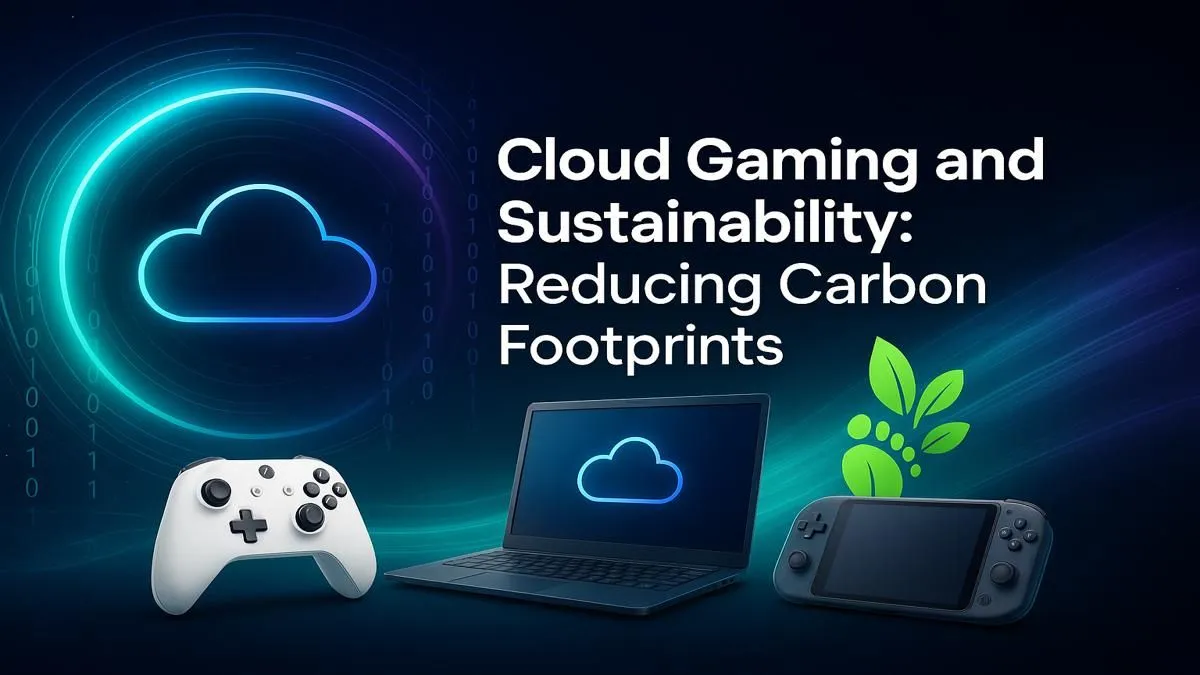
Streaming AAA titles without a monster rig sounds like a dream, right? For many South African gamers, cloud gaming is a tempting escape from massive downloads and pricey hardware. But as we stream crisp 4K graphics from a server hundreds of kays away, a critical question arises: what is the actual cloud gaming carbon footprint? Is this convenience coming at a hidden environmental cost? Let's dive in and see if it's as green as it seems. ✨
Unpacking the Energy Demands of Cloud Gaming
The magic of cloud gaming doesn't happen in the clouds... it happens in massive, power-hungry data centres. These facilities house racks of high-end server hardware, running 24/7 to process graphics and stream gameplay to you. The environmental impact of cloud gaming isn't just one thing; it's a chain of energy consumption.
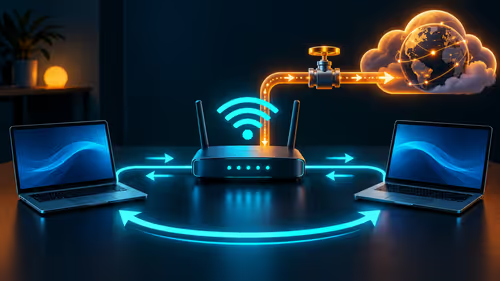
First, there's the server itself, doing all the heavy lifting your local PC normally would. Then, there's the vast network infrastructure that transmits petabytes of data across the country to your router. Finally, your own device—be it a laptop, phone, or smart TV—uses energy to receive and decode the video stream. Each step adds to the overall carbon footprint, a constant energy drain that persists for every second you play.
The Local PC vs. The Remote Server: A Carbon Comparison
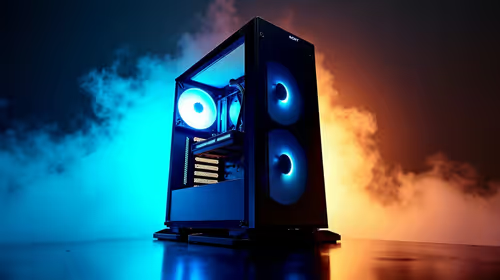
So, how does this compare to a traditional gaming PC? While manufacturing any piece of tech has an environmental cost, a local PC's manufacturing footprint is a one-time event. After that, you're only using energy when you're actively gaming. A powerful gaming rig might seem power-hungry, but you have complete control over its consumption.
When you're not gaming, a modern PC sips power in idle mode. Cloud gaming servers, on the other hand, are always on, consuming significant energy even when idle, waiting for the next user to log in. This is where owning your own hardware, like one of the many efficient best gaming PC deals, can offer a more transparent energy profile. For those who want maximum performance without compromise, today's powerful PCs over R20,000 are also built with increasingly efficient components.
Optimise Your Power Plan ⚡
In Windows, you can create custom power plans. Create one called "Gaming" set to "High Performance" and another called "Everyday" set to "Balanced". You can switch between them with two clicks. This ensures you're only drawing maximum power when you actually need it, reducing your PC's energy consumption and electricity bill.
Is Cloud Gaming's Footprint a Deal-Breaker in South Africa?
Here in South Africa, the discussion around the cloud gaming carbon footprint gets even more complex. Our national grid has its own carbon intensity, meaning the source of the electricity matters immensely. While some global data centres are shifting towards renewable energy, it's often difficult for the end-user to know if the specific server streaming their game is powered by solar or coal. 🌍
Ultimately, owning a local PC gives you direct control. You decide when it's on, how hard it works, and you're connected to a local power grid whose source, while complex, is at least known. Whether you opt for affordable budget gaming PCs or more balanced gaming PCs under R20,000, the power is in your hands. Investing in one of our expertly assembled custom pre-built PC deals ensures you get an optimised, efficient machine from day one.
While cloud gaming offers undeniable convenience, its eco-friendly credentials are murky at best. The constant energy draw from remote data centres creates an ongoing carbon cost that's largely invisible to the player. For a more transparent and controllable environmental impact, a well-managed local gaming PC remains the clearer choice for the conscious South African gamer.
Ready to Take Control of Your Gaming?
The true cloud gaming carbon footprint is complex, but owning your hardware puts the power back in your hands. For maximum performance, choice, and value in South Africa, a dedicated gaming PC is unbeatable. Explore our massive range of PC deals and find the perfect rig to conquer your world.