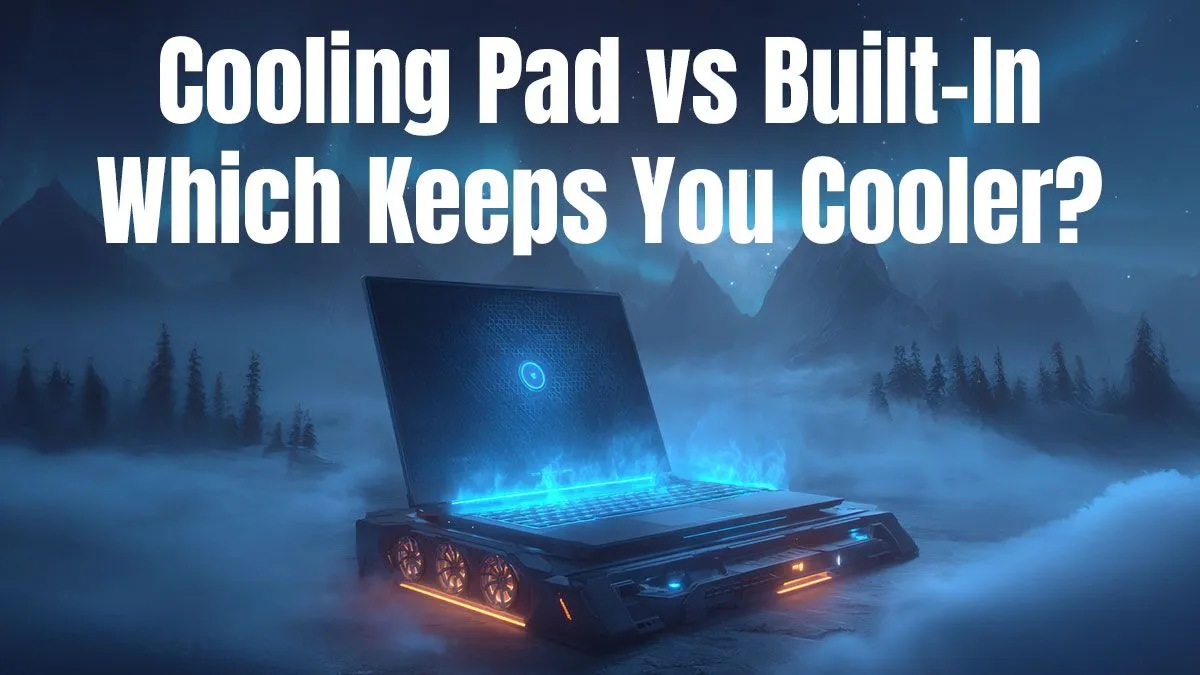
Is your gaming laptop hot enough to fry an egg on after a heavy session? We've all been there. In the heat of a tense Apex Legends match, the last thing you need is your machine throttling because its internals are sweating. This brings up a classic South African gamer's debate: is your laptop's standard cooling system enough, or is it time to invest in an external cooling pad? Let's settle the cooling pad vs built-in laptop cooling argument. 🌡️
How Your Laptop's Built-In Cooling Actually Works
Before you spend your hard-earned Rands, it's crucial to understand what's already happening under the hood. Your laptop's built-in cooling system is a sophisticated network of heat pipes, heat sinks, and fans, all working to pull heat away from critical components like the CPU and GPU.
Modern designs have become incredibly efficient. The latest generation of processors, found in many top-tier Intel laptops on special, feature advanced thermal management. However, they all fight against the same enemy: physics. A slim, portable chassis has limited space for air to circulate, which means fans have to work harder and louder to keep things from overheating.
The Case for an External Laptop Cooling Pad
A laptop cooling pad is essentially an external accessory that sits underneath your laptop, using one or more fans to push cool air into its intake vents. Think of it as a support unit for your laptop's own system.
The primary benefit is improved airflow. 💨 By constantly supplying a stream of cooler, ambient air, it helps the internal fans operate more efficiently. This can lead to a tangible drop in operating temperatures—often between 5°C and 10°C during heavy loads. For anyone pushing one of the best gaming laptop deals to its absolute limit, that temperature difference can be the key to unlocking sustained performance and preventing thermal throttling.
Check Your Vents First!
Before buying a cooling pad, flip your laptop over. If its main air intake vents are on the bottom, a cooling pad will be highly effective. If the intakes are primarily on the sides or back, the benefit will be less direct, focusing more on cooling the chassis itself.
Cooling Pad vs Built-In Cooling: The Direct Comparison
So, which approach wins? The honest answer is... it depends on your specific needs. Let's break down the cooling pad vs built-in laptop cooling showdown.
Performance & Thermals
For raw cooling potential, adding a pad gives you an edge. A dedicated cooling pad can prevent your machine from hitting its thermal limits, allowing your CPU and GPU to maintain higher clock speeds for longer. This translates to smoother frame rates and more consistent performance in demanding games and applications.
Portability & Convenience
Here, the built-in system is the undisputed champion. It requires no extra space in your bag, no extra USB port for power, and no setup. A cooling pad is another piece of gear to carry, making it less ideal for gamers who are constantly on the move.
Cost & Noise
Your laptop's cooling comes at no extra cost, but a decent cooling pad is a relatively affordable upgrade. It will, however, add to the overall noise of your setup. Sometimes, a high-quality, low-RPM cooling pad can be quieter than your laptop's internal fans screaming at full blast. It's a trade-off worth considering, especially if you're looking at powerful AMD laptops on special that can run hot under pressure.
The Verdict: Do You Need a Cooling Pad?
Deciding between relying on your laptop's built-in cooling or adding a cooling pad comes down to your usage.
You should seriously consider a cooling pad if:
- You engage in long gaming sessions or run intensive software (video editing, 3D rendering).
- You notice your laptop's performance dropping after it heats up (a classic sign of thermal throttling).
- You live in a warmer part of South Africa where high ambient temperatures are the norm.
- Your primary gaming station is at a desk.
You can probably skip it if:
- You use your laptop for light tasks like browsing and streaming.
- Portability is your number one priority.
- Your laptop already has a top-of-the-line, vapour-chamber cooling system and you aren't experiencing throttling. ✨
Ultimately, a cooling pad is a fantastic, cost-effective tool to maximise your hardware's potential and extend its lifespan.
Ready to Beat the Heat? Whether your built-in cooling is a beast or you need that extra boost, the right hardware makes all the difference. Explore our incredible laptop specials and find the perfect cool-running machine for your needs.