




IPS vs VA for Strategy and Sim Games in SA
IPS vs VA for strategy and sim games should be judged by fit, not a single winner. Compare compatibility, latency, capacity, upgrade path, cost planning, and South African setup needs.
Read moreWorried about your CPU air cooler lifespan? Most quality heatsinks last over a decade, while fans typically last 5-7 years! 🌬️ Learn to spot failure signs and extend your hardware's life in this 2025 maintenance guide. 🔧
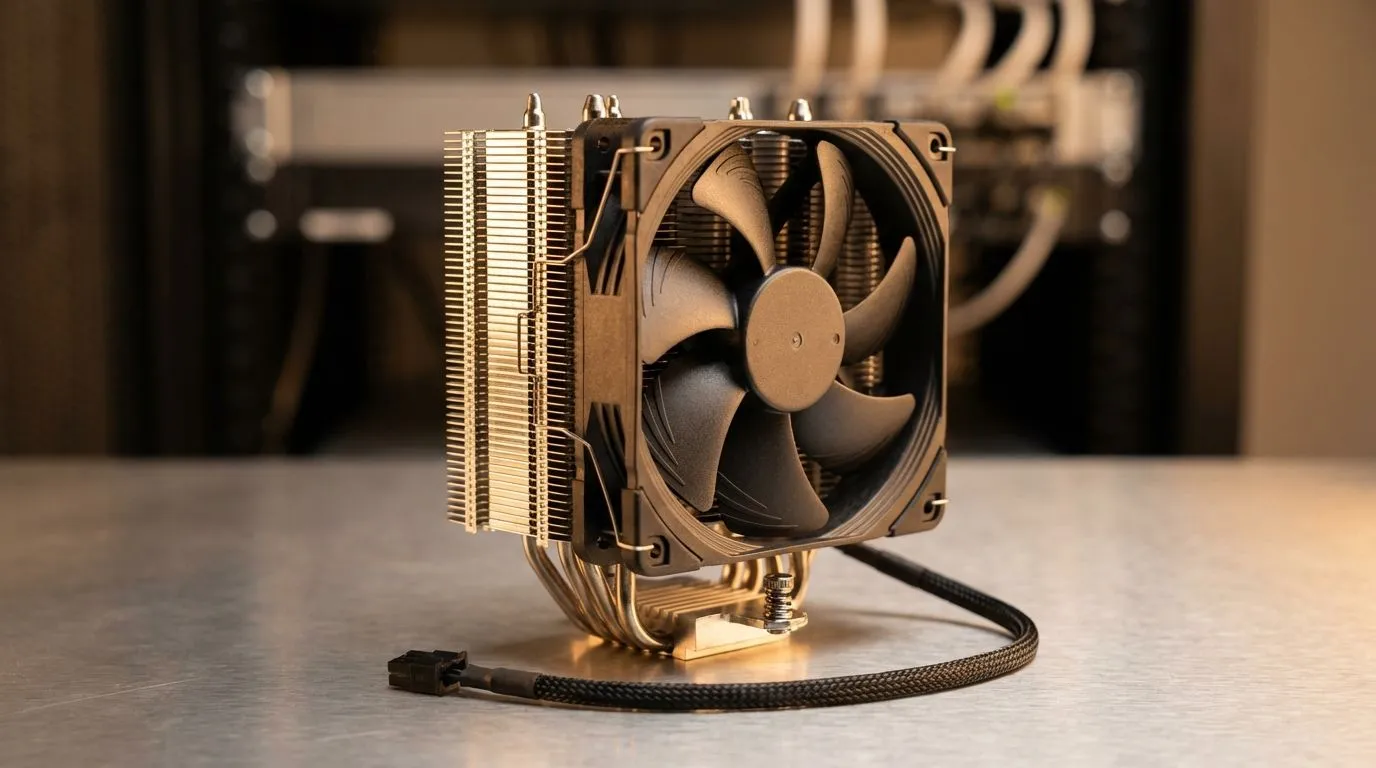
You've just dropped some serious cash on a new CPU for your rig. Lekker! But now comes the crucial question: how do you keep it from melting during a heated Warzone match in the middle of a South African summer? While flashy liquid coolers get a lot of hype, the humble air cooler remains a champion of reliability. But what is the real CPU air cooler lifespan? Is it a part you can buy once and forget about? Let's investigate.
Thinking about how long CPU air coolers last requires looking at their two main parts separately. It's a tale of two components: one that's basically immortal and one that has a definite expiry date.
The big, finned metal block is the heatsink. It’s typically made of aluminium and copper, and its only job is to absorb heat from your CPU and offer a large surface area for it to dissipate. It has zero moving parts. Barring physical damage (like dropping it or taking a hammer to it 🔨), a heatsink will easily outlast every other component in your PC. It doesn't degrade, wear out, or get "old." Its performance will be the same on day one as it is on day 3,000.
The fan (or fans) attached to the heatsink is the active part of the system and the component that will eventually fail. A fan is a motor with bearings that are under constant stress. Its lifespan depends heavily on:
The good news? Fans are replaceable and relatively cheap. You don't need to throw away the whole cooler, making them a very sustainable choice from our wide selection of CPU coolers.
Let’s get to the numbers. A quality CPU air cooler's lifespan can be broken down like this:
This incredible durability is why a top-tier Air Cooler is often seen as a smarter long-term investment than its liquid-cooled cousins.
Before you assume your cooler is failing, give it a proper clean. Power down your PC, unplug it, and use a can of compressed air to blast the dust out of the heatsink fins and fan blades. You'd be amazed how often this simple maintenance can drop your CPU temps by 5-10°C and silence a noisy fan.
Your cooler will usually give you clear warning signs that the fan is on its way out. Keep an eye (and an ear) out for these symptoms:
If you notice any of these, it's time to look at replacing the fan, not the entire cooler.
How does an air cooler's durability stack up against an All-In-One (AIO) liquid cooler?
While a high-performance Liquid Cooler (AIO) often provides superior cooling for high-end, overclocked CPUs, it comes with more points of failure. An AIO has a pump, tubing, and radiator, and the coolant inside can slowly evaporate over many years (a process called permeation). The pump is the most common failure point, and when it dies, the whole unit is usually a write-off. The lifespan of an AIO is typically 5-7 years.
Quality brands like CORSAIR make fantastic options in both categories, but for sheer, set-and-forget longevity, air cooling is the undisputed king. For those pushing their CPUs to the absolute limit, however, the raw thermal headroom provided by large 360mm Radiator AIOs is often worth the trade-off in lifespan. ✨
The final verdict on CPU air cooler lifespan is overwhelmingly positive. They are one of the most reliable, long-lasting, and cost-effective components you can buy for your PC. By simply replacing a fan every half-decade or so, a great air cooler can serve you faithfully through multiple builds.
Ready to Keep Your Rig Cool & Quiet? Whether you're after the rock-solid reliability of an air cooler or the peak performance of an AIO, the right choice makes all the difference. Explore our massive range of CPU coolers and find the perfect solution to keep your temps low and your framerates high.
The metal heatsink is virtually indestructible, but the attached fans typically last 5 to 7 years depending on the bearing type and usage intensity.
Yes, air coolers generally have a longer lifespan than AIOs because they lack mechanical pumps and evaporation risks, leaving only the fan as a failure point.
Common signs include grinding or rattling noises, visible wobbling, failure to spin up on boot, or sudden spikes in CPU temperatures during idle or load.
Absolutely. If the heatsink is intact, you can simply unclip the dead fan and attach a new compatible static pressure fan to restore full cooling performance.
To maintain optimal heat transfer and protect your CPU air cooler lifespan, it is recommended to clean and reapply thermal paste every 2 to 3 years.
Fluid Dynamic Bearing (FDB) and Magnetic Levitation fans offer the longest lifespan, often exceeding 10 years, compared to standard Sleeve Bearing fans.
IPS vs VA for strategy and sim games should be judged by fit, not a single winner. Compare compatibility, latency, capacity, upgrade path, cost planning, and South African setup needs.
Read more
Gen 5 NVMe SSD guide for Bloemfontein gamers should be shortlisted around the job it must do. South African buyers should compare capacity, speed, thermals, and motherboard support, warranty path, and upgrade room before treating any pick as best.
Read more
Skip the RTX 5070 if your first-time builder budget needs better balance. Better SA picks can free room for the right CPU, PSU, case, monitor, storage, and cooling while still giving a strong first gaming PC experience this year in South Africa.
Read more
RTX 5080: weighing the pros and cons for SA should be shortlisted around the job it must do. South African buyers should compare GPU tier, VRAM, cooling, and PSU headroom, warranty path, and upgrade room before treating any pick as best.
Read more
Core i5-13400F gives South African PC builders a capable mid-range CPU choice with clear limits. Check its gaming fit, discrete GPU requirement, LGA1700 platform costs, and upgrade path before locking in your parts list.
Read more
Pros and cons of the Wi-Fi 7 routers for SA should be shortlisted around the job it must do. South African buyers should compare WiFi standard, coverage, latency, and device support, warranty path, and upgrade room before treating any pick as best.
Read more
Steam content servers unreachable needs a download-path check, not an immediate reinstall of every game. Restart the client, inspect download settings and compare another connection when practical. Clearing the download cache is separate from deleting installed games.

Keychron G6 HE has built-in and swappable battery versions with different weights. The product brief lists 42g and 46g respectively, each with a 3g tolerance. Choose by grip and battery preference before treating one headline weight as universal.

Corsair HS80 v2 MAX supports 2.4GHz wireless and Bluetooth. Its maximum battery figures use RGB-off conditions and differ by connection. Check microphone routing, comfort and the exact device support before assuming every wireless mode behaves alike.

Windows taskbar notification badges can be shown or hidden in Taskbar behaviours. This changes the small app indicators, not the underlying messages. Choose a calmer desktop while keeping a deliberate routine for checking important conversations and app updates.
Windows taskbar notification badges can be shown or hidden in Taskbar behaviours. This changes the small app indicators, not the underlying messages. Choose a calmer desktop while keeping a deliberate routine for checking important conversations and app updates.

Windows USB device in use can mean a program still has the drive open. Finish transfers and close files before retrying ejection. Better performance caching requires safe removal; a replacement drive is not the first fix for an open-file warning.

Windows Nearby Sharing not working starts with feature, Bluetooth and visibility checks on both PCs. My devices only depends on matching Microsoft accounts. Test a small harmless file before buying networking hardware or changing your home router.
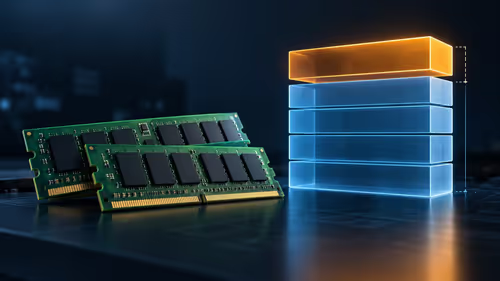
Windows hardware reserved RAM is different from memory used by applications. Compare installed memory with firmware detection and the usable amount before buying modules. Reservations and reporting limits vary by system; no universal setting restores every byte.

Windows title bar window shake can minimise other open windows when you shake the active window by its title bar. Inspect the Multitasking setting and switch it off if that gesture interrupts your work. The preference costs R0 and does not require new hardware.

Windows Print Screen opens Snipping Tool when its keyboard preference is enabled. Change the option under Accessibility, Keyboard to choose another workflow. Test whether you need a clipboard image or a saved file.

Windows desktop icons missing may be a visibility setting. Right-click the desktop, choose View and inspect Show desktop icons. If only system icons are absent, use Desktop icon settings. Check the Desktop folder before assuming files were deleted.

Windows set time zone automatically greyed out calls for a location and device-policy check. Automatic time-zone selection relies on location services. A manual time-zone choice is separate from synchronising the clock; check both before replacing hardware.