

Complete Guide: Setting Up Monitor Light
Setting Up Monitor Light. Tested & verified settings for best FPS and visual quality on SA hardware budgets.
Read moreStreaming setups face CPU bottlenecks. Discover where 💥 | Master high-performance gear for smoother streaming!
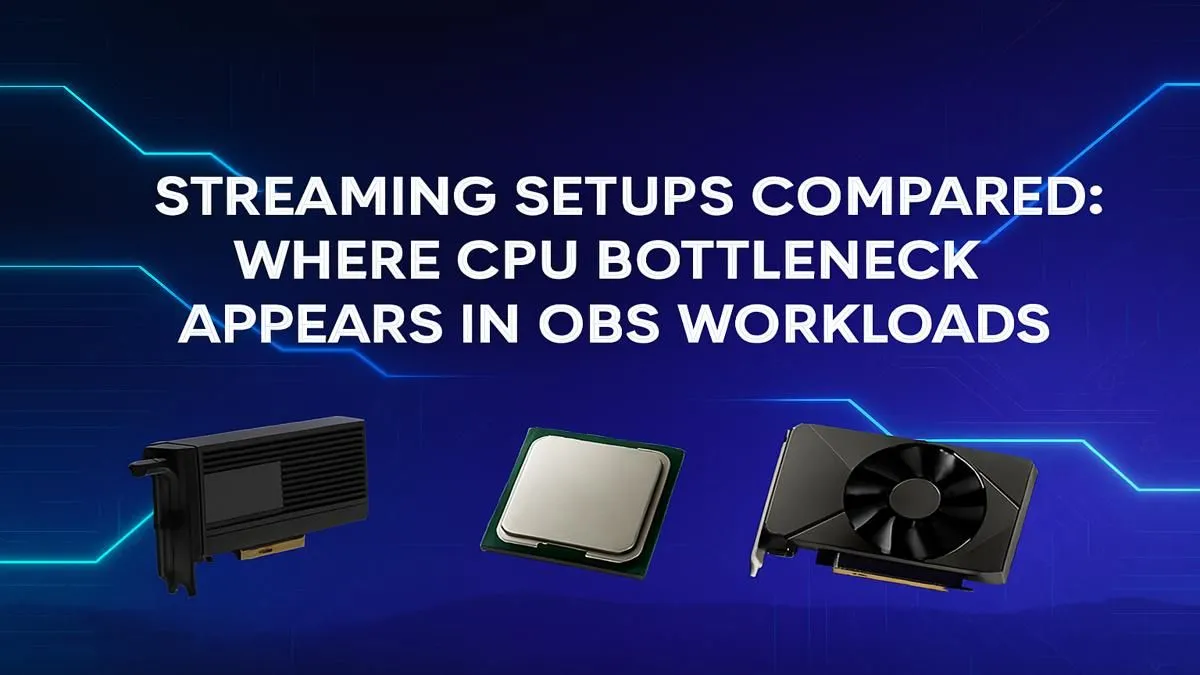
You’ve meticulously set up your stream. The overlays are crisp, the lighting is perfect, and your game is running like a dream… until you hit "Start Streaming" in OBS. Suddenly, your gameplay stutters, your stream drops frames, and your viewers see a slideshow. What gives? Chances are, you're facing a classic CPU bottleneck in your OBS streaming setup, a frustrating issue that plagues many South African creators. Let's break down why it happens and how to fix it.
Think of your CPU as the master conductor of your PC orchestra. It has to manage the game you're playing, your operating system, Discord, and everything else. When you start streaming using the popular x264 encoder in OBS, you give it another massive job: encoding your gameplay into a video format that can be sent to Twitch or YouTube.
A CPU bottleneck in an OBS streaming setup occurs when your processor simply doesn't have enough power to handle both gaming and encoding simultaneously. It becomes overwhelmed, and one (or both) of the tasks suffers. The result? Your game lags, your stream stutters, or both. It’s a performance traffic jam right inside your rig. ⚡
Not sure if your CPU is the problem? Your PC will give you some clear warning signs. If you're hitting these issues the moment you go live, it’s time to investigate a potential streaming CPU bottleneck.
A weak processor can make even the most powerful graphics card feel sluggish during a broadcast. Investing in one of the many powerful CPU processors available in South Africa is the most reliable long-term solution.
Before you rush out and spend your hard-earned Randelas, there are a few software tweaks you can try. However, these are often temporary fixes for a hardware limitation.
Settings > Output. Under the Streaming tab, find the CPU Usage Preset. It's likely on veryfast by default. Changing it to superfast or ultrafast reduces the load on your CPU, but it will slightly decrease the visual quality of your stream.In OBS, navigate to Settings > Advanced. Set the Process Priority to Above Normal. This tells Windows to give OBS more CPU resources than other background tasks, which can sometimes stabilise a struggling stream.
Software tweaks can only get you so far. If you've tried everything and still face an OBS CPU bottleneck, the undeniable solution is a hardware upgrade. Modern games and streaming demand more processing power, specifically more cores and threads.
Ultimately, a modern processor with at least 6 cores and 12 threads is the new sweet spot for a smooth, high-quality streaming experience in South Africa. It ensures your gaming isn't compromised and your audience gets the flawless broadcast they deserve.
Ready to End Your CPU Bottleneck for Good? Stop compromising between game performance and stream quality. Explore our massive range of CPUs to find the perfect heart for your rig. Shop now at Evetech for performance that leaves lag in the dust.
High render demands, excessive scenes, or outdated CPUs stress the processor during streaming.
Run OBS stress tests, benchmark with Core i7+ CPUs, or use hardware monitoring apps.
Intel i7/i9 and Ryzen 7/9 series offer smooth encoding under heavy OBS workloads.
Yes! Encoding struggles cause frame drops, lag, and poor bitrates during live streams.
Lower resolution, use hardware encoding (NVENC), and balance scene complexity.
A modern 6-core+ CPU, 16GB+ RAM, and GPU acceleration prevent performance drops.
Encoding adds load; strong CPUs are needed for smooth gameplay + stream performance.
Setting Up Monitor Light. Tested & verified settings for best FPS and visual quality on SA hardware budgets.
Read more
Assassins Creed Shadows Ultrawide Support: 21:9. Clear setup instructions with SA-specific considerations, troubleshooting tips & recommended components.
Read more
Complete Gaming Setup Guide for the Collector. Clear setup instructions with SA-specific considerations, troubleshooting tips & recommended components.
Read more
Will the Steam Deck 2 Have an OLED Screen? Leaked. Plain-English explanation of what it means, why it matters & how it affects your buying decisions in SA.
Read more
Setting Up Ultrawide 144Hz. Tested & verified settings for best FPS and visual quality on SA hardware budgets.
Read more
Kingdom Come: Deliverance 2 Ultrawide Support. Clear setup instructions with SA-specific considerations, troubleshooting tips & recommended components.
Read more
When Will the RTX 6090 Launch in South Africa Detailed answer with SA data, expert analysis & practical recommendations for local buyers.
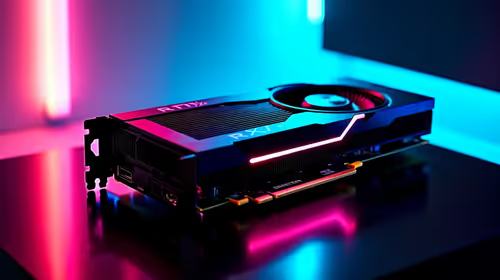
Top Valorant Settings for RTX 5070: FPS Optimisation picks evaluated on performance, value & SA availability with current Rand pricing from Evetech.
RDNA 3.5 Graphics in Ryzen AI 400? Can You Game. Plain-English explanation of what it means, why it matters & how it affects your buying decisions in SA.
GPU Price Index : December Report. Current stock data & price tracking for SA buyers. See what is available and where prices are heading.
Core i5-14600K + B760 + RTX 5060 Build Under. Full parts list, Rand pricing & expected performance. Build confidently with SA-available components.
RX 7600 Apex Legends at 4K: FPS Benchmark. Real-world benchmark data, FPS numbers & performance analysis. What SA gamers can actually expect.
RX 7900 XTX GTA 6 at 4K: FPS Benchmark & Optimal. Real-world benchmark data, FPS numbers & performance analysis. What SA gamers can actually expect.
Head-to-head comparison of RTX 5070 vs RX 9070 XT: Gaming Performance for SA gamers. Performance benchmarks, Rand pricing & which delivers better value.
Starfield Max Settings on RTX 5070. Tested & verified settings for best FPS and visual quality on SA hardware budgets.
Top RX 7800 XT Model Under R8,000 picks evaluated on performance, value & SA availability with current Rand pricing from Evetech.
RTX 5070 Valorant Optimised Settings: Graphics. Real-world benchmark data, FPS numbers & performance analysis. What SA gamers can actually expect.
Top Laptop with Core i7 + RX 7700S: Picks picks evaluated on performance, value & SA availability with current Rand pricing from Evetech.