

Humidity Damage to PC Components: Recovery Guide
Humidity Damage to PC Components: Recovery Guide. Everything you need to know with SA pricing, step-by-step instructions & expert recommendations.
Read moreNeed CPU cooling for a 125W–159W Intel Core Ultra 5 245K in South Africa? Here’s what to buy and why—air vs AIO, mounting, fan curves, and airflow. 🔧❄️ Stay cool under gaming and productivity.

Summer in South Africa is brutal on your gaming rig... especially when you're pushing next-gen hardware. If you just picked up the new Intel Core Ultra 5 245K, you already know it's an absolute beast for gaming and multitasking. But with its base power at 125W and turbo hitting a toasty 159W, keeping those temperatures down is absolutely crucial. Let's find the perfect thermal solution to prevent throttling.
The new architecture from Team Blue is highly efficient, but it still generates serious heat when under heavy load. When you browse the latest processors, you'll quickly notice that modern chips demand robust thermal management. The Ultra 5 245K sits in a unique sweet spot where a basic stock cooler simply won't cut it.
You need an aftermarket solution that can comfortably dissipate up to 159 watts of heat. If you skimp on cooling, your chip will downclock itself to prevent damage... meaning you lose out on the performance you paid for. South African ambient temperatures easily hit 30 degrees in summer, making a high-quality cooler a strict necessity rather than an optional luxury. ⚡
When hunting for the ideal thermal solution, you generally have two main paths: massive dual-tower air coolers or All-In-One (AIO) liquid coolers.
A premium dual-tower air cooler is incredibly reliable. For between R1,500 and R2,500, you can secure a chunky heatsink that handles 159W without breaking a sweat. However, if you want to keep your system whisper-quiet while pushing the limits of your new Intel CPU, a 240mm or 280mm AIO liquid cooler is the superior choice.
Liquid coolers take much longer to reach thermal equilibrium... meaning short bursts of heavy processing won't cause your fans to suddenly roar like a jet engine. Plus, an AIO adds a clean, premium aesthetic to your build. 🚀
When installing a 240mm AIO for your Ultra 5, mount the radiator at the top of your case as an exhaust. This prevents hot air from being dumped directly onto your graphics card, keeping your entire gaming rig running cooler during intense summer gaming sessions.
It's always smart to look at the broader market before finalising your build. If you're still deciding on your motherboard platform, you might be considering a high-performance AMD CPU instead. Team Red's top-tier chips also require serious cooling infrastructure.
For instance, if your budget allows you to step up to a flagship AMD Ryzen 9 processor, you'll almost certainly need a premium 360mm AIO to handle the intense thermal density of those cores. The exact same logic applies if you plan to upgrade within the Intel ecosystem later down the line. Moving from the Ultra 5 to an enthusiast-grade Intel Core Ultra 9 pushes your power draw well past the 250W mark.
Buying a high-capacity 280mm or 360mm cooler right now means you're future-proofing your rig. You spend a little extra ZAR today, but you save yourself the headache of replacing your cooler when you eventually upgrade your processor. ✨
Ready to Chill Your Next-Gen Build? Don't let thermal throttling ruin your gaming experience. Whether you prefer the rugged reliability of a massive air cooler or the sleek aesthetics of an AIO liquid loop, we have the hardware you need. Explore our massive range of CPU coolers and keep your rig running at peak performance.
For 159W sustained loads, choose a high-end air cooler or a 240mm to 360mm AIO, plus strong case airflow to keep temperatures controlled.
Yes, if you use a top-tier tower air cooler with good contact and airflow. For higher sustained workloads, an AIO often stays cooler.
A 280mm or 360mm AIO is usually the best match for 150W+ CPUs, especially in warm South African rooms where case temperatures rise.
Very. Even the best cooler can struggle with poor airflow. Use intake fans to feed the GPU and cooler, and exhaust fans to remove heat.
Follow the cooler manufacturer’s compatibility for the correct socket. A proper mount and quality thermal paste make a measurable difference.
Use an aggressive but stable curve: lower RPM at idle, rising quickly under load. Target consistent temps without excessive noise.
Higher ambient temperatures increase CPU temps. Prioritize more radiator capacity, stronger case airflow, and good thermal paste application.
Aim for stable load temps with headroom. If you see frequent thermal throttling, upgrade cooler size, improve airflow, or re-mount properly.
Humidity Damage to PC Components: Recovery Guide. Everything you need to know with SA pricing, step-by-step instructions & expert recommendations.
Read more
Gamer Spending Trends April : Complete Setups. Clear setup instructions with SA-specific considerations, troubleshooting tips & recommended components.
Read more
Setting Up DDR5 32GB Kit. Tested & verified settings for best FPS and visual quality on SA hardware budgets.
Read more
Tech Setup Guide for SPU Res Students. Clear setup instructions with SA-specific considerations, troubleshooting tips & recommended components.
Read more
Monster Hunter Wilds Ultrawide Support: 21:9 and. Clear setup instructions with SA-specific considerations, troubleshooting tips & recommended components.
Read more
Apple iPad Durability Guide: Cases, Screen. Practical breakdown of costs, regulations & whether it makes financial sense for SA buyers.
Read more
AMD RX 9050 XT: Rumoured Specs, Price & Release. SA-focused analysis with local pricing data, real-world insights & actionable buying advice.
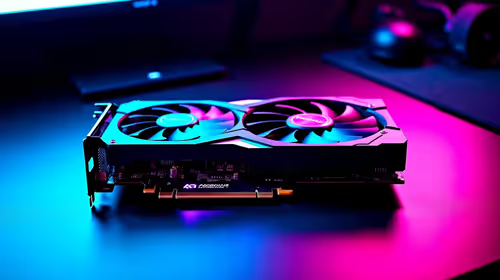
Can RTX 4080 Super Run AI Workloads for SA Developers Detailed answer with SA data, expert analysis & practical recommendations for local buyers.
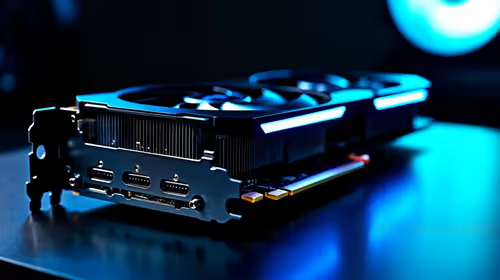
Can RTX 4090 Run AI Workloads for SA Developers Detailed answer with SA data, expert analysis & practical recommendations for local buyers.
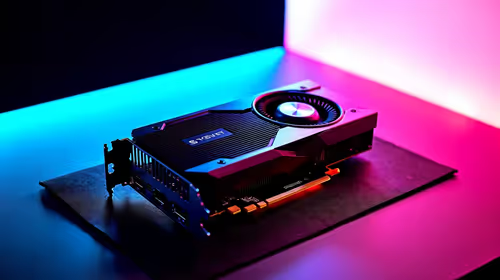
Top Settings for Intel Arc B580 at Ultrawide 1440p picks evaluated on performance, value & SA availability with current Rand pricing from Evetech.

RTX 4060 CS2 Low Settings at 1080p: FPS Results. Real-world benchmark data, FPS numbers & performance analysis. What SA gamers can actually expect.

Visual Artifacts: Possible GPU Issue Issue #1. Diagnosis steps, proven fixes & when to seek professional help. SA-specific support info included.
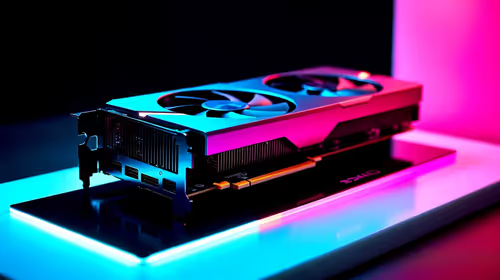
Can the RTX 4090 Handle 1440p 144Hz Gaming. Performance testing verdict with real data & practical recommendations for SA buyers.

Top ASUS GPU Under R15000 picks evaluated on performance, value & SA availability with current Rand pricing from Evetech.
GTA 6 Max Settings on RTX 5070. Tested & verified settings for best FPS and visual quality on SA hardware budgets.
Cyberpunk 2077 Max Settings on RTX 5080. Tested & verified settings for best FPS and visual quality on SA hardware budgets.
Starfield Max Settings on RTX 5070 Ti. Tested & verified settings for best FPS and visual quality on SA hardware budgets.
Top RTX 5090 Under R5000 picks evaluated on performance, value & SA availability with current Rand pricing from Evetech.