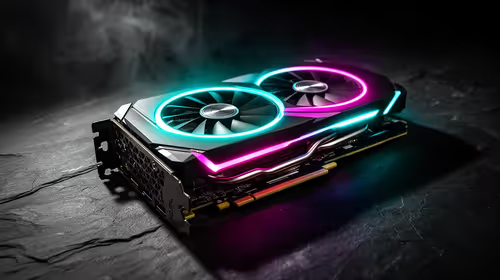
Ever fired up a new game only to feel like you are looking through a dirty camera lens? You have likely just spent thousands of Rands on a new GPU... yet the image looks fuzzy or distorted. We are talking about two of the most divisive settings in modern gaming. Whether you should disable film grain and chromatic aberration depends on your love for cinematic grit versus pure visual clarity.
What Are These Effects Doing to Your Graphics? 🔧
Film grain is a visual effect that adds a layer of moving noise over your image. It mimics the look of old-school celluloid film. Developers often use it to hide low-resolution textures or to create a gritty atmosphere. Chromatic aberration is a bit different. It simulates a lens defect where colours bleed at the edges of objects... typically appearing as purple or blue fringing.
While these effects are meant to make a game feel like a big-budget movie, they often frustrate players who want the sharpest image possible. If you have invested in high-performance graphics cards, seeing a blurry mess on your screen can feel like a step backward.
Why You Might Want to Disable Film Grain and Chromatic Aberration
The primary reason to turn these off is visual clarity. In competitive shooters, you need to spot enemies instantly. Film grain creates "noise" that can make it harder to see a distant player in a bush or a dark corner. Chromatic aberration can make the edges of the screen look blurry... which can lead to eye strain or even motion sickness for some South African gamers.
When you use premium hardware, such as MSI graphics cards, you want to see every pixel in its purest form. These settings often act as a filter that degrades the work your hardware is doing.
Visual Clarity Pro Tip ⚡
If you find a game looks too soft after turning off these effects, try using your GPU driver's sharpening tool. Both NVIDIA and AMD offer "Image Sharpening" or "Radeon Image Sharpening" in their control panels. Setting this to around 20% to 30% can bring back fine details without adding unwanted artifacts to your favourite titles.
The Impact on Performance and Fidelity 🚀
The good news is that these settings rarely impact your frame rate. They are post-processing effects that require very little power to run. Whether you are using the latest Intel Arc graphics cards or a budget-friendly setup, your FPS will likely stay the same regardless of these toggles.
However, the "perceived" performance is different. A cleaner image often feels smoother to the human eye. If you are working on creative projects, you might be using workstation graphics cards to render scenes. In a professional environment, these effects are usually added during the final edit... not baked into the raw output. Gamers are starting to adopt this same mindset.
Finding the Sweet Spot for Your Style ✨
Is there ever a reason to keep them on? In horror games like Resident Evil or atmospheric titles like Cyberpunk 2077, these effects can add to the "vibe". They help blend digital assets together... making the world feel more cohesive.
If you are rocking AMD Radeon graphics cards, you can use the software suite to create per-game profiles. You might choose to disable film grain and chromatic aberration in Call of Duty for an edge... but leave them on for a moody playthrough of a narrative adventure.
Ultimately, your PC is your domain. Most enthusiasts in the local community prefer to turn them off immediately. It allows the raw power of the hardware to shine through without any artificial "smudge" getting in the way of a 4K experience.
Ready to Find Your Perfect Match?
The debate over visual settings is personal, but having the right hardware to run them is essential. For maximum power, choice, and value in South Africa, our range of GPUs is hard to beat. Explore our massive range of graphics card specials and find the perfect component to conquer your world.