You've got a killer gaming rig and a work laptop, but only one glorious high-refresh-rate monitor. A DisplayPort switch seems like the perfect solution for managing it all, maybe even connecting a portable monitor for extra real estate. But then you notice it… a tiny, frustrating delay between your mouse movement and the action on screen. That, my friend, could be DisplayPort switch input lag, and it’s a real pain for any serious gamer in South Africa.
Understanding DisplayPort Switch Input Lag
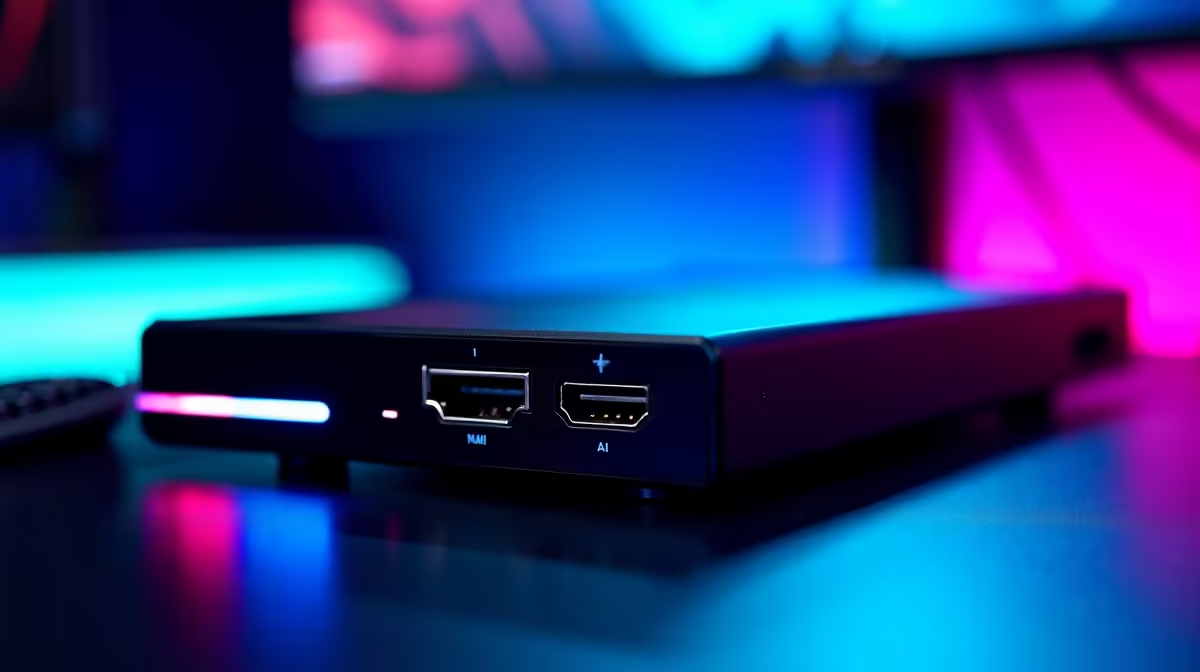
So, what’s actually happening inside that little box? A DisplayPort switch isn't just a simple splitter; it's an active device that has to process the video signal. Think of it as a tiny traffic cop for your pixels. Every frame sent from your GPU has to be received, briefly buffered, and then re-transmitted to your monitor. This process, while incredibly fast, is not instant.
This microscopic delay is the primary source of input lag from a DisplayPort switch. Several factors can make it worse:
- Signal Processing: Cheaper switches use slower chipsets, adding precious milliseconds to the signal path.
- Bandwidth Bottlenecks: A switch not rated for DisplayPort 1.4 can't handle the firehose of data from modern GPUs, especially when you're pushing pixels on demanding 5K and 4K monitors. This can cause signal compression or instability, which you'll feel as lag or stutter.
- Poor Cable Quality: Long or uncertified cables can weaken the signal, forcing the switch to work harder and potentially introduce errors.
Is Your DP Switch Really the Culprit? 🧐
Before you toss your switch in the bin, it's worth confirming it's the source of your woes. The easiest way is a simple A/B test. Play your favourite fast-paced game—like Apex Legends or Valorant—for a few minutes with your PC routed through the switch. Then, unplug it and connect your DisplayPort cable directly from your PC to your monitor.
Can you feel a difference? Is your aim suddenly snappier? If the connection feels more responsive, you've found the cause. For competitive players, even a few milliseconds of lag can be the difference between a win and a loss, making the raw performance of one of our top-tier gaming monitors absolutely crucial.
How to Fix Input Lag from a DisplayPort Switch 🔧
If your switch is adding noticeable latency, don't despair! You can take a few steps to minimise the problem and reclaim your competitive edge.
1. Invest in a High-Quality Switch
This is the single biggest factor. Look for a switch from a reputable brand that explicitly states support for your desired resolution, refresh rate, and DisplayPort version (DP 1.4 is the standard for modern gaming). It might cost a bit more, but the performance difference is night and day.
2. Use Short, Certified Cables
Signal integrity is key. Use the shortest possible VESA-certified DisplayPort cables on both sides of the switch. A 1-metre cable is almost always better than a 3-metre one. If your setup is feeling a bit tangled, you can find a great selection of high-quality cables in our monitor accessories section.
3. Ensure Proper Power
Many DP switches can draw power over USB, but it's often not enough for stable performance. If your switch came with a dedicated power adapter, use it! This ensures the internal electronics have enough juice to process the signal without faltering.
Check Your Specs! ⚡
Always match your switch to your monitor and GPU. A DisplayPort 1.2 switch will bottleneck a 144Hz 4K monitor that requires DP 1.4. Check the specs on the product page before you buy to ensure it supports the full bandwidth for your resolution and refresh rate, including features like G-Sync or FreeSync.
When It's Time for an Alternative
Sometimes, the best fix is to remove the problem entirely. A DisplayPort switch is a compromise between convenience and performance. For zero-compromise gaming, consider these alternatives:
- Use Your Monitor's Built-in Inputs: This is the best solution. Most modern displays have multiple inputs (e.g., 2x DisplayPort, 2x HDMI). Switching inputs using your monitor's on-screen menu is completely lag-free. In fact, many of the best PC monitor deals in South Africa feature displays with a generous number of ports.
- KVM Switches: A KVM (Keyboard, Video, Mouse) switch is a more advanced solution that also switches your peripherals. The same rules about quality and latency apply, but a high-end KVM is a fantastic tool for power users.
Ultimately, a direct connection eliminates the switch entirely, which is ideal whether you're using a massive curved monitor for immersion or a standard flat panel. For a full overview of what's possible, you can browse our entire collection of PC monitors. A little input lag might seem small, but in the heat of the moment, a direct connection is a clear advantage. ✨
Ready to Eliminate Lag for Good?
A DisplayPort switch is great for convenience, but for zero-compromise gaming, nothing beats a direct connection to a high-performance monitor. Explore our massive range of monitors and find the perfect screen to dominate your game.