

Humidity Damage to PC Components: Recovery Guide
Humidity Damage to PC Components: Recovery Guide. Everything you need to know with SA pricing, step-by-step instructions & expert recommendations.
Read moreDiscover the best practices for ergonomic power button placement to enhance user comfort and device accessibility. 🖥 Improve efficiency today!
Ever fumbled under your brand-new monitor, smudging the screen just to find the power button? You're not alone. Here in South Africa, we obsess over GPUs and CPUs but often overlook the small details. The truth is, ergonomic power button placement is a crucial, if unsung, hero of a great setup. It’s the difference between a seamless start to a gaming session and a frustrating fumble. This guide will show you why it matters. 🤔
Let's be honest, you probably don't think about your monitor's power button... until it annoys you. But its location impacts your daily user experience more than you'd think. An ideal power button placement is easy to reach without looking, doesn't get pressed by accident, and doesn't ruin the clean aesthetic of your battle station.
A poorly placed button can lead to accidentally shutting down your screen mid-match or smudging your panel with fingerprints. When you're browsing all the latest gaming monitors, considering the control scheme is just as important as the refresh rate.
Monitor manufacturers have tried a few different approaches over the years. Understanding the pros and cons of each type of power button placement will help you choose wisely.
These are the old-school, no-nonsense buttons on the front bezel.
This is the most common design today, with buttons tucked away on the underside of the frame.
Many premium screens, including a lot of high-resolution 4K and 5K monitors, now use a single multi-directional joystick on the back.
If you're running two or more screens, a rear-mounted joystick can be a pain to reach. Consider using a VESA mount or monitor arm to create a small gap between your displays. This gives you just enough space to reach the controls without hassle.
So, which one is for you? Your ideal power button placement depends entirely on your setup and preferences.
If you have a rig on the go, the button location on compact portable monitors is critical for quick setup and pack-down. For home setups, think about your desk layout. A monitor pushed against a wall might make a rear joystick awkward. Investing in quality monitor accessories like an adjustable arm can also make any button placement more ergonomic by bringing the screen to you. 🔧
Ultimately, the best way to know is to see them for yourself. When you browse Evetech's vast range of PC monitors, check the product images to see where the controls are. It’s a small detail that makes a world of difference to your daily comfort.
Find a Monitor That Just Works Ready to upgrade to a screen that gets the details right? Explore our incredible monitor specials and find the perfect fit for your setup and budget. Check out the best PC monitor deals at Evetech and make screen-smudging a thing of the past.
Mistakes include awkward angles, lack of tactile feedback, and ignoring accessibility standards. Follow ergonomic design principles for usability.
Proper placement reduces strain by aligning with natural hand movement. Optimal positioning improves accessibility for users with limited mobility.
ISO 9241 emphasizes user-centered design. Guidelines ensure physical controls meet ergonomic criteria for safety and efficiency.
Position for easy reach per accessibility guidelines. Consider height, angle, and tactile indicators for diverse user needs.
Yes, repetitive strain may occur from poor placement. Following ergonomic checklist criteria reduces injury risks and improves long-term comfort.
Tactile feedback confirms activation without over-exertion. This enhances user experience for physical controls and meets device button standards.
ISO 9241 mandates user-friendly interfaces, requiring buttons to meet accessibility and ease-of-use criteria during placement.
Use 3D modeling software and ergonomic checklists. Conduct user testing to evaluate adherence to device button standards.
Humidity Damage to PC Components: Recovery Guide. Everything you need to know with SA pricing, step-by-step instructions & expert recommendations.
Read more
Gamer Spending Trends April : Complete Setups. Clear setup instructions with SA-specific considerations, troubleshooting tips & recommended components.
Read more
Setting Up DDR5 32GB Kit. Tested & verified settings for best FPS and visual quality on SA hardware budgets.
Read more
Tech Setup Guide for SPU Res Students. Clear setup instructions with SA-specific considerations, troubleshooting tips & recommended components.
Read more
Monster Hunter Wilds Ultrawide Support: 21:9 and. Clear setup instructions with SA-specific considerations, troubleshooting tips & recommended components.
Read more
Apple iPad Durability Guide: Cases, Screen. Practical breakdown of costs, regulations & whether it makes financial sense for SA buyers.
Read more
AMD RX 9050 XT: Rumoured Specs, Price & Release. SA-focused analysis with local pricing data, real-world insights & actionable buying advice.
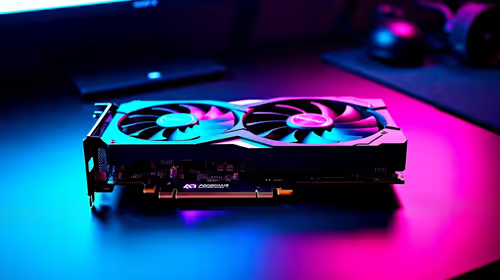
Can RTX 4080 Super Run AI Workloads for SA Developers Detailed answer with SA data, expert analysis & practical recommendations for local buyers.
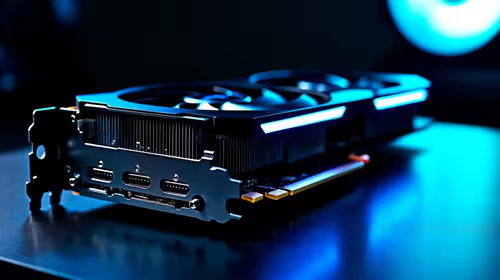
Can RTX 4090 Run AI Workloads for SA Developers Detailed answer with SA data, expert analysis & practical recommendations for local buyers.
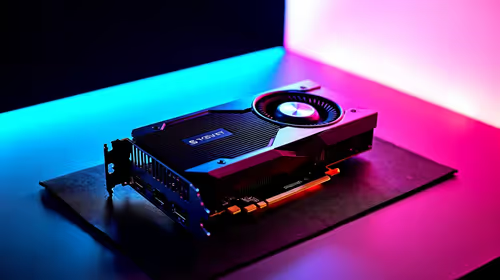
Top Settings for Intel Arc B580 at Ultrawide 1440p picks evaluated on performance, value & SA availability with current Rand pricing from Evetech.
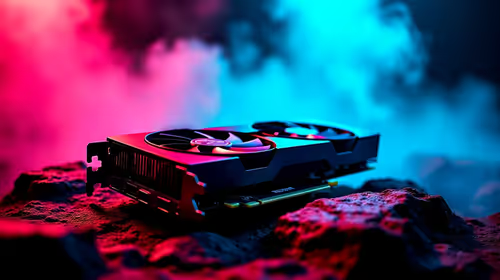
RTX 4060 CS2 Low Settings at 1080p: FPS Results. Real-world benchmark data, FPS numbers & performance analysis. What SA gamers can actually expect.
Visual Artifacts: Possible GPU Issue Issue #1. Diagnosis steps, proven fixes & when to seek professional help. SA-specific support info included.
Can the RTX 4090 Handle 1440p 144Hz Gaming. Performance testing verdict with real data & practical recommendations for SA buyers.
Top ASUS GPU Under R15000 picks evaluated on performance, value & SA availability with current Rand pricing from Evetech.
GTA 6 Max Settings on RTX 5070. Tested & verified settings for best FPS and visual quality on SA hardware budgets.
Cyberpunk 2077 Max Settings on RTX 5080. Tested & verified settings for best FPS and visual quality on SA hardware budgets.
Starfield Max Settings on RTX 5070 Ti. Tested & verified settings for best FPS and visual quality on SA hardware budgets.
Top RTX 5090 Under R5000 picks evaluated on performance, value & SA availability with current Rand pricing from Evetech.