Most home offices in South Africa were assembled in a hurry: a kitchen chair, a laptop flat on the table, a monitor borrowed from somewhere. It works for a week and then your neck, wrists, and lower back start sending the bill. A proper ergonomic WFH setup is not about luxury, it is about positioning every piece of hardware so your body stays neutral through an eight-hour day. This guide walks through each category, with local pricing context, so you can build it up sensibly.
Quick Answer
The ergonomic target is simple: the top of your screen should be level with your eyes, your forearms held horizontal with elbows bent near 90 degrees, and your feet flat. Everything that follows, the chair, the desk, the monitor arm, the riser, exists to hit that posture. You can reach it in stages rather than buying it all at once.
The Posture Standard Everything Serves
Before any product, fix the geometry. Your eyes should land on the top third of the screen when looking straight ahead, so you are not craning down or tilting your head back. Your upper arms hang relaxed at your sides, forearms level, keeping the wrists neutral and flat rather than angled upward or downward. Your thighs sit roughly parallel to the floor with feet supported.
Every item below is just a tool for holding one of those angles in place. Once you see the setup this way, you stop buying gadgets and start solving specific posture problems.
The Chair Comes First
If you spend on one thing, spend here. A good ergonomic chair supports the natural curve of your lower back, adjusts in height so your feet rest flat, and lets you set the armrests so your shoulders relax rather than hunch.
What To Look For
Prioritise adjustable seat height, lumbar support that meets the small of your back, and armrests you can move to keep elbows near 90 degrees. A seat depth that leaves a few fingers of space behind your knees prevents pressure on the back of your legs. Breathable material helps through a Cape Town summer or a Joburg afternoon. You can compare desks and ergonomic workspace furniture across the gaming and standing desk range at Evetech, which pairs naturally with a proper monitor arm and well-set screen height.
The Desk And Getting Height Right
A desk that is too high forces your shoulders up; too low and you slump. The ideal surface lets your forearms rest level when your chair is set correctly. A standing desk that raises and lowers solves this for households where more than one person uses the same workspace, and it lets you alternate between sitting and standing to break up the day.
If a height-adjustable desk is not on the cards yet, a fixed desk at the right height plus a good chair still gets you most of the way. The point is matching desk and chair so your elbows land at the correct angle.
Lifting The Screen To Eye Level
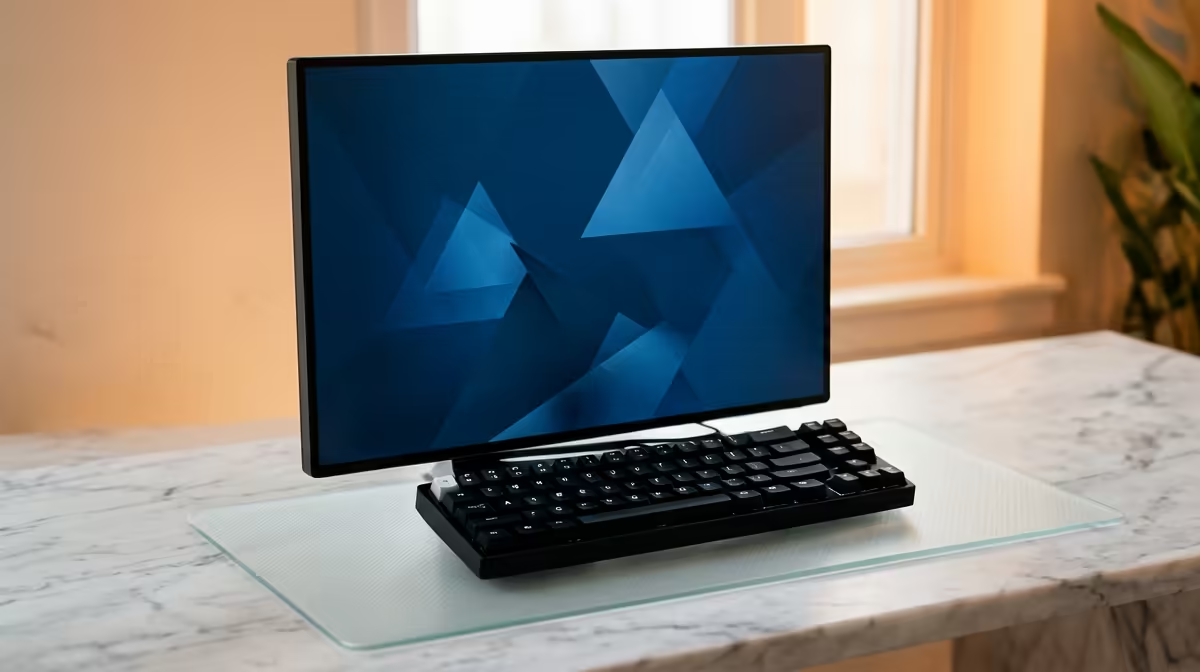
This is the most common mistake and the cheapest to fix. A laptop on the desk pulls your head down all day. Raise the screen until its upper edge aligns with your natural line of sight.
Monitor Arms Versus Risers
A monitor arm clamps to the desk and frees the surface beneath while letting you set exact height, tilt, and distance, ideal for a fixed monitor. A simple riser or stand is the budget route and works well for a single screen or a laptop. If you work mostly on a laptop, pair a riser with an external keyboard and mouse so the screen goes up while your hands stay at the right level. That keyboard-and-mouse split is the unlock that makes laptop ergonomics actually possible.
Wrists, Keyboard And Mouse
With the screen lifted, your input devices set wrist health. Keep wrists straight and neutral. An external keyboard positioned so your elbows stay near 90 degrees, a mouse that fits your hand without forcing a claw grip, and a wrist rest level with the keyboard all reduce strain over a full day. These are small purchases that pay back fast in comfort.
Lighting And Cable Management
Good lighting cuts eye fatigue: aim for even ambient light plus a task lamp positioned to avoid glare on the screen. Tidy cabling is not just neatness, loose cables snag, tangle, and make height adjustments a hassle. A few clips, a tray, or sleeves keep the desk usable and let a standing desk move freely.
Building It In Stages
You do not need everything on day one. A sensible order for most people: chair first, then lift the screen with an arm or riser plus an external keyboard and mouse, then improve the desk, then sort lighting and cables. Spreading it out keeps it affordable while fixing the worst posture problems first. To gauge what other local buyers prioritise and what represents good value, the best-selling desk accessories and workspace gear at Evetech is a useful starting reference.
Frequently Asked Questions
What is the single most important ergonomic upgrade?
A properly adjustable chair. It sets the foundation for correct posture, supports your lower back, and lets you position your feet and arms correctly. Everything else builds on getting the chair right first.
How high should my monitor be?
The display should be raised until its top edge aligns with your eyes when you look straight ahead, so your gaze falls naturally on the upper third without straining your neck. Use an arm or riser to reach that height.
Do I really need an external keyboard with a laptop?
Yes, if you use a laptop for long hours. Raising the laptop screen to eye level puts its built-in keyboard too high for your hands. An external keyboard and mouse let you fix the screen height and the wrist angle at the same time.
Is a standing desk worth it?
It can be, especially in a shared workspace or if you want to alternate between sitting and standing. If budget is tight, a correctly sized fixed desk plus a good chair delivers most of the ergonomic benefit.
How do I reduce eye strain working from home?
Combine even ambient lighting with a glare-free task lamp, keep the screen at eye level and an arm's length away, and take regular short breaks to look at something further off. Good lighting and screen placement do most of the work.