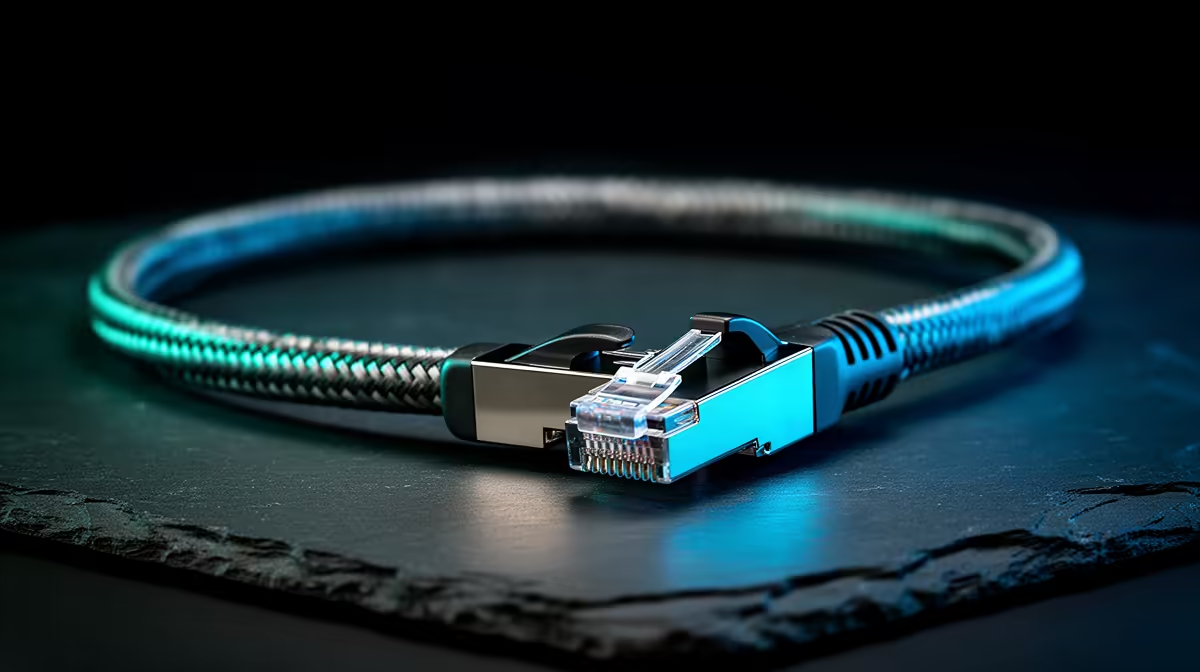
You’ve got the fastest fibre line in your complex, a beast of a gaming rig, and a top-tier router... so why does your ping still spike during a crucial clutch in Valorant? The culprit might be the one component everyone overlooks: your Ethernet cable. Choosing the right one isn't just about plugging something in. It's about unlocking the full speed you're already paying for. This guide on Ethernet cable types explained will help you make the perfect choice. ⚡
Understanding the Ethernet Cable Alphabet Soup
Before we dive into the numbers, let's get the basics straight. When you look at Ethernet cable types, you'll see terms like "Cat 6" or "Cat 5e". The "Cat" simply stands for "Category". A higher number generally means faster speeds and better protection against interference.
Most cables you'll encounter are UTP (Unshielded Twisted Pair), which is perfectly fine for home use. Others are STP (Shielded Twisted Pair), offering extra protection in environments with a lot of electrical noise... think running cables alongside power lines or near heavy machinery. For most gaming setups, UTP is all you need.
A Breakdown of Common Ethernet Cable Categories
Navigating the different categories is the most important part of learning how to choose an Ethernet cable. Each one is built for a specific level of performance.
### Cat 5e: The Old Faithful
This was the standard for years and can handle speeds up to 1 Gigabit per second (Gbps). If you have an internet plan under 1 Gbps and aren't transferring massive files across your home network, a Cat 5e cable will still do the job. It's the budget-friendly option, but it's starting to show its age.
### Cat 6: The Gamer's Sweet Spot 🎮
Here’s the new gold standard for most South African homes. Cat 6 supports up to 10 Gbps over shorter distances (up to 55 metres), which is more than enough for any home network. It offers better protection against crosstalk and interference than Cat 5e, resulting in a more stable, reliable connection for gaming and streaming. It's the perfect balance of price and performance, with brands like GIZZU offering a fantastic range of reliable cables.
### Cat 6a: The Future-Proof Investment
"A" stands for "Augmented". Cat 6a handles a full 10 Gbps connection over the entire 100-metre maximum length. These cables are thicker and less flexible due to enhanced shielding, making them a solid investment if you're wiring up a new house or want to ensure your network is ready for the next decade of internet speeds. You can find professional-grade options from HP that are built to last.
Check Your Current Cable! 🔧
Unplug your Ethernet cable and look closely at the text printed on the sheath. It will say something like "CAT 6 UTP" or "CATEGORY 5e". This is the quickest way to see if your current cable is a bottleneck.
How to Choose the Right Ethernet Cable for Your Setup
So, which one is for you? It boils down to three simple questions.
- What's your internet speed? If you're on a 100 Mbps line, a Cat 5e is technically fine. But for 200 Mbps and above, a Cat 6 is a no-brainer to get the stability and speed you pay for.
- What's your network usage like? Do you have a home server or NAS? Do you transfer huge video files between PCs? A Cat 6 or 6a will make those local transfers fly.
- What's the environment? For a simple 2-metre connection from your router to your PC, any decent cable will do. For longer runs through walls or near other electronics, a better-shielded, higher-category cable ensures a clean signal. Brands like Promate offer a variety of lengths and colours to fit any setup perfectly.
Ultimately, understanding the different Ethernet cable types empowers you to eliminate one of the most common, yet overlooked, sources of lag. For a small investment, you can ensure your connection is as fast and stable as possible. 🚀
Ready to Banish Lag for Good? Don't let an old cable sabotage your gaming. Explore our massive selection of high-performance Ethernet cables and give your connection the upgrade it deserves. Shop our comprehensive cable solutions at Evetech for performance that leaves lag in the dust.