

GTA 6 Max Settings on RTX 5070: Complete Guide
GTA 6 Max Settings on RTX 5070. Tested & verified settings for best FPS and visual quality on SA hardware budgets.
Read moreDiscover if fanless laptops outperform actively cooled ones in noise levels 🎯. Learn how to balance performance and silence for optimal computing.
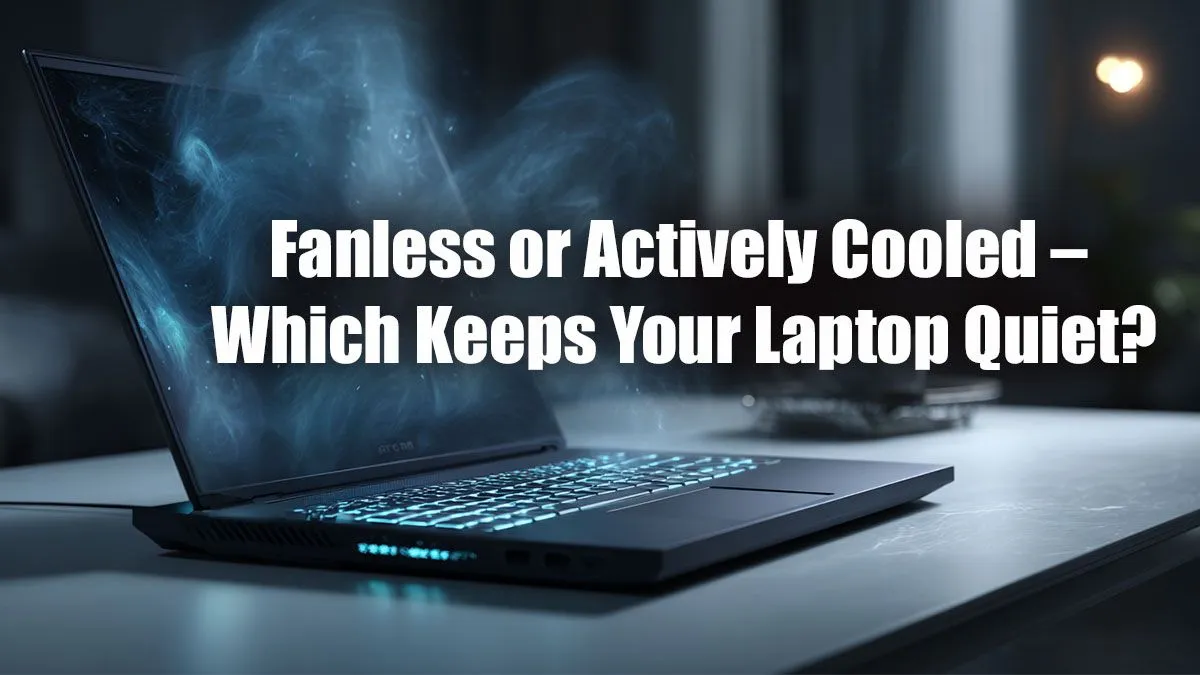
Picture this: it’s 2 AM, the house is dead quiet, and you’re finally in the zone... until your laptop’s fans spin up, sounding like a tiny jet engine getting ready for takeoff. We’ve all been there. It’s the classic battle in portable tech: fanless laptops vs actively cooled systems. But when it comes to pure silence, which one truly wins? And what performance trade-offs are you making for that peace and quiet here in South Africa? 🤫
When we talk about an actively cooled laptop, we're referring to the traditional design that uses fans to push hot air away from critical components like the CPU and GPU. A system of heat pipes draws thermal energy to a heat sink, and one or more fans then blast cool air over its fins to dissipate the heat. It’s a tried-and-tested method for keeping high-performance hardware from throttling (slowing down).
This approach is essential for machines built for heavy lifting. If you’re diving into the latest AAA titles or editing 4K video, the heat generated demands active cooling. It's the only way to sustain peak performance, which is why you'll find it in virtually all top-tier gaming laptops. The trade-off? That fan noise when your system is under load.
A fanless laptop, as the name suggests, has zero fans. So, how does it stay cool? Through passive cooling. Engineers design the laptop’s chassis itself to act as a giant heat sink. Heat from the processor is spread across a larger surface area, often using advanced materials like vapour chambers or graphite sheets, and then radiates away into the air. 💨
The main advantage is blissful silence. With no moving parts, the only sounds you’ll hear are your own keystrokes. This makes them perfect for quiet environments like libraries, lecture halls, or a home office during a late-night work session. Thanks to major efficiency gains, many modern Intel laptops designed for portability and all-day battery life now use this silent, fanless architecture.
When considering a fanless laptop, pay close attention to the processor. Chips like Intel's Core i3 i5 U-series or Apple's M-series silicon are incredibly efficient, delivering snappy performance for everyday tasks without generating enough heat to need a fan.
So, which is quieter? In a direct comparison, the fanless laptop wins on silence every single time. It produces 0dB of noise from its cooling system because... well, it doesn't have one.
However, the story for an actively cooled laptop is more nuanced. During light tasks like browsing or writing an email, a well-designed machine can be virtually silent, with its fans completely switched off. The noise only becomes a factor when you push the hardware. A modern gaming rig might idle at a barely audible 25dB but ramp up to 45-55dB during an intense Warzone match. While many powerful AMD laptops have sophisticated cooling that keeps noise low, they can't compete with the absolute silence of a fanless design.
The choice between a fanless vs fan-cooled laptop comes down to your primary use case.
Ultimately, the quietest laptop is the one that best fits your workflow. There's no point having a silent machine that can't run your essential software.
Find Your Perfect Match at Evetech Whether you crave absolute silence or demand maximum power, the right machine is waiting for you. Explore our massive range of laptop specials for sale in South Africa and get the performance you need at a price you'll love.
Fanless laptops offer silent operation and reduced dust accumulation, ideal for quiet environments.
Yes, actively cooled laptops can produce noise from fans, especially under heavy workloads.
Actively cooled laptops are better for gaming due to superior thermal management for high performance.
Reduces mechanical failure risks with passive cooling but may throttle performance under load.
They use passive cooling systems like heat sinks to dissipate heat without noisy fans.
Even quiet laptops may throttle performance in high temperatures to prevent overheating.
Look for fanless designs or laptops with advanced active cooling and solid-state fans.
GTA 6 Max Settings on RTX 5070. Tested & verified settings for best FPS and visual quality on SA hardware budgets.
Read more
Cyberpunk 2077 Max Settings on RTX 5080. Tested & verified settings for best FPS and visual quality on SA hardware budgets.
Read more
Starfield Max Settings on RTX 5070 Ti. Tested & verified settings for best FPS and visual quality on SA hardware budgets.
Read more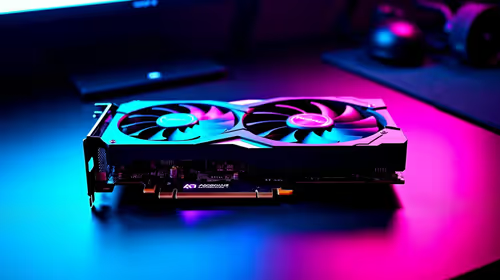
Can RTX 4080 Super Run AI Workloads for SA Developers Detailed answer with SA data, expert analysis & practical recommendations for local buyers.
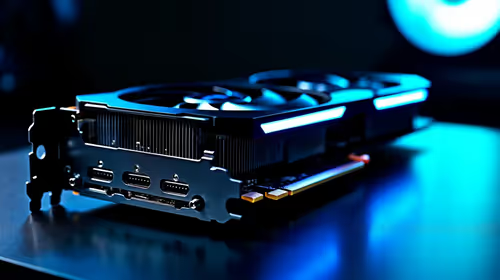
Can RTX 4090 Run AI Workloads for SA Developers Detailed answer with SA data, expert analysis & practical recommendations for local buyers.
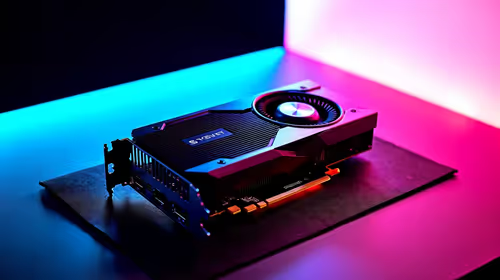
Top Settings for Intel Arc B580 at Ultrawide 1440p picks evaluated on performance, value & SA availability with current Rand pricing from Evetech.
RX 7600 Overclocking Guide: Safe OC Settings for. Real-world benchmark data, FPS numbers & performance analysis. What SA gamers can actually expect.

RTX 4060 CS2 Low Settings at 1080p: FPS Results. Real-world benchmark data, FPS numbers & performance analysis. What SA gamers can actually expect.

Visual Artifacts: Possible GPU Issue Issue #1. Diagnosis steps, proven fixes & when to seek professional help. SA-specific support info included.
Can the RTX 4090 Handle 1440p 144Hz Gaming. Performance testing verdict with real data & practical recommendations for SA buyers.

Top ASUS GPU Under R15000 picks evaluated on performance, value & SA availability with current Rand pricing from Evetech.
GTA 6 Max Settings on RTX 5070. Tested & verified settings for best FPS and visual quality on SA hardware budgets.
Cyberpunk 2077 Max Settings on RTX 5080. Tested & verified settings for best FPS and visual quality on SA hardware budgets.
Starfield Max Settings on RTX 5070 Ti. Tested & verified settings for best FPS and visual quality on SA hardware budgets.
Top RTX 5090 Under R5000 picks evaluated on performance, value & SA availability with current Rand pricing from Evetech.