

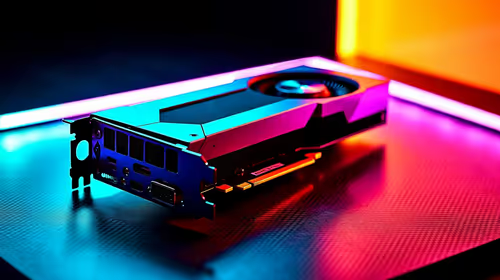
GTA 6 Max Settings on RTX 5070: Complete Guide
GTA 6 Max Settings on RTX 5070. Tested & verified settings for best FPS and visual quality on SA hardware budgets.
Read moreDeciding on fibre vs wireless South Africa can be tough. 🧐 This guide breaks down the key differences in speed, reliability, cost, and latency to help you choose the perfect high-speed internet for your home, gaming, or work needs. Find out which connection reigns supreme! ⚡
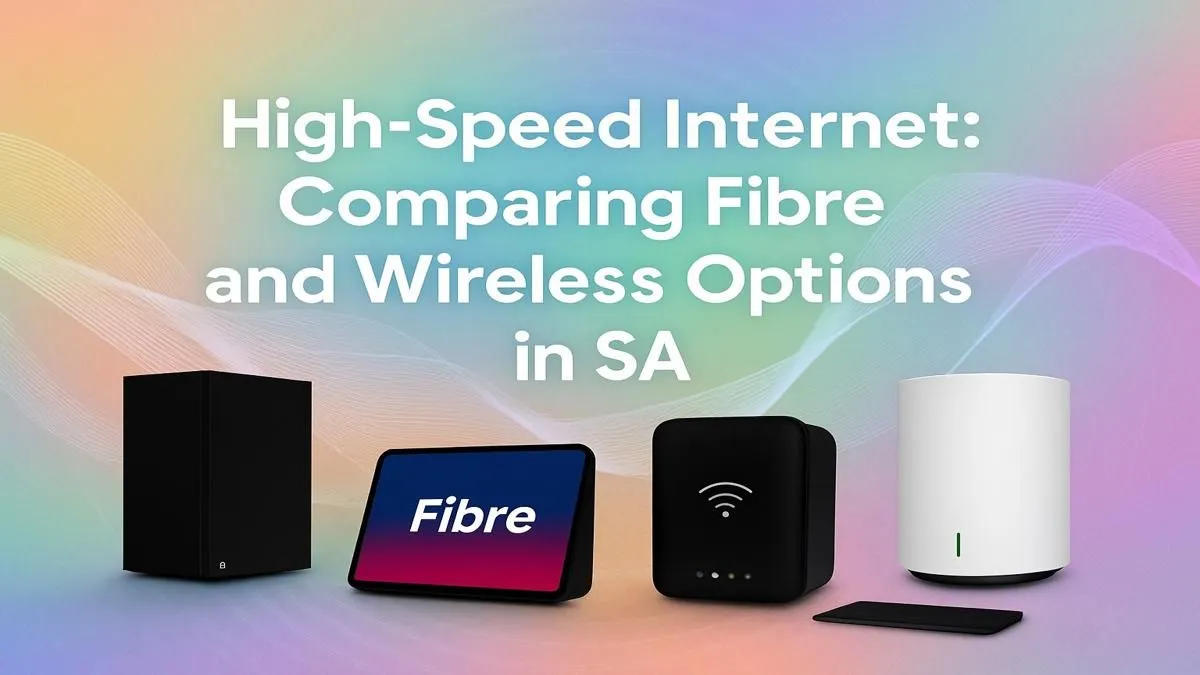
Staring at a buffering icon while your squad gets wiped? We've all been there. In South Africa, choosing the right high-speed internet can feel like a boss battle. The big question for every gamer, streamer, and work-from-home warrior is: Fibre vs Wireless? Getting this choice right means the difference between glorious victory and frustrating lag. Let’s break down which connection is best for your setup. ⚡
Fibre optic internet is the current king of speed. It works by sending data as pulses of light through incredibly thin glass cables. Think of it as a dedicated, private highway for your data, immune to most of the issues that plague older connection types.
For South African gamers, this means two things: blistering download speeds for those massive game updates and, more importantly, incredibly low latency.
Wireless internet, including LTE, 5G, and Fixed Wireless, beams the internet to your home through the air. It’s the go-to solution when fibre cables haven't reached your neighbourhood yet, providing a vital high-speed link for millions of South Africans.
To get the most out of any connection, you need the right gear. A weak router can bottleneck even the fastest internet, so investing in one of today's powerful wireless routers is essential for stable Wi-Fi throughout your home.
So, for the things that truly matter to a PC enthusiast, how do they stack up head-to-head? The debate over Fibre vs Wireless in South Africa often comes down to these key factors.
Don't just trust your ISP's advertised speeds. Use a local service like Speedtest by Ookla to check your actual download speed, upload speed, and ping. Run the test at different times of the day to see if your connection suffers during peak hours (usually evenings). This data is gold when troubleshooting lag.
The best connection for you really depends on your specific needs and, crucially, your location in South Africa.
You're a competitive gamer, a content creator, or live in a household with multiple heavy users streaming 4K content. The low latency and raw speed are unbeatable for performance-critical tasks. If fibre is available in your area, it's almost always the superior choice.
Fibre isn't an option at your address, or you need an internet connection set up quickly without waiting weeks for installers. Even on a wireless connection, you can create a robust home network. If your signal struggles to reach your gaming setup, wireless range extenders can eliminate those frustrating dead zones. And for a desktop PC without a built-in Wi-Fi card, high-quality wireless adapters will ensure you get the strongest possible connection from your router.
Ultimately, the Fibre vs Wireless debate is about matching the technology to your needs. Fibre offers raw, unmatched performance, while wireless provides essential flexibility and coverage. Whichever you land on, ensuring your home networking gear is up to the task is the final piece of the puzzle.
Ready to Optimise Your Connection? Whether you choose fibre or wireless, a powerful home network is non-negotiable for a lag-free experience. Explore our complete range of wireless networking gear and make sure your hardware isn't the bottleneck.
For most urban users, fibre is better than wireless due to its superior speed, lower latency, and higher reliability, making it ideal for gaming and streaming.
The main disadvantage of fibre is its limited availability. Installation requires physical cables to be laid, so it's not accessible in all areas, especially rural ones.
Yes, modern wireless options like 5G and LTE-A can be fast enough for gaming. However, latency (ping) can be less consistent than with a stable fibre connection.
Initially, fibre installation can be more expensive, but monthly plans are often more competitive for higher speeds. Wireless can have lower setup costs but may be pricier per GB.
For rural areas without fibre coverage, fixed wireless, LTE, and satellite internet are the primary options, offering a crucial connection where wired infrastructure is absent.
Fibre optic internet is underground and immune to weather. Wireless signals, especially satellite and fixed wireless, can be affected by heavy rain, fog, or storms.
GTA 6 Max Settings on RTX 5070. Tested & verified settings for best FPS and visual quality on SA hardware budgets.
Read more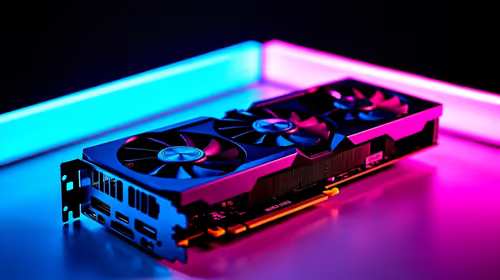
Cyberpunk 2077 Max Settings on RTX 5080. Tested & verified settings for best FPS and visual quality on SA hardware budgets.
Read more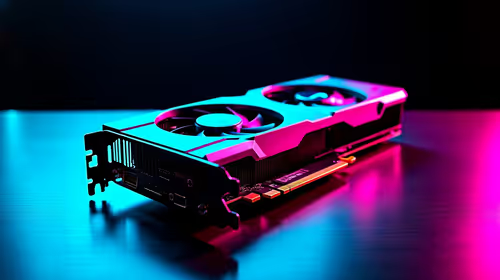
Starfield Max Settings on RTX 5070 Ti. Tested & verified settings for best FPS and visual quality on SA hardware budgets.
Read more
AMD RX 9050 XT: Rumoured Specs, Price & Release. SA-focused analysis with local pricing data, real-world insights & actionable buying advice.
Can RTX 4080 Super Run AI Workloads for SA Developers Detailed answer with SA data, expert analysis & practical recommendations for local buyers.
Can RTX 4090 Run AI Workloads for SA Developers Detailed answer with SA data, expert analysis & practical recommendations for local buyers.
Top Settings for Intel Arc B580 at Ultrawide 1440p picks evaluated on performance, value & SA availability with current Rand pricing from Evetech.

RTX 4060 CS2 Low Settings at 1080p: FPS Results. Real-world benchmark data, FPS numbers & performance analysis. What SA gamers can actually expect.

Visual Artifacts: Possible GPU Issue Issue #1. Diagnosis steps, proven fixes & when to seek professional help. SA-specific support info included.
Can the RTX 4090 Handle 1440p 144Hz Gaming. Performance testing verdict with real data & practical recommendations for SA buyers.

Top ASUS GPU Under R15000 picks evaluated on performance, value & SA availability with current Rand pricing from Evetech.
GTA 6 Max Settings on RTX 5070. Tested & verified settings for best FPS and visual quality on SA hardware budgets.
Cyberpunk 2077 Max Settings on RTX 5080. Tested & verified settings for best FPS and visual quality on SA hardware budgets.
Starfield Max Settings on RTX 5070 Ti. Tested & verified settings for best FPS and visual quality on SA hardware budgets.
Top RTX 5090 Under R5000 picks evaluated on performance, value & SA availability with current Rand pricing from Evetech.