

GTA 6 Max Settings on RTX 5070: Complete Guide
GTA 6 Max Settings on RTX 5070. Tested & verified settings for best FPS and visual quality on SA hardware budgets.
Read moreBoost your trackpad responsiveness with our expert troubleshooting guide. 🖱️ Discover why refurbished pointing devices feel sluggish and how to fix it fast.
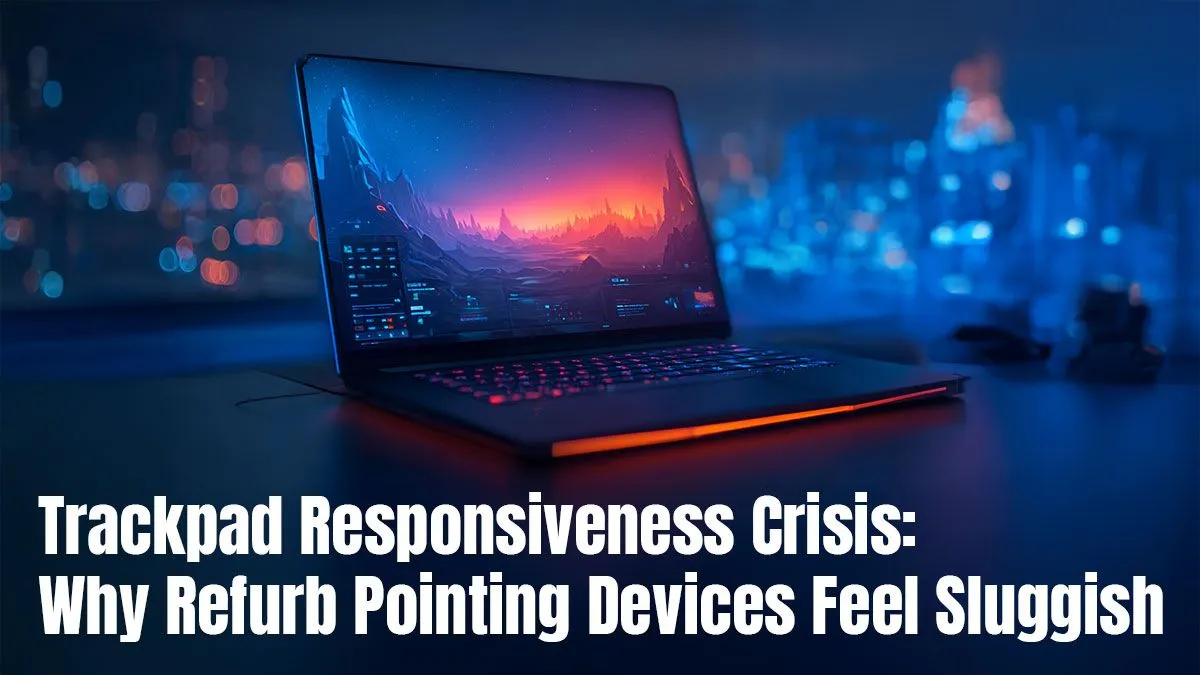
Staring down an opponent in a tight 1v1, only for your trackpad to ghost, stutter, or flat-out ignore you? It's a uniquely frustrating Mzansi gamer moment. Before you rage-quit, know this: you can often fix your trackpad responsiveness with a few simple tweaks. This guide will help you reclaim that snappy, precise control for everything from headshots to spreadsheets, getting you back in the game… faster. 🚀
Before you can fix the problem, you need to know the cause. A laggy trackpad usually boils down to one of three things: outdated software drivers, incorrect system settings, or plain old physical grime. Sometimes, it's a combination of all three. While the latest gaming laptops come with highly optimised, responsive trackpads out of the box, older devices can lose their edge over time. Understanding what's slowing you down is the first step to achieving faster control.
Most responsiveness woes can be solved right from your desktop, without spending a cent. These digital tune-ups are the quickest way to improve your trackpad’s performance. Let's dive in. ⚡
Windows has a surprising amount of control over your trackpad. A misconfigured setting is often the main culprit behind a frustrating experience.
Windows Key + I.Bluetooth & devices > Touchpad.Taps, set the sensitivity to ‘Most sensitive’ for a quicker reaction.Gestures & interaction, adjust the Cursor speed slider. Move it slightly to the right for a faster pointer, but don't overdo it, as this can harm accuracy.Disable the "Tap with a single finger to single-click" option if you find yourself accidentally clicking while moving the cursor. This forces a physical press, giving you more deliberate control during intense gaming sessions.
Your trackpad's driver is the software that lets it talk to your laptop's operating system. If it's outdated, communication breaks down, leading to lag and missed inputs. Windows Update often handles this, but a manual check is best for optimal performance. Whether you're running one of the slick new AMD laptops on special or a powerhouse from our range of Intel laptops on special, visiting the manufacturer's website for the latest touchpad driver can make a world of difference.
If software tweaks don't cut it, it's time to look at the hardware itself. Don't worry, you don't need a degree in engineering for this part.
First, give it a clean. Dust, skin oils, and crumbs can build up, interfering with the trackpad's sensors. Power down your laptop, then gently wipe the surface with a microfibre cloth slightly dampened with isopropyl alcohol. You'd be amazed what a difference this can make.
If your laptop is a few years old, the trackpad's hardware might simply be worn out. If it still feels sluggish after a thorough clean and software tune-up, it might be a sign that an upgrade is on the horizon. Thankfully, you don't have to break the bank for a massive improvement, with plenty of powerful gaming laptops under R20k available today.
Ready for Flawless Control? If you've tried everything and still can't fix your trackpad responsiveness, it might be time for an upgrade. Explore our best gaming laptop deals for performance that leaves lag in the dust.
Trackpad lag often stems from dirty sensors or outdated drivers. Clean the surface and update your OS for smoother performance.
Perform pointer speed tests to identify lag. Use diagnostic tools to detect driver issues or hardware limitations in refurbished devices.
Calibration apps and driver update utilities effectively resolve responsiveness issues. Specialized software optimizes refurbished pointing devices' performance.
High-quality refurbished trackpads maintain functionality when properly maintained. Regular cleaning preserves their responsiveness longevity.
Adjust pressure sensitivity settings in system preferences. Find your ideal balance between pointer control precision and speed for better usability.
Yes, update firmware and install optimized drivers to significantly improve trackpad performance and responsiveness across different operating systems.
GTA 6 Max Settings on RTX 5070. Tested & verified settings for best FPS and visual quality on SA hardware budgets.
Read more
Cyberpunk 2077 Max Settings on RTX 5080. Tested & verified settings for best FPS and visual quality on SA hardware budgets.
Read more
Starfield Max Settings on RTX 5070 Ti. Tested & verified settings for best FPS and visual quality on SA hardware budgets.
Read more
AMD RX 9050 XT: Rumoured Specs, Price & Release. SA-focused analysis with local pricing data, real-world insights & actionable buying advice.
Can RTX 4080 Super Run AI Workloads for SA Developers Detailed answer with SA data, expert analysis & practical recommendations for local buyers.
Can RTX 4090 Run AI Workloads for SA Developers Detailed answer with SA data, expert analysis & practical recommendations for local buyers.
Top Settings for Intel Arc B580 at Ultrawide 1440p picks evaluated on performance, value & SA availability with current Rand pricing from Evetech.
RTX 4060 CS2 Low Settings at 1080p: FPS Results. Real-world benchmark data, FPS numbers & performance analysis. What SA gamers can actually expect.
Visual Artifacts: Possible GPU Issue Issue #1. Diagnosis steps, proven fixes & when to seek professional help. SA-specific support info included.
Can the RTX 4090 Handle 1440p 144Hz Gaming. Performance testing verdict with real data & practical recommendations for SA buyers.
Top ASUS GPU Under R15000 picks evaluated on performance, value & SA availability with current Rand pricing from Evetech.
GTA 6 Max Settings on RTX 5070. Tested & verified settings for best FPS and visual quality on SA hardware budgets.
Cyberpunk 2077 Max Settings on RTX 5080. Tested & verified settings for best FPS and visual quality on SA hardware budgets.
Starfield Max Settings on RTX 5070 Ti. Tested & verified settings for best FPS and visual quality on SA hardware budgets.
Top RTX 5090 Under R5000 picks evaluated on performance, value & SA availability with current Rand pricing from Evetech.