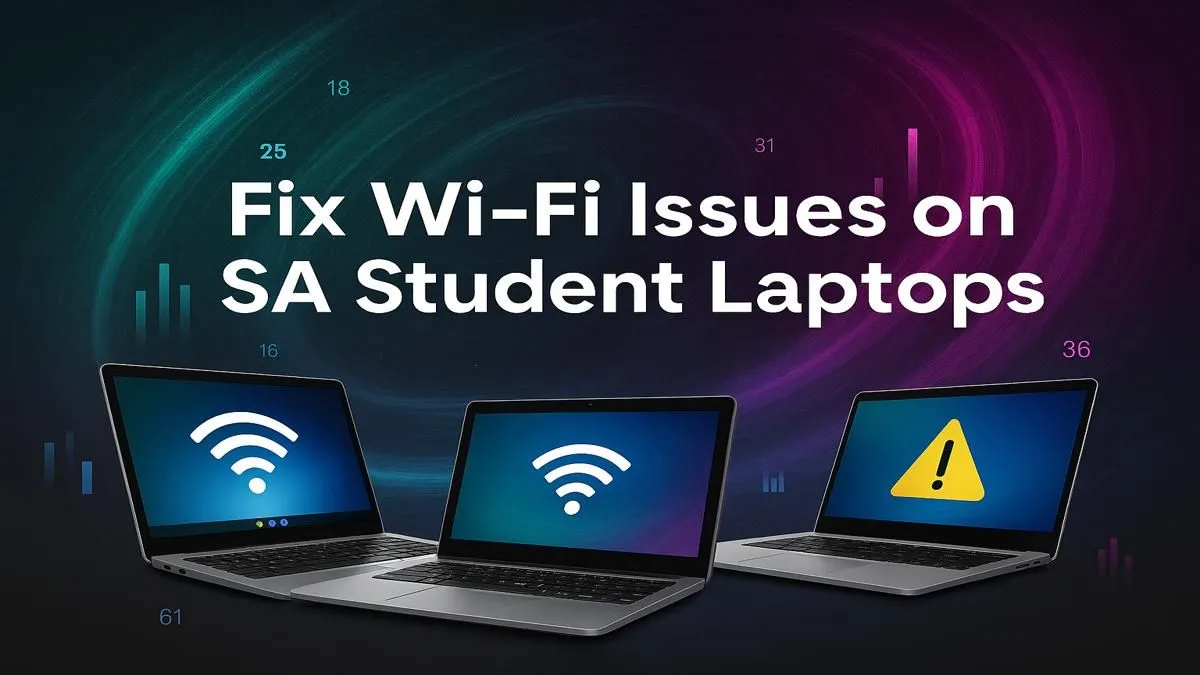
Loadshedding hits, the inverter kicks in, but your Wi-Fi still drops mid-lecture… or worse, mid-clutch in Valorant. Sound familiar? For South African students, a stable connection is non-negotiable, but campus or res Wi-Fi often feels like a gamble. Before you throw your laptop out the window, let’s run through some quick steps to fix Wi-Fi issues and get you back online fast. Your grades (and your K/D ratio) depend on it. 🚀
Is It Your Laptop or the Network? Quick Diagnostics
First, let's play detective. The biggest mistake is blaming your machine when the entire network is down. To troubleshoot your Wi-Fi problems effectively, you need to isolate the cause.
Start simple: check your phone or a roommate's device. Can they connect? If everyone is offline, the problem is likely the router or the internet service provider. But if it's just you, the fault probably lies with your laptop. This is where a modern machine can make a huge difference; many of our laptops with the latest Intel Wi-Fi tech feature Wi-Fi 6 capabilities, which drastically improve connection stability in crowded network environments like a student residence.
Quick Fixes for Common Wi-Fi Problems
Before digging into complex settings, let's try the easy wins. These solutions fix a surprising number of common Wi-Fi issues.
1. The Classic Reboot 🔧
It's a cliché for a reason. Restarting your laptop and your router (if you have access to it) clears temporary glitches and memory leaks that can slow your connection. Unplug your router for 30 seconds, plug it back in, and then restart your laptop. This simple step can often fix a stubborn Wi-Fi connection.
2. Update Your Network Drivers
Outdated drivers are a primary cause of slow Wi-Fi. Your laptop’s Wi-Fi adapter needs the latest software to talk to the router properly.
- Press the Windows Key and type "Device Manager".
- Expand the "Network adapters" section.
- Right-click your Wi-Fi adapter (it usually has "Wireless" or "Wi-Fi" in the name) and select "Update driver".
A powerful machine can process these tasks seamlessly in the background, ensuring your game or stream never stutters. Many powerful AMD laptops are optimised for exactly this kind of multitasking.
Pro DNS Tip ⚡
If your internet feels sluggish even with a strong signal, try changing your DNS server. Switch to Google's (8.8.8.8) or Cloudflare's (1.1.1.1) DNS in your network settings. This can sometimes speed up how quickly websites start to load.
Could Your Old Laptop Be the Real Culprit?
You've tried everything… but the Wi-Fi still crawls. What now? It might be time to admit that your hardware is the bottleneck. An older laptop with an ancient Wi-Fi card (like Wi-Fi 4 or 5) simply can't keep up with today's fibre speeds or demanding online games. It struggles to hold a stable connection, especially when multiple devices are competing for bandwidth.
Imagine trying to download a massive assignment file or the latest Call of Duty update on a five-year-old machine. It takes forever. A new device with Wi-Fi 6 or 6E technology not only downloads faster but also provides lower latency—crucial for responsive gaming and lag-free video calls. If you suspect your hardware is holding you back, it might be time for an upgrade. Why not check out our latest gaming laptop deals and see the difference for yourself? ✨
Upgrade Your Connection, Upgrade Your Life
Stop fighting with buffering lectures and laggy games. A new laptop is an investment in your studies and your sanity, ensuring you have the speed and reliability you need to succeed. Find your perfect match in our laptop specials for performance that leaves bad Wi-Fi in the dust.