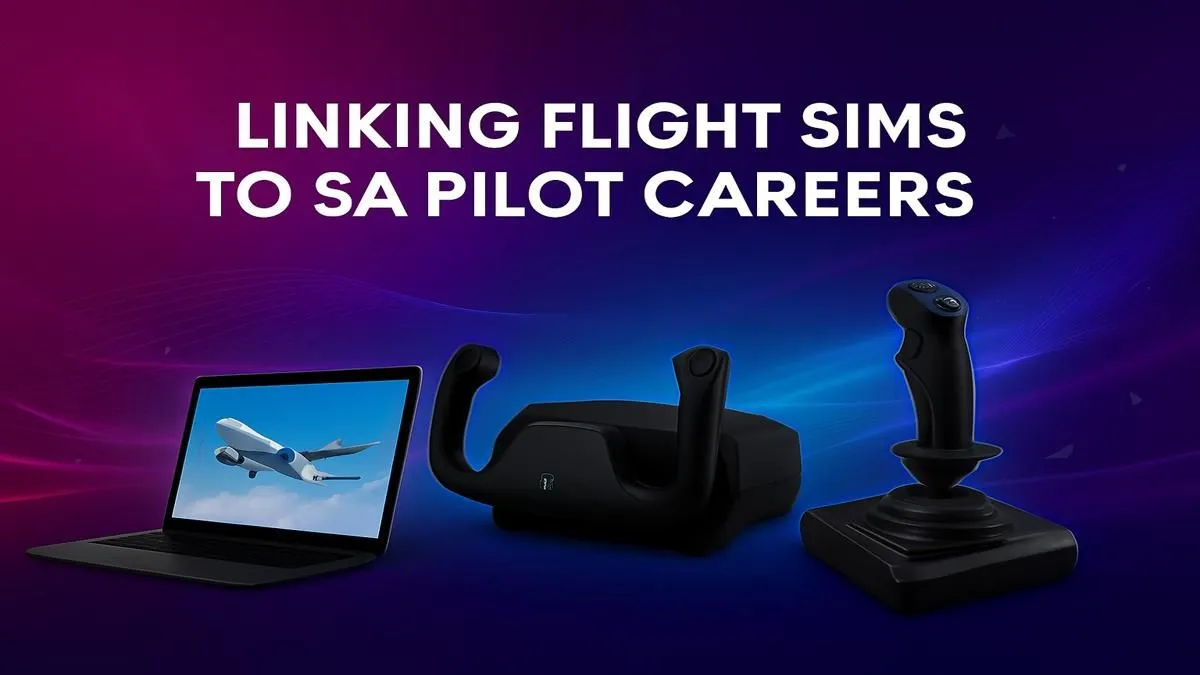
Ever looked up at a FlySafair Boeing 737 carving through the Highveld sky and felt a pull? The dream of becoming a pilot is powerful, but the path seems dauntingly expensive. What if you could start your journey right from your desk? Modern flight simulators are no longer just games… they are sophisticated tools that offer a real taste of the cockpit, making flight simulator training in South Africa a viable and affordable first step on your pilot career path. ✈️
Why Flight Simulator Training is Taking Off in South Africa
Let's be clear: a home simulator won't replace the hours you need with a certified instructor at a flight school. However, it's an incredibly powerful supplement that can save you a fortune in the long run. Think of it as your personal procedural trainer.
Before you even spend your first rand on actual airtime, a simulator helps you master the fundamentals that often consume costly initial lessons. You can practise:
- Aircraft Systems: Learning the function of every switch, dial, and display in a specific aircraft, like a Cessna 172.
- Checklists & Procedures: Committing pre-flight, take-off, and landing checklists to muscle memory.
- Instrument Flying (IFR): Navigating solely by reference to your instruments… a critical skill for any commercial pilot, which is incredibly difficult and expensive to learn from scratch in a real plane.
- Emergency Scenarios: Practising engine failures or electrical faults in a safe, repeatable environment.
Mastering these on the ground means your time in the air is spent on honing stick-and-rudder skills, not fumbling for the right switch. This approach to flight simulator training in South Africa is how you turn virtual hours into real-world progress.
Building Your Home Cockpit: The Essential Gear
Creating a setup that feels less like a game and more like a cockpit is key to effective training. Here’s what you need to get started.
The Brains of the Operation: The PC
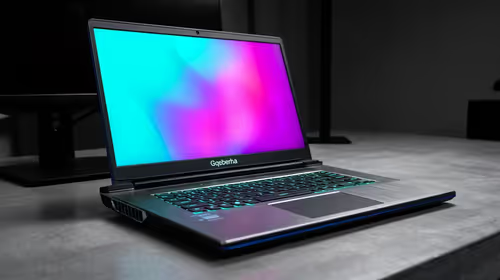
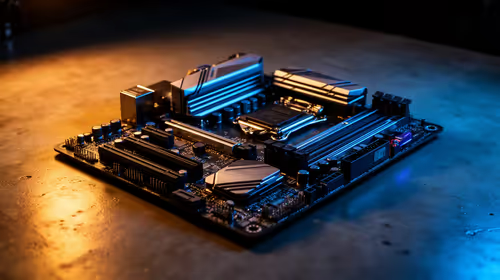
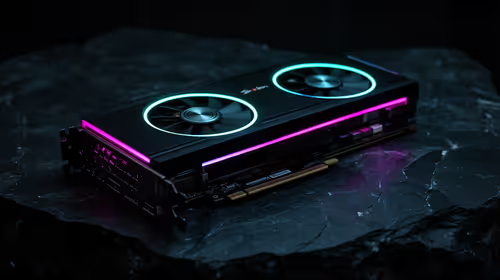
Microsoft Flight Simulator is notoriously demanding. It streams photorealistic satellite imagery of the entire planet, models complex weather systems, and simulates intricate aerodynamics. To run it smoothly, you need a powerful rig. Forget about your average office PC; you’ll want a machine with a top-tier graphics card and a robust CPU. Investing in one of our purpose-built Microsoft Flight Simulator Gaming PCs ensures you have the horsepower to render the world in stunning detail without stuttering. 🖥️
Your Window to the World: The Monitor
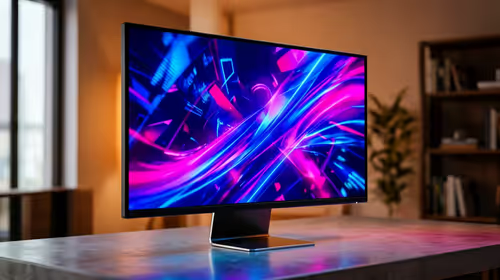
Immersion is everything. A standard monitor works, but to truly feel like you're in the cockpit, you need a wide field of view. This is where curved monitors excel, wrapping the image around your periphery and enhancing your sense of presence. Many serious sim-pilots even opt for a triple-screen setup for the ultimate panoramic view, something you can explore with our wide range of PC monitors.
Pro Sim Tip ⚡
For realistic navigation, use a second screen or a tablet to display flight charts and approach plates, just like real-world pilots do. Apps like Navigraph are brilliant for this and can connect directly to your simulator.
The Controls: Yoke and Rudder
Flying with a mouse and keyboard is… not flying. To build real muscle memory, you need proper controls. A quality HOTAS (Hands-On Throttle-And-Stick) or a yoke and throttle quadrant system is non-negotiable. Brands like Thrustmaster offer incredible hardware that replicates the tactile feel of a real aircraft, from the resistance on the yoke to the satisfying click of the landing gear lever.
The Captain's Seat: Ergonomics
You'll be spending hours in your virtual cockpit. An old dining room chair won't cut it. Proper posture is crucial for comfort and focus during long IFR flights. A supportive chair prevents fatigue and keeps you sharp. Our range of gaming chairs in South Africa provides the ergonomic support needed for those long-haul sessions from OR Tambo to Cape Town International.
From Virtual Runways to a Real Pilot's Licence
So, you've clocked hundreds of hours and can fly a Daher TBM 930 by the book. What's next? Your simulator time builds a rock-solid foundation of knowledge that will impress any instructor at a South African flight school. You'll grasp concepts faster, progress through your Private Pilot Licence (PPL) and Commercial Pilot Licence (CPL) training more efficiently, and potentially save thousands of Rands in flight hours.
The path to a pilot career is a marathon, not a sprint. Using a home simulator for training is like having a world-class running track in your backyard. It's the smart, cost-effective way to prepare for the real thing and give your dream career the best possible start. 🚀
Ready for Takeoff?
Your journey from enthusiast to ace pilot begins with the right equipment. A powerful, purpose-built PC is the heart of any serious flight simulator setup. Explore our specialised Microsoft Flight Simulator PCs and build the cockpit of your dreams today.