


PCIe 5.0 vs PCIe 4.0 for Strategy and Sim Games in SA
PCIe 5.0 and PCIe 4.0 differ most in lane support, compatibility, and upgrade value for strategy and sim games. SA buyers should match the choice to their actual hardware and games.
Read moreFSR 4 and FSR 3.1 differ most in game support, compatibility, and upgrade value for competitive esports. SA buyers should match the choice to their actual hardware and games.
FSR 4 is the sharper option only when the game and Radeon hardware support it properly, especially on newer Radeon RX 9000-series GPUs. FSR 3.1 is the safer compatibility choice because it reaches more GPUs and can still add frame generation in supported games. For competitive esports, choose FSR 4 for image quality on a new AMD build and FSR 3.1 when broad support matters more.
FSR 3.1 separates upscaling and frame generation more cleanly and works across a wide range of modern graphics cards. FSR 4 focuses on a newer upscaling path for supported Radeon hardware, so fine detail can hold better at Quality, Balanced, or Performance presets. The gain is easiest to see around grass, thin wires, UI text, and fast camera movement.
For competitive esports, aim for a clean 60 fps floor in cinematic games or 120-240 fps for high-refresh play. A Radeon RX 7600-class card is a 1080p starting point, while Radeon RX 7800 XT, RX 7900 GRE, or newer RX 9070-class options fit 1440p better. If a game only supports FSR 3.1, start with Quality or Balanced before trying Performance.
Use cautious ZAR bands: mainstream AMD gaming PCs commonly sit around R15,000-R28,000, while stronger 1440p builds move higher as GPU and CPU choices improve. A Ryzen 5 7600 with 16GB RAM is a solid base; Ryzen 7, 32GB RAM, and 1TB NVMe storage make more sense for streaming, editing, or large live-service installs.
No. FSR 4 can look cleaner in supported games on supported Radeon hardware, but FSR 3.1 has broader compatibility.
FSR 3.1 can help many non-AMD GPUs in supported games. FSR 4 is more hardware-specific, so check the GPU and game support first.
Use 60 fps for cinematic games, 100-144 fps for high-refresh play, and 200 fps or more for serious esports. Upscaling should support that target, not hide a weak GPU match.
Start with Quality or Balanced upscaling and inspect fine text, hair, fences, and motion before moving to Performance mode.
PCIe 5.0 and PCIe 4.0 differ most in lane support, compatibility, and upgrade value for strategy and sim games. SA buyers should match the choice to their actual hardware and games.
Read more
AM5 vs AM4 for video editing in 4K Difference explained is mostly about compatibility, budget, upgrade path, and setup fit. SA buyers should check device support and real needs before expecting a clear win from either option.
Read more
OLED vs QD-OLED for strategy and sim games buyers - what changes is mostly about compatibility, budget, upgrade path, and setup fit. SA buyers should check device support and real needs before expecting a clear win from either option.
Read more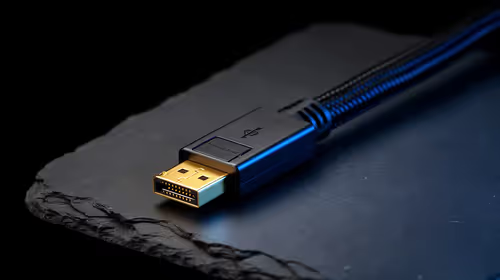
DisplayPort 2.1 and 1.4 differences matter when SA PC builders match GPUs, monitors, and refresh targets. Use this difference between displayport 2 1 and displayport 1 4 explained pc builders guide to avoid mismatched parts.
Read more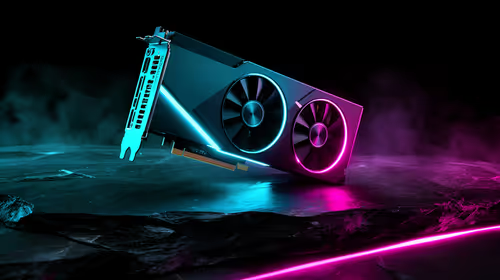
Ray tracing vs Path tracing depends on Strategy and sim games needs, platform limits, and budget fit. Compare compatibility, latency, upgrade path, and real setup constraints before choosing for an SA build.
Read more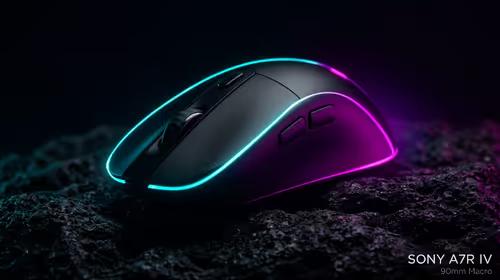
wireless mouse guide for Gqeberha gamers should be shortlisted around the job it must do. South African buyers should compare sensor, shape, weight, and wireless latency, warranty path, and upgrade room before treating any pick as best.
Read more
From 1 October 2026, WhatsApp Business Platform service replies in South Africa are expected to cost about $0.0076, or 12 cents, per delivered message.
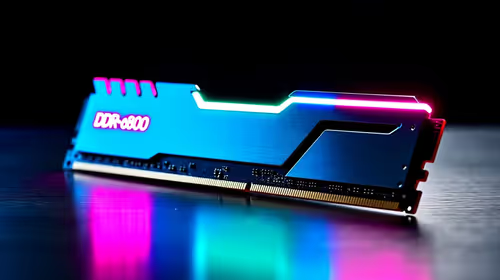
DDR5-8000 RAM Kits pros and cons depend on the build, budget, and workload. Weigh gaming needs, platform fit, power, cooling, warranty support, and South African pricing context before shortlisting it.
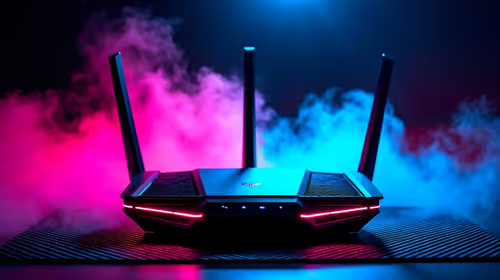
Wi-Fi 6E vs Wi-Fi 6 depends on AAA single-player gaming needs, platform limits, and budget fit. Compare compatibility, latency, upgrade path, and real setup constraints before choosing for an SA build.
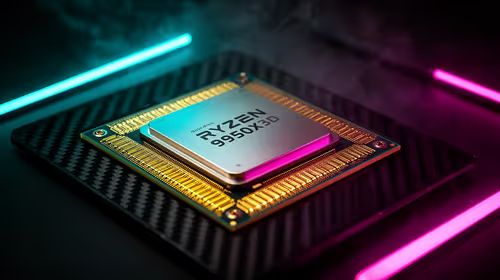
Ryzen 9 9950X3D dead pixel checks should isolate the panel first. Run colour fills, inspect the monitor menu, test another cable or input, and capture proof before linking it to the SA CPU upgrade.

YouTube will count public views from the first frame across video formats from 24 August, while earnings and eligibility remain tied to engaged viewing.
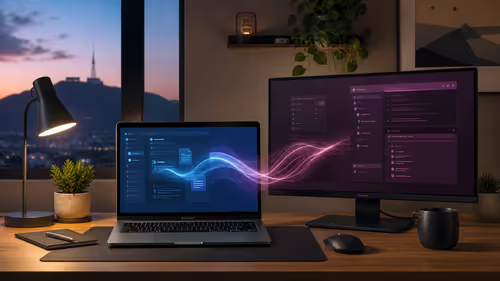
Canonical expects Ubuntu on WSL users to outnumber native Ubuntu desktop users before the end of 2026. The software is open source and runs inside supported Windows PCs.
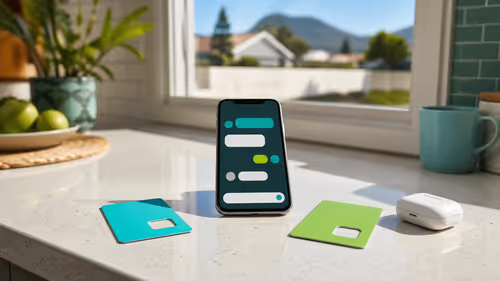
Telkom's daily bundles pair WhatsApp access with 10 all-network voice minutes. The R15 option includes 300MB, while the R17 option uses a fair-use threshold.
A 10,000-hour test found similar image retention across older and newer OLED TVs, while newer panels were brighter and more efficient. Local OLED monitors started at R9,999.
650W for RTX 5090 needs a full-build check, not a simple yes. Review GPU guidance, CPU draw, transient load, connectors, PSU quality, and upgrade plans before deciding.
PCIe 5.0 and PCIe 4.0 differ most in lane support, compatibility, and upgrade value for strategy and sim games. SA buyers should match the choice to their actual hardware and games.
How to fix FPS drops Windows 11 RX 9070 XT starts with GPU drivers, overlays, power plans, and frame pacing checks. For SA gaming PCs, verify chipset updates, HAGS, refresh rate, thermals, and per-game graphics settings.
AM5 vs AM4 for video editing in 4K Difference explained is mostly about compatibility, budget, upgrade path, and setup fit. SA buyers should check device support and real needs before expecting a clear win from either option.