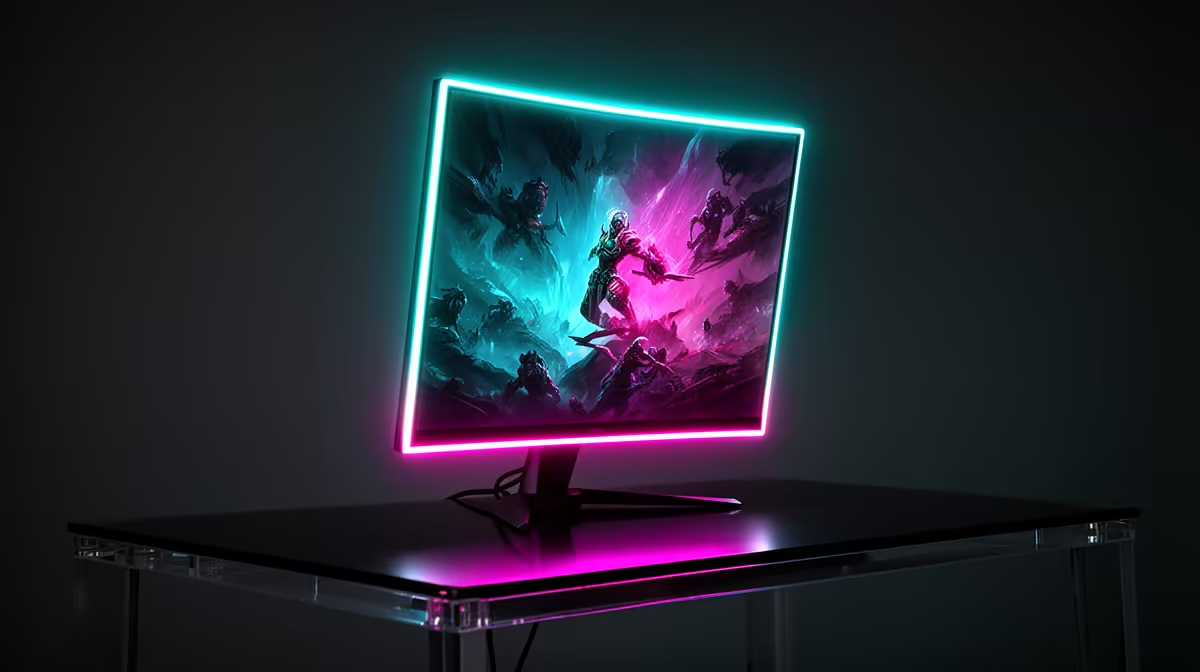
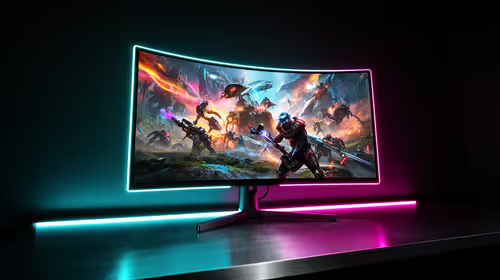
Staring at a gorgeous game that stutters and tears is a special kind of pain for any South African gamer. You've invested in a powerful rig, but your screen can't keep up, ripping the image in half during fast action. Frustrating, right? This is where adaptive sync technology comes in, and the big debate is G-Sync vs FreeSync. Understanding the difference is crucial to unlocking the smooth, immersive gameplay you paid for. Let's dive in.
What is Adaptive Sync, Anyway?
At its core, screen tearing happens when your graphics card (GPU) sends out frames at a different rate than your monitor can display them. It's a classic communication breakdown. Adaptive sync forces your monitor to match its refresh rate to your GPU's frame rate in real-time. The result? Buttery-smooth motion, no tearing, and less input lag. ✨ It's a non-negotiable feature for modern gaming, found across a huge variety of PC monitors.
The two main flavours of this tech are NVIDIA's G-Sync and AMD's FreeSync. While they solve the same problem, they get there in slightly different ways.
The Lowdown on NVIDIA G-Sync
NVIDIA G-Sync is the veteran player. Originally, it required a dedicated hardware module inside the monitor to manage the handshake with the GPU. This resulted in flawless performance but also added a premium to the price tag.
Today, there are three tiers:
- G-Sync Compatible: These are often FreeSync monitors that have passed NVIDIA's rigorous testing to ensure a baseline level of quality performance with GeForce GPUs. They don't have the dedicated hardware module but offer a great experience.
- G-Sync: These displays feature the dedicated processor, offering a full variable refresh rate range and variable overdrive to eliminate ghosting.
- G-Sync Ultimate: The top tier, designed for the best of the best. These monitors combine the G-Sync processor with advanced features like brilliant HDR, optimised for high-end gaming on stunning 4K monitors.
NVIDIA’s strict certification is its biggest strength… ensuring a consistent, high-quality experience.
Understanding AMD FreeSync
AMD FreeSync, on the other hand, is an open standard built on top of the VESA Adaptive-Sync protocol. This means monitor manufacturers can implement it without paying licensing fees to AMD, making FreeSync monitors generally more affordable and widely available across all gaming monitors. 🚀
Like G-Sync, it also has tiers:
- FreeSync: The basic level, eliminating tearing and stuttering.
- FreeSync Premium: Adds a requirement for at least a 120Hz refresh rate at 1080p and includes Low Framerate Compensation (LFC), which keeps gameplay smooth even when your FPS drops below the monitor's minimum refresh rate.
- FreeSync Premium Pro: Builds on the Premium tier with a focus on exceptional HDR implementation, ensuring low latency and vibrant colours for HDR gaming.
Pro Tip: Use G-Sync on a FreeSync Monitor 🔧
Did you know many FreeSync monitors work with NVIDIA cards? If you have a GeForce 10-series or newer GPU, go to the NVIDIA Control Panel. Under "Set up G-SYNC," check the box for "Enable G-SYNC, G-SYNC Compatible" and select your monitor. It might not be officially certified, but it often works perfectly!
G-Sync vs FreeSync: The Head-to-Head
So, which technology is better for your gaming setup? The choice usually comes down to your GPU and your budget.
Performance and Compatibility
The biggest factor in the G-Sync vs FreeSync decision is your graphics card. If you have an AMD Radeon GPU, FreeSync is your native choice. If you have an NVIDIA GeForce GPU, a G-Sync or G-Sync Compatible monitor will guarantee the best performance. While NVIDIA cards can run on many FreeSync displays, the experience on a non-certified panel isn't guaranteed. For competitive gamers who demand flawless sync, the dedicated G-Sync hardware still offers arguably the most reliable performance, especially in immersive curved monitors where every detail matters.
Cost and Value
Here, FreeSync has a clear advantage. Because it's an open standard, you'll find FreeSync technology in a much wider range of monitors at more accessible price points in South Africa. G-Sync monitors, especially those with the dedicated hardware module, command a premium price for their guaranteed quality and performance.
The Final Verdict: Which One Should You Buy?
Choosing between G-Sync and FreeSync isn't about which one is universally "better"... it's about which one is better for you.
- For Team NVIDIA: If you're running a GeForce RTX or GTX card and budget isn't your primary concern, a true G-Sync monitor offers a premium, plug-and-play experience that is second to none. If you're on a tighter budget, a certified G-Sync Compatible monitor is your best bet.
- For Team AMD: This one's easy. Grab a FreeSync Premium or Premium Pro monitor and enjoy fantastic, tear-free gaming. The value for money is exceptional.
- For the LAN Party Legend: If you're constantly on the move, pairing your gaming laptop with one of the new high-refresh-rate portable monitors featuring FreeSync can be a great, flexible option.
Remember that to get the most out of either technology, you'll need to use a DisplayPort cable. Investing in quality monitor accessories ensures your hardware can perform at its peak.
Ready to Find Your Perfect Match?
The G-Sync vs FreeSync debate is decided by your GPU and budget. The right monitor unlocks your PC's true potential. Explore our massive range of gaming monitors and find the perfect screen to conquer your world.