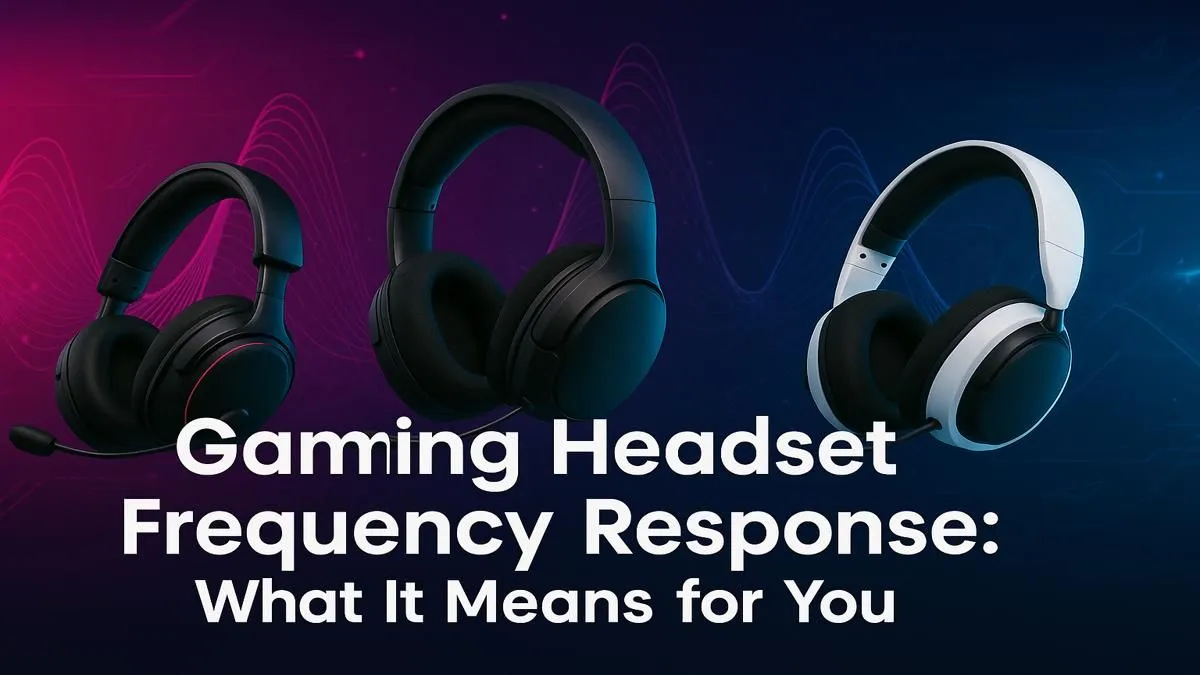
Ever wonder why the subtle crunch of footsteps in Warzone gives away an enemy's position, or why a grenade in Helldivers 2 feels like it's shaking your very soul? It’s not just about volume. A massive part of that immersion comes down to a spec you’ve probably seen on the box: frequency response. Understanding what gaming headset frequency response means is your secret weapon to choosing the perfect audio gear. 🚀
What is Gaming Headset Frequency Response Anyway?
Let's cut through the jargon. Frequency response is the range of sound frequencies a headset can reproduce, measured in Hertz (Hz). Think of it like a sound spectrum. On the low end, you have deep, rumbling bass (like an 808 drum), and on the high end, you have sharp, crisp treble (like cymbals clashing).
Most human ears can hear sounds between 20Hz and 20,000Hz (or 20kHz). This is why the "20Hz – 20kHz" range is the standard for most audio equipment, from studio monitors to gaming headsets. A headset's ability to accurately reproduce sounds across this range determines how detailed and immersive your audio experience will be. A good gaming headset frequency response ensures you hear the game exactly as the developers intended.
How Frequency Response Impacts Your Gaming
Different parts of the sound spectrum are crucial for different in-game moments. A well-balanced headset gives you an edge by making sure no sound goes unheard.
The Lows (Bass): Feeling the Boom
The low-end frequencies (roughly 20Hz - 250Hz) are all about impact and atmosphere. This is where you feel the thundering explosions, the deep growl of a vehicle's engine, or the powerful bass in a game's soundtrack. A headset that handles bass well, like a solid wired headset, can make a cinematic single-player game feel incredibly epic and immersive.
The Mids (Mid-Range): Clarity is King
The mid-range (about 250Hz - 4kHz) is arguably the most important for overall sound quality. This is where you’ll find the clarity of character dialogue, the sound of your weapon firing, and most environmental audio cues. If the mids are muddy or weak, voices can get lost in the chaos. This is why many top-tier wireless headsets focus on delivering a clean and balanced mid-range for a superior all-round experience.
The Highs (Treble): Your Tactical Advantage ✨
For competitive gamers, the high-end frequencies (4kHz - 20kHz) are a massive deal. This is the range where critical audio cues live: the faint sound of enemy footsteps, the click of a grenade pin being pulled, or the tinkle of shattering glass. Headsets that reproduce treble clearly can give you the split-second advantage you need to win a firefight. It's a key reason why dedicated PlayStation headsets are tuned to highlight these crucial competitive sounds.
Tweak Your Sound Profile 🔧
Don't forget that software can fine-tune your headset's frequency response! Many gaming headsets come with companion apps (like Logitech G Hub or Razer Synapse) that feature a graphic equaliser (EQ). Use it to boost the high-end frequencies for a competitive edge in FPS games or pump up the bass for a more cinematic single-player experience.
Is a Wider Frequency Response Always Better?
You might see some premium headsets advertising a super-wide frequency range, like 5Hz – 40,000Hz. While it looks impressive on the box, it's not the be-all and end-all. Remember, the vast majority of people can't hear outside the 20Hz – 20kHz range.
What matters more than the width of the range is the quality and balance of the sound within it. Some headsets have a "V-shaped" sound signature, boosting the bass and treble for a more exciting, punchy sound. Others aim for a "flatter" response, which is more neutral and true-to-source. The best Xbox headsets, for example, often strike a great balance that works for both explosive action and tactical shooters. Ultimately, the ideal headset frequency response depends on your personal preference and the games you play most.
Finding the Right Headset For You
So, what does this all mean for your next purchase? Instead of just chasing the biggest numbers, think about what you value.
- For FPS pros: Prioritise a headset with clear, detailed highs.
- For RPG & adventure fans: Look for a balanced profile with rich mids and impactful bass for ultimate immersion.
Don't get too bogged down in the specs. The gaming headset frequency response is just one piece of the puzzle, alongside comfort, microphone quality, and connectivity. The best way to find your perfect match is to explore a wide variety. Take a look at Evetech's full range of headphone headsets to see the different options available. By understanding what these numbers mean, you're now equipped to make a much smarter choice and find a headset that truly enhances your gaming. And if you're looking for incredible value, be sure to check out our latest gaming headset deals for top-tier audio at unbeatable prices.
Ready to Hear the Difference?
The spec sheets can be confusing, but hearing is believing. From tactical advantages to breathtaking immersion, the right headset changes everything. Explore our massive range of gaming headset deals and find the perfect audio weapon for your setup.