



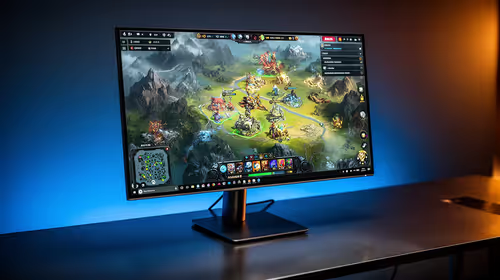
IPS vs VA for Strategy and Sim Games in SA
IPS vs VA for strategy and sim games should be judged by fit, not a single winner. Compare compatibility, latency, capacity, upgrade path, cost planning, and South African setup needs.
Read moreGPU UPS requirements explained for 2026 — learn sizing, runtime, surge protection, and best models to protect high-power GPUs 🔋💡
The lights flicker, and your heart stops. Did that power surge just brick your brand new, R35,000 graphics card? In South Africa, this isn't just a fear; it's a reality. As GPUs in 2026 push power limits even further, understanding your GPU UPS requirements becomes non-negotiable. It's not just about backup power; it's about protecting your high-end investment from an unstable grid. Let's make sure your rig is ready. ⚡
The graphics card landscape is evolving at a blistering pace. While we dream of the performance of a future RTX 5090 or RX 8800 XT, we also need to plan for their power demands. Future GPUs are expected to have even higher Transient Power Spikes—massive, split-second power draws that can overwhelm an undersized Uninterruptible Power Supply (UPS).
An older 650VA unit that was fine for a GTX 1060 will simply trip and shut down when faced with the demands of today's high-end NVIDIA GeForce cards, let alone future models. This isn't just an inconvenience; a sudden shutdown during a firmware update or intense file operation can lead to data corruption or even hardware damage. The core of this protection system is ensuring your UPS can communicate effectively with a quality power supply, which is the first line of defence.
Figuring out the right UPS size isn't guesswork. It's about looking at your total system power draw under load. A simple formula is to add up the wattage of your core components:
A solid rule of thumb is to choose a UPS with a Volt-Amp (VA) rating that is at least 1.6 times your PSU's wattage. For example, if your rig runs on a powerful 1000W PSU, you should be looking for a UPS of 1600VA or higher. This buffer accounts for PSU inefficiency and those aggressive power spikes from your GPU. Investing in a top-tier fully modular PSU already gives you a head start with stable, clean power delivery.
Your PSU's 80 Plus rating (like Gold or Platinum) indicates its efficiency. A 1000W 80 Plus Gold PSU might pull around 1100W from the wall to deliver 1000W to your components. Always factor this into your UPS calculation for a safe margin. A more efficient PSU reduces the load on your UPS and saves you money on your electricity bill.
Not all UPS units are created equal. For a modern gaming PC, especially one with any graphics card over R15,000, these features are non-negotiable:
This is the most crucial feature. High-end PSUs with Active Power Factor Correction (PFC) require a smooth, clean electrical signal (a "pure sine wave") to function correctly. Cheaper "simulated sine wave" UPS units can cause buzzing, instability, or even damage to your sensitive power supply when on battery power.
Given South Africa's notoriously unstable grid, AVR is a lifesaver. It automatically corrects for voltage dips (brownouts) and surges without switching to battery power. This preserves your battery for a full blackout and protects your components from "dirty" power day-to-day.
You don't need to finish a whole Elden Ring boss fight on battery. You just need enough time—typically 5 to 10 minutes—to save your progress, close applications, and perform a safe, graceful shutdown.
Looking ahead to 2026, here’s a practical guide to matching a UPS with your future build. The right UPS requirements for new GPUs will depend on the tier you're aiming for.
Ultimately, a quality UPS is the unsung hero of any high-performance PC build in South Africa. It’s the insurance policy that lets you game and create without fear of the next power cut.
Ready to Build a Resilient Rig? it's a necessity. From the GPU to the PSU, getting the foundation right is key. Explore our massive range of PC components and build a machine that's ready for anything South Africa's grid throws at it.
Calculate total system wattage, add 20–30% headroom, confirm runtime targets, and use surge protection. See ups for gpus 2026 guidelines.
Sum GPU TDPs plus CPU, drives and fans, then multiply by 1.25–1.3 for peaks and runtime. Use a capacity calculator ups gpu to pick VA/Watts.
Online double-conversion UPS gives the cleanest power and zero-transfer switching, ideal for mining rigs, AI workstations and critical GPUs.
Runtime varies: small UPS give minutes, large battery packs an hour or more. Aim for 5–15 minutes for safe shutdown and longer if needed.
You can, but for sustained multi-GPU loads choose server-grade or high-capacity models. Check best ups for mining rigs 2026 reviews first.
Run battery self-tests, replace batteries every 3–5 years, keep firmware updated, and monitor load to avoid overloads.
Prioritize wattage/VA rating, pure sine wave output, online topology, battery runtime, number of outlets, and robust surge protection.
IPS vs VA for strategy and sim games should be judged by fit, not a single winner. Compare compatibility, latency, capacity, upgrade path, cost planning, and South African setup needs.
Read more
Gen 5 NVMe SSD guide for Bloemfontein gamers should be shortlisted around the job it must do. South African buyers should compare capacity, speed, thermals, and motherboard support, warranty path, and upgrade room before treating any pick as best.
Read more
Skip the RTX 5070 if your first-time builder budget needs better balance. Better SA picks can free room for the right CPU, PSU, case, monitor, storage, and cooling while still giving a strong first gaming PC experience this year in South Africa.
Read more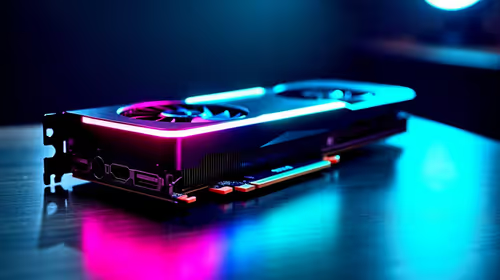
RTX 5080: weighing the pros and cons for SA should be shortlisted around the job it must do. South African buyers should compare GPU tier, VRAM, cooling, and PSU headroom, warranty path, and upgrade room before treating any pick as best.
Read more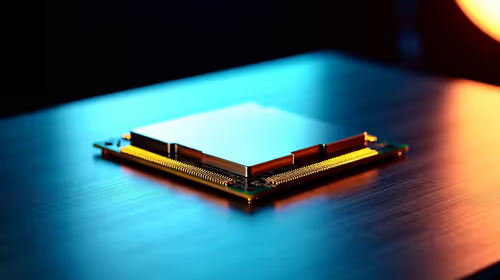
Core i5-13400F gives South African PC builders a capable mid-range CPU choice with clear limits. Check its gaming fit, discrete GPU requirement, LGA1700 platform costs, and upgrade path before locking in your parts list.
Read more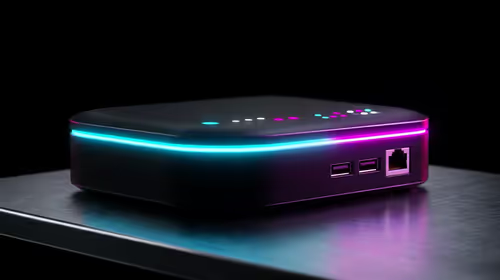
Pros and cons of the Wi-Fi 7 routers for SA should be shortlisted around the job it must do. South African buyers should compare WiFi standard, coverage, latency, and device support, warranty path, and upgrade room before treating any pick as best.
Read more
Steam content servers unreachable needs a download-path check, not an immediate reinstall of every game. Restart the client, inspect download settings and compare another connection when practical. Clearing the download cache is separate from deleting installed games.
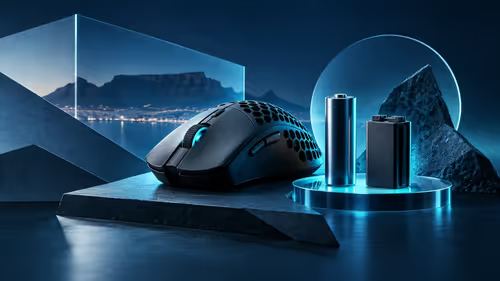
Keychron G6 HE has built-in and swappable battery versions with different weights. The product brief lists 42g and 46g respectively, each with a 3g tolerance. Choose by grip and battery preference before treating one headline weight as universal.
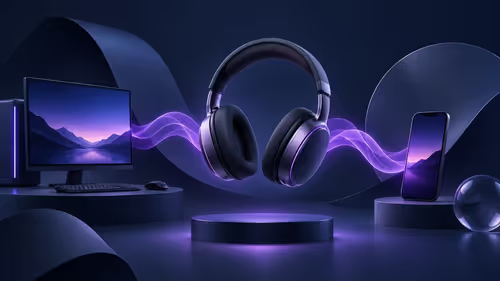
Corsair HS80 v2 MAX supports 2.4GHz wireless and Bluetooth. Its maximum battery figures use RGB-off conditions and differ by connection. Check microphone routing, comfort and the exact device support before assuming every wireless mode behaves alike.

Windows taskbar notification badges can be shown or hidden in Taskbar behaviours. This changes the small app indicators, not the underlying messages. Choose a calmer desktop while keeping a deliberate routine for checking important conversations and app updates.
Windows taskbar notification badges can be shown or hidden in Taskbar behaviours. This changes the small app indicators, not the underlying messages. Choose a calmer desktop while keeping a deliberate routine for checking important conversations and app updates.
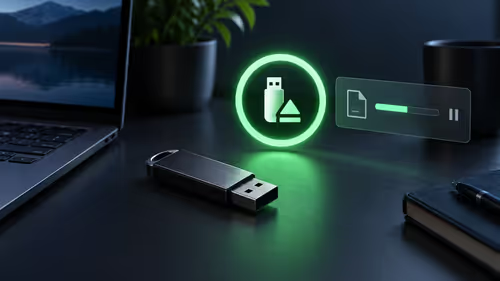
Windows USB device in use can mean a program still has the drive open. Finish transfers and close files before retrying ejection. Better performance caching requires safe removal; a replacement drive is not the first fix for an open-file warning.

Windows Nearby Sharing not working starts with feature, Bluetooth and visibility checks on both PCs. My devices only depends on matching Microsoft accounts. Test a small harmless file before buying networking hardware or changing your home router.
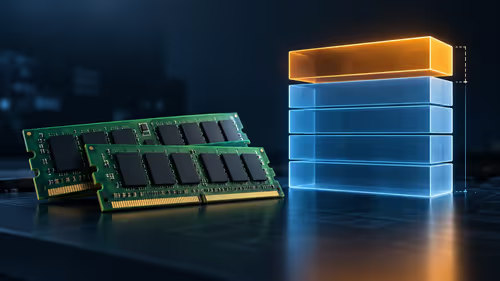
Windows hardware reserved RAM is different from memory used by applications. Compare installed memory with firmware detection and the usable amount before buying modules. Reservations and reporting limits vary by system; no universal setting restores every byte.

Windows title bar window shake can minimise other open windows when you shake the active window by its title bar. Inspect the Multitasking setting and switch it off if that gesture interrupts your work. The preference costs R0 and does not require new hardware.

Windows Print Screen opens Snipping Tool when its keyboard preference is enabled. Change the option under Accessibility, Keyboard to choose another workflow. Test whether you need a clipboard image or a saved file.

Windows desktop icons missing may be a visibility setting. Right-click the desktop, choose View and inspect Show desktop icons. If only system icons are absent, use Desktop icon settings. Check the Desktop folder before assuming files were deleted.

Windows set time zone automatically greyed out calls for a location and device-policy check. Automatic time-zone selection relies on location services. A manual time-zone choice is separate from synchronising the clock; check both before replacing hardware.