

Humidity Damage to PC Components: Recovery Guide
Humidity Damage to PC Components: Recovery Guide. Everything you need to know with SA pricing, step-by-step instructions & expert recommendations.
Read moreDiscover the perfect GPU for video editing and slash your render times. This guide explains how a powerful graphics card accelerates your workflow, from smooth playback to faster exports. We'll cover VRAM, CUDA cores, and the best options from NVIDIA and AMD to supercharge your creativity. 🚀 Ready to build a video editing beast? Let's dive in! 💻
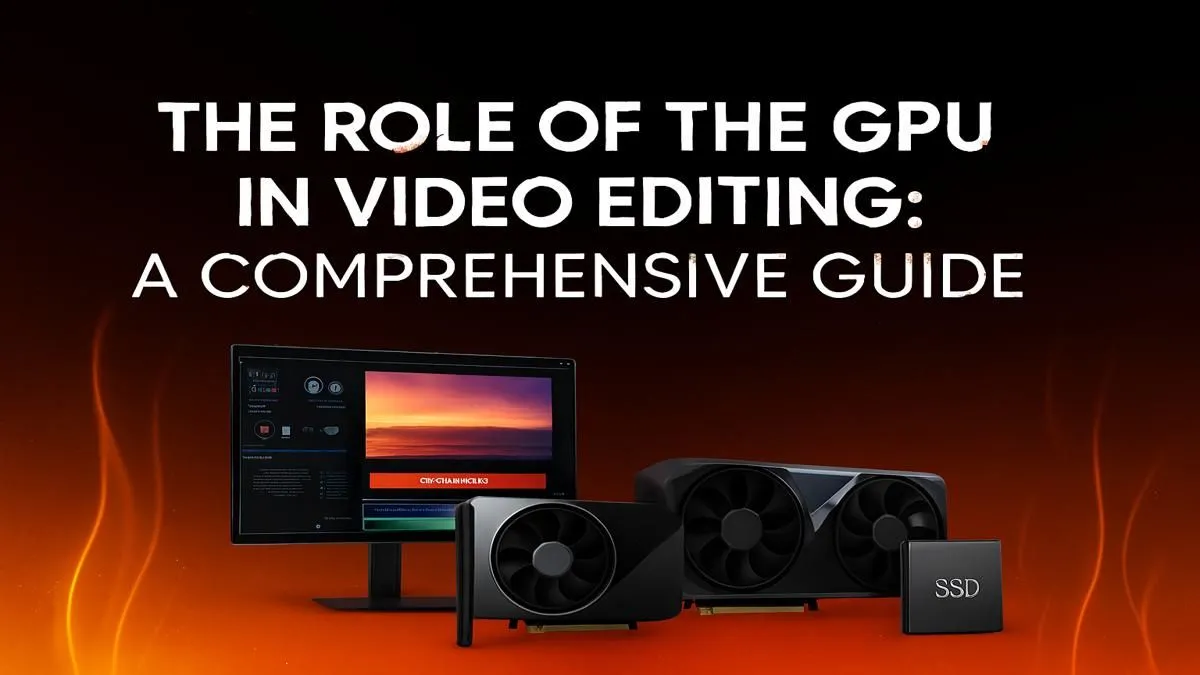
Staring at a render progress bar is a special kind of pain, isn't it? Especially when you know that deadline is creeping closer. In South Africa, where every second counts, slow rendering isn't just annoying… it's lost time and money. What if the secret to getting your time back wasn't a faster CPU, but the right GPU for video editing? Let's dive in and find that perfect graphics card to crush your export times. 🚀
For years, the CPU did all the heavy lifting in creative work. But modern video editing software has changed the game. Now, your Graphics Processing Unit (GPU) is a powerhouse that dramatically accelerates your entire workflow, not just the final export.
A powerful GPU for video editing uses its thousands of specialised cores to handle tasks like:
Essentially, a good video editing GPU frees up your CPU to handle other system tasks, creating a more responsive and efficient creative experience.
Finding the best GPU for video editing depends on your software, footage resolution, and budget. It’s not just about buying the most expensive card. Let's break down the key factors.
Historically, NVIDIA has been the top choice for video editors, thanks to its CUDA (Compute Unified Device Architecture) technology. Major software suites like Adobe Premiere Pro and After Effects are heavily optimised for CUDA, often resulting in better performance and stability. This makes a system from our range of NVIDIA GeForce gaming PCs a very safe bet for most creators.
However, AMD has made huge strides. Software like DaVinci Resolve is incredibly well-optimised for AMD GPUs, showing that the gap is closing. For creators on Team Red, exploring a build from our selection of AMD Radeon gaming PCs can offer fantastic value and performance, especially if Resolve is your primary tool.
If you have an NVIDIA card, download the 'Studio Driver' instead of the 'Game Ready Driver'. Studio Drivers are specifically tested and optimised for creative applications like Adobe Premiere Pro, DaVinci Resolve, and Blender. This can lead to significant stability improvements and fewer crashes during those marathon editing sessions.
VRAM, or Video RAM, is your GPU's dedicated memory. It's crucial for handling high-resolution textures, frames, and complex effects. Running out of VRAM can cause slowdowns or even crashes. Here’s a quick guide:
Choosing the right amount of VRAM is a key step in selecting a GPU for video editing.
A beastly GPU won't perform at its peak if it's bottlenecked by a slow CPU or insufficient RAM. Your processor is still vital for many aspects of video editing, like decoding certain codecs and general application responsiveness. Ensure your powerful new graphics card is paired with a capable CPU. Whether you're looking at the latest Intel PC deals for their strong single-core performance or the excellent multi-core value found in our AMD Ryzen PC deals, a balanced system is key to unlocking faster rendering.
This is a common question. Should you get a GeForce RTX card or a professional-grade NVIDIA RTX Ada Generation (formerly Quadro) card?
For the vast majority of YouTubers, streamers, and freelance editors in South Africa, a high-end gaming GPU (like an RTX 4070 or higher) offers the best performance-per-Rand. They are powerful, widely available, and deliver incredible rendering speed. Many of our pre-built PC deals feature these cards and are perfectly balanced for a dual gaming-and-creating setup. ✨
Professional workstation GPUs, however, are built for a different purpose. They come with certified drivers for enterprise-level software (like Autodesk and SOLIDWORKS), offer extreme stability for 24/7 operation, and sometimes include features not found on consumer cards. If you're a professional in a broadcast or cinematic environment where every second of downtime costs thousands, investing in dedicated Workstation PCs is the right call.
For everyone else, a powerful gaming card is the ideal GPU for video editing, providing the raw power needed to accelerate your creative vision.
Ready to Slash Your Render Times? Choosing the right hardware can feel complex, but the impact on your workflow is massive. Stop waiting and start creating. Explore our range of powerful Workstation PCs, expertly configured for demanding creative tasks right here in South Africa.
Both are crucial, but for different tasks. The CPU manages the software and overall system, while the GPU dramatically accelerates rendering, effects, and high-res playback.
For 4K video editing, aim for at least 8GB of VRAM. For complex projects with many effects or for 6K/8K footage, 12GB or more is recommended for a smooth workflow.
Yes, absolutely. A powerful GPU significantly speeds up rendering times by using its parallel processing cores for tasks like encoding and applying effects (GPU acceleration).
You can, but it will be very slow. Integrated graphics struggle with rendering and effects playback. A dedicated GPU is highly recommended for an efficient video editing experience.
Historically, NVIDIA's CUDA technology gave it an edge in apps like Adobe Premiere Pro. However, AMD's recent GPUs are highly competitive. Check your specific software's optimization.
GPU acceleration in Premiere Pro offloads intensive processing tasks like rendering, applying effects, and scaling from the CPU to the GPU for faster performance and smoother playback.
Humidity Damage to PC Components: Recovery Guide. Everything you need to know with SA pricing, step-by-step instructions & expert recommendations.
Read more
Gamer Spending Trends April : Complete Setups. Clear setup instructions with SA-specific considerations, troubleshooting tips & recommended components.
Read more
Setting Up DDR5 32GB Kit. Tested & verified settings for best FPS and visual quality on SA hardware budgets.
Read more
Tech Setup Guide for SPU Res Students. Clear setup instructions with SA-specific considerations, troubleshooting tips & recommended components.
Read more
Monster Hunter Wilds Ultrawide Support: 21:9 and. Clear setup instructions with SA-specific considerations, troubleshooting tips & recommended components.
Read more
Apple iPad Durability Guide: Cases, Screen. Practical breakdown of costs, regulations & whether it makes financial sense for SA buyers.
Read more
AMD RX 9050 XT: Rumoured Specs, Price & Release. SA-focused analysis with local pricing data, real-world insights & actionable buying advice.
Can RTX 4080 Super Run AI Workloads for SA Developers Detailed answer with SA data, expert analysis & practical recommendations for local buyers.
Can RTX 4090 Run AI Workloads for SA Developers Detailed answer with SA data, expert analysis & practical recommendations for local buyers.
Top Settings for Intel Arc B580 at Ultrawide 1440p picks evaluated on performance, value & SA availability with current Rand pricing from Evetech.

RTX 4060 CS2 Low Settings at 1080p: FPS Results. Real-world benchmark data, FPS numbers & performance analysis. What SA gamers can actually expect.

Visual Artifacts: Possible GPU Issue Issue #1. Diagnosis steps, proven fixes & when to seek professional help. SA-specific support info included.
Can the RTX 4090 Handle 1440p 144Hz Gaming. Performance testing verdict with real data & practical recommendations for SA buyers.

Top ASUS GPU Under R15000 picks evaluated on performance, value & SA availability with current Rand pricing from Evetech.
GTA 6 Max Settings on RTX 5070. Tested & verified settings for best FPS and visual quality on SA hardware budgets.
Cyberpunk 2077 Max Settings on RTX 5080. Tested & verified settings for best FPS and visual quality on SA hardware budgets.
Starfield Max Settings on RTX 5070 Ti. Tested & verified settings for best FPS and visual quality on SA hardware budgets.
Top RTX 5090 Under R5000 picks evaluated on performance, value & SA availability with current Rand pricing from Evetech.