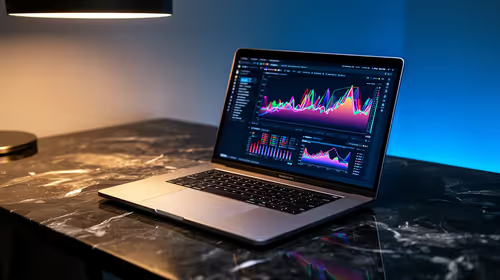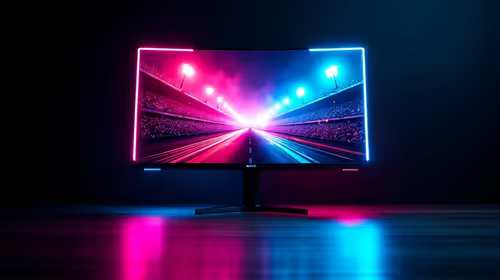
You've just dropped some serious ZAR on a shiny new HDR display, ready to experience Night City or the Forbidden West in breathtaking colour. But when you fire up the game, something’s… off. The image is dim, the colours look washed out, and shadows are crushed. What gives? You're likely experiencing one of the most common HDR auto brightness issues that plague PC gamers.
Don't panic. Before you start packing up your new PC monitor for a return, let's dive into why your gaming monitor looks wrong and how to fix it. 🔧
Understanding HDR Auto Brightness Issues
High Dynamic Range (HDR) is supposed to deliver a massive upgrade in visual quality, with brighter highlights, deeper blacks, and a wider range of colours. So, why does it sometimes look worse than standard dynamic range (SDR)?
The problem often isn't a faulty panel. Instead, HDR brightness problems usually stem from a mismatch between your operating system, your graphics card drivers, and your monitor's own firmware. Windows, in particular, has a tricky relationship with HDR. It tries to manage the brightness of your SDR desktop and your HDR games simultaneously, and it doesn't always get it right. This can lead to the screen looking too dark or suddenly shifting brightness, which is a classic sign of an HDR auto brightness issue.
How to Fix Your Monitor's Brightness Problems
Ready to get the vibrant, punchy image you paid for? Let's walk through the most effective solutions to solve these frustrating HDR auto brightness issues. Most of these fixes are simple software tweaks that can make a world of difference.
1. Master the Windows HD Colour Settings
Before you even touch your monitor's buttons, your first stop should be Windows' display settings.
- Right-click your desktop and select "Display settings".
- Make sure "Use HDR" is toggled on.
- Click on "HDR" (or "Use HDR" in Windows 11) to open the next menu.
- Here's the key: look for the "SDR content brightness" or "HDR/SDR brightness balance" slider.
This slider tells Windows how bright to make non-HDR content (like your desktop and most apps) when HDR is enabled. If your desktop looks grey and washed out, you likely need to increase this slider's value. Finding the sweet spot here is crucial for fixing a display where the HDR auto brightness seems completely wrong.
Cable Check ⚡
all cables are created equal. For a stable HDR signal, especially at high refresh rates, you need a certified DisplayPort 1.4 or HDMI 2.1 cable. An old or cheap cable can be the hidden cause of flickering and brightness issues. Investing in [high-quality monitor accessories](https: www.evetech.co.za PC-Components buy-monitor-accessories-368.aspx) is a small price to pay for a perfect picture.
2. Calibrate, Calibrate, Calibrate
Windows has a fantastic, free tool called the "Windows HDR Calibration" app, available from the Microsoft Store. This app walks you through a series of test patterns to determine your monitor's darkest black and brightest white. It then creates a custom colour profile that helps your system display HDR content much more accurately. Running this simple calibration can instantly solve many HDR brightness problems.
3. Tame Your Monitor's On-Screen Display (OSD)
Your monitor has its own brain, and sometimes its "smart" features are anything but. Use the buttons on your monitor to open its On-Screen Display (OSD) menu and hunt for these settings:
- Dynamic Contrast: Turn it OFF. This feature constantly adjusts the backlight and often fights with the HDR signal.
- Eco Mode / Power Saving: Turn it OFF. These modes limit the monitor's peak brightness, which is the opposite of what you want for impactful HDR.
- Local Dimming / Variable Backlight: This can be tricky. On high-end displays, it's essential for true HDR. On budget displays, a poor implementation can cause blooming or weird brightness shifts. Try setting it to its fastest or most aggressive setting. If the HDR auto brightness issues persist, try turning it off completely.
When Your Gaming Monitor Looks Wrong... Because It Is
You've tweaked every setting, run the calibration tool, and your picture is still underwhelming. What now? ✨
Sometimes, the issue is the hardware itself. Many entry-level screens have "DisplayHDR 400" certification, which offers a minimal jump over SDR and often lacks key technologies like local dimming. For a truly transformative experience, you need a panel with higher peak brightness (600 nits or more) and better contrast. This is where you'll see the biggest difference, especially with premium 4K and 5K monitors designed for stunning visual fidelity.
The same principle applies to other form factors; top-tier immersive curved monitors often use superior panel technology to deliver that HDR punch, while even portable monitors are starting to incorporate better display tech. If you've tried all the fixes and are still disappointed, it might be time to explore our full range of gaming monitors to find one that truly delivers on the promise of HDR.
Ready for Flawless HDR? Don't let frustrating settings ruin your immersion. If you've tried everything and your monitor is still holding you back, it might be time for an upgrade. Check out the latest monitor deals at Evetech and find a display that delivers the breathtaking visuals you deserve.