That split-second. It's the difference between landing a headshot in Valorant or staring at a respawn timer. Your skill is crucial, but what about your gear? Specifically, the tiny switches under your mouse buttons. For years, mechanical switches were king. But now, a new contender has entered the arena: the HITS (Hall-effect Independent Trigger System). This guide breaks down the HITS Trigger System vs Mechanical Switches debate, helping you choose your next competitive edge.
Understanding Traditional Mechanical Switches
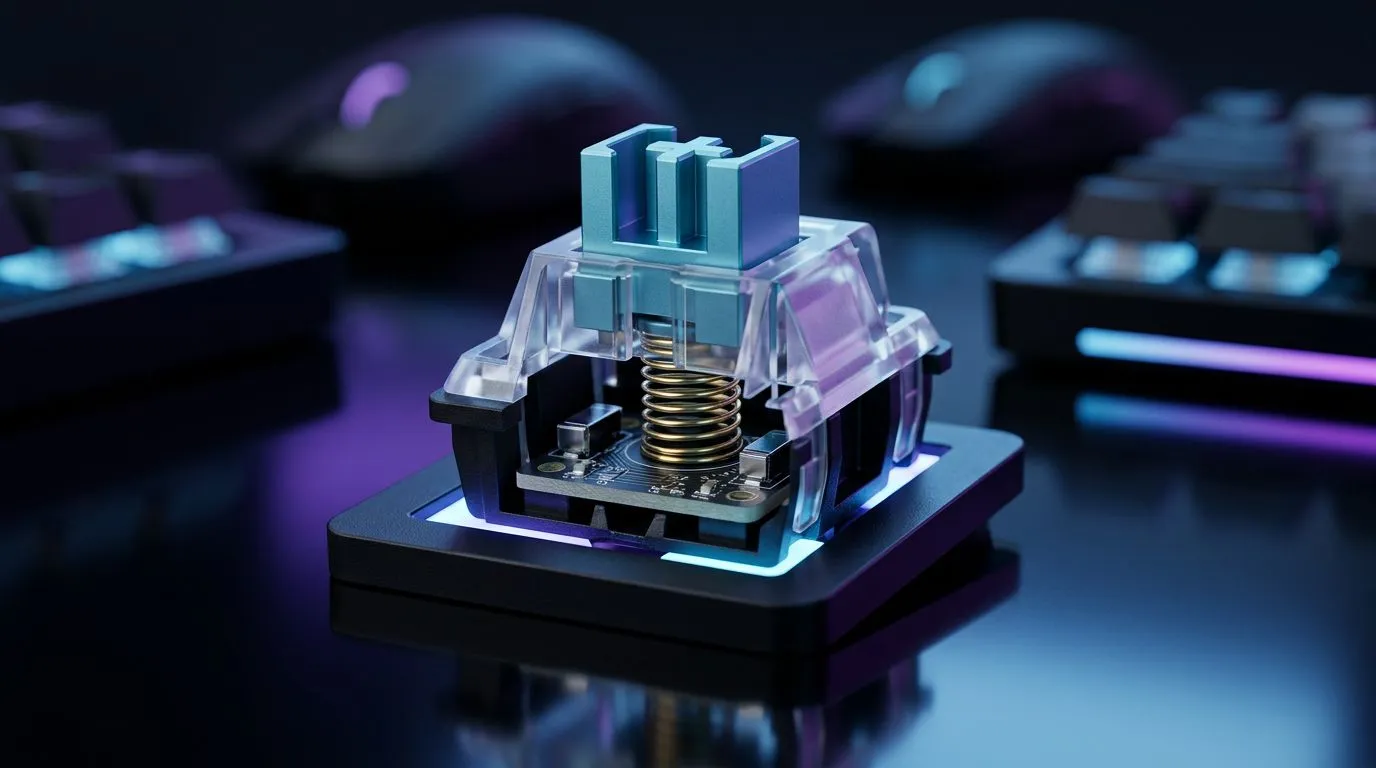
For decades, the satisfying click of a mechanical switch has been the sound of PC gaming. At its core, a mechanical switch is simple and effective. When you press the mouse button, it pushes down on a spring-loaded metal contact, completing an electrical circuit and registering a click. It’s a physical, tactile process that many gamers have grown to love.
This design is reliable and offers a huge variety of distinct feelings, from light and airy to heavy and deliberate. The main drawback, however, is something called "debounce delay." Because the metal contacts can physically bounce for a few milliseconds, the mouse's firmware has to wait for the signal to stabilise before sending the click to your PC. For most people, it's unnoticeable... but in competitive play, milliseconds matter. Over time, these physical parts can also wear out, sometimes leading to the dreaded "double-clicking" issue. Still, a quality wired gaming mouse with solid mechanical switches offers incredible performance for its price.
So, What is the HITS Trigger System? ✨
The HITS Trigger System throws the old design out the window. Instead of relying on physical metal contacts, it uses magnets and the Hall effect—a principle of physics where a magnetic field affects an electrical conductor. When you click, a magnet moves closer to a sensor, which instantly detects the change in the magnetic field and registers the input.
The result? Zero physical contact and zero debounce delay. The click is registered at the speed of light (well, nearly). This makes the input signal cleaner and faster than any mechanical switch. Because there are no metal parts grinding against each other, durability goes through the roof, with some HITS switches rated for over 100 million clicks. This cutting-edge tech is often found in premium wireless gaming mice, where every bit of latency reduction counts.
HITS Trigger System vs Mechanical Switches: The Head-to-Head
When we put the HITS Trigger System vs mechanical switches in a direct comparison, the differences become clear. It’s a battle of new-school speed against old-school feel.
### Speed and Latency 🚀
This is HITS's home turf. By eliminating debounce delay, HITS triggers are objectively faster. For an esports professional playing an FPS game where reaction time is everything, that tiny advantage can be the difference between winning and losing a round. Mechanical switches are fast, but they can’t beat the near-instantaneous nature of a magnetic system.
### Durability and Lifespan
Again, HITS takes the lead. With no metal contacts to wear down, corrode, or fail, magnetic switches are built to last significantly longer than their mechanical counterparts. They are immune to the double-clicking fault that can plague older mechanical mice. This means your clicks will feel as crisp on day one thousand as they did on day one.
### Feel and Feedback
This is where things get subjective. Many gamers love the distinct tactile bump and audible click of a good mechanical switch. There’s a satisfying, tangible feedback that you’ve actuated the button. HITS triggers, while incredibly responsive, can feel different—often described as lighter and more linear. It’s not better or worse, just different. If you're looking to try both, keep an eye on the best gaming mouse deals to find premium tech at a great price.
Pro Tip: Tweak Your Debounce Time 🔧
If you're sticking with a mechanical mouse, some high-end models let you adjust the debounce time in their software. Setting it to the lowest stable value (e.g., 0-4ms) can make your clicks feel noticeably more responsive, closing the gap on optical and HITS switches. Just be aware that setting it too low might introduce accidental double-clicks!
Which Switch Is Right for Your Playstyle?
Ultimately, the choice between the HITS Trigger System vs mechanical switches comes down to your priorities as a gamer.
- For the Hardcore Competitor: If you play fast-paced shooters like CS2, Apex Legends, or Valorant at a high level, the speed and reliability of a HITS Trigger System are undeniable advantages. The consistent performance and durability make it a worthwhile investment.
- For the All-Round Gamer: If you play a wide variety of genres, from RPGs to strategy games, the classic feel of a mechanical switch might be more satisfying. They provide excellent performance and a tactile experience that many find more enjoyable for general use.
- For the Budget-Conscious Player: Mechanical switches offer fantastic value. You can get a high-performance gaming mouse for a fraction of the cost of a top-tier HITS model, and it will serve you well in any game.
Don't forget that your performance also depends on your entire setup. Pairing your chosen mouse with great mouse accessories like a quality mousepad can make a world of difference.
Ready to Feel the Difference? The debate over the HITS Trigger System vs Mechanical Switches is all about gaining that split-second advantage. Whether you crave the lightning-fast response of HITS or the classic feel of a mechanical click, your perfect peripheral is waiting. Explore our massive range of gaming mice and find the tool to dominate your next match.