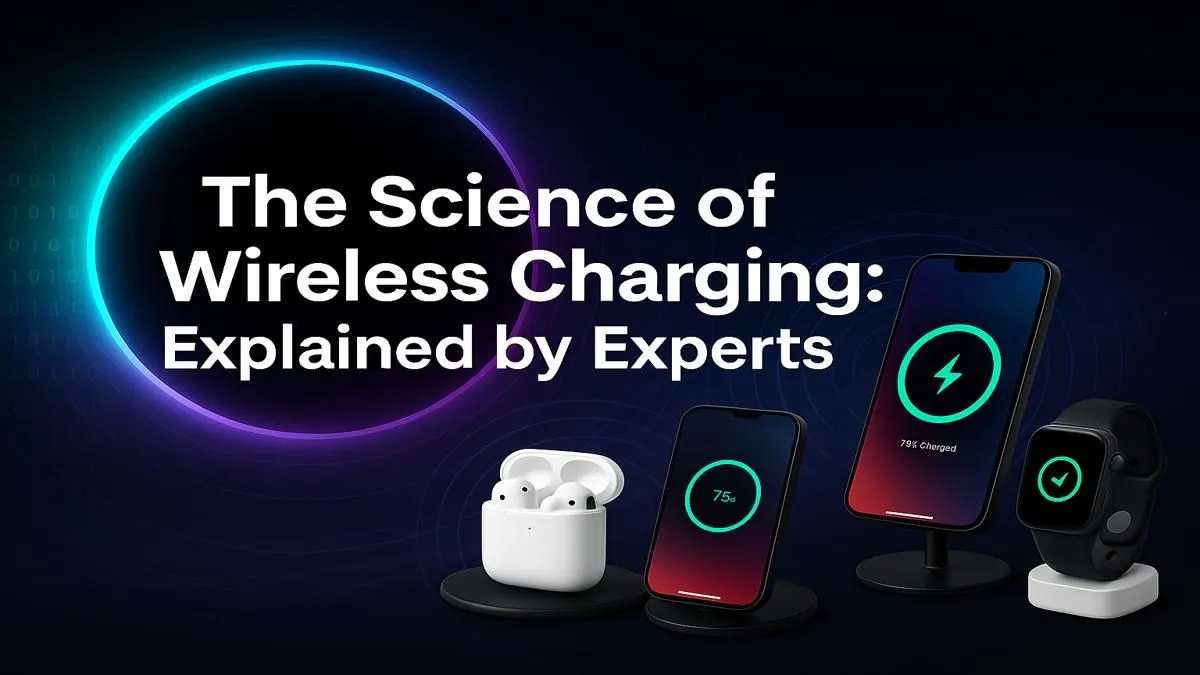
Tired of fumbling for a charging cable in the dark? Wireless charging feels like magic, but it’s pure science. For South African tech lovers and gamers, understanding how this technology works is the first step to unlocking a new level of convenience. Let's pull back the curtain on the tech that’s finally letting us cut the cord for good. ⚡
The Core Science: How Does Wireless Charging Work?
At its heart, the process relies on a principle called electromagnetic induction. It sounds complex, but the concept is surprisingly simple.
Inside a wireless charging pad is a coil of wire. When electricity from the wall socket flows through this coil, it creates a small, oscillating magnetic field around the pad. Your smartphone, smartwatch, or wireless earbuds also have a similar, smaller coil built into them.
When you place your device on the pad, its coil enters the magnetic field. This field "induces" an electric current in your device's coil... and voilà, your battery starts charging. It’s a seamless transfer of energy through the air, with no plugs required. The key is ensuring you have the right charger that is compatible with your device.
The Universal Standard: What is Qi?
You've probably seen the "Qi" (pronounced "chee") logo on phones and chargers. Qi is the universal standard for wireless charging, developed by the Wireless Power Consortium. This standardisation is brilliant because it means any Qi-certified device can be charged by any Qi-certified charger, regardless of the brand.
This has simplified things massively. Whether you're using a Samsung phone, an iPhone, or wireless earbuds, a single Qi charging pad can power them all up. Top brands like Promate have fully embraced this, offering a range of reliable Promate's Qi-certified chargers that work with hundreds of devices.
Placement Pro Tip 🎯
For the fastest and most efficient charge, try to place your device directly in the centre of the charging pad. This aligns the transmitter coil (in the pad) and the receiver coil (in your device) perfectly, ensuring maximum energy transfer. If your phone isn't charging, a slight nudge is often all it takes!
Is Wireless Charging Right For Your Setup?
So, you understand the science, but should you make the switch? Let's look at the pros and cons.
The Advantages
- Convenience: Simply placing your phone down to charge is incredibly easy. No more worn-out cables or ports.
- Aesthetics: A sleek charging pad looks much tidier on a desk or nightstand than a mess of tangled wires.
- Versatility: Many modern wireless gaming accessories, like mice and headsets, now use this tech, allowing for a truly cable-free setup.
The Considerations
- Speed: While constantly improving, wireless charging is generally a bit slower than the fastest wired charging options.
- Efficiency: A small amount of energy is lost as heat during the transfer, so it's slightly less energy-efficient than a direct cable connection.
- Positioning: You can't pick up and use your phone easily while it's charging wirelessly, unlike with a long cable.
For most people, the sheer convenience outweighs the minor speed difference, especially for overnight charging or topping up at your desk. When you're ready to simplify your power needs, exploring Promate chargers is a great place to start your journey into a cable-free life.
Ready to Cut the Cord?
Wireless charging offers incredible convenience for your phone, earbuds, and gaming gear. Stop fighting with cables and start enjoying effortless power. Explore our wide range of wireless chargers and find the perfect solution for your setup.