



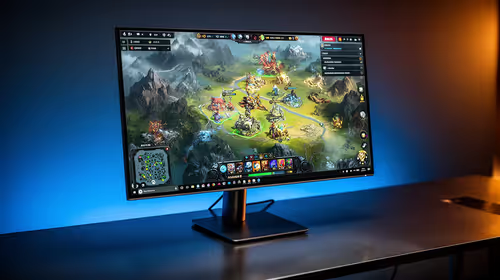
IPS vs VA for Strategy and Sim Games in SA
IPS vs VA for strategy and sim games should be judged by fit, not a single winner. Compare compatibility, latency, capacity, upgrade path, cost planning, and South African setup needs.
Read moreEver wonder how do gaming headsets work to create such immersive soundscapes? This guide breaks down the core technology, from drivers and virtual surround sound to noise-cancelling mics. Understand the magic behind every footstep and explosion to make smarter gear choices. 🎧💥
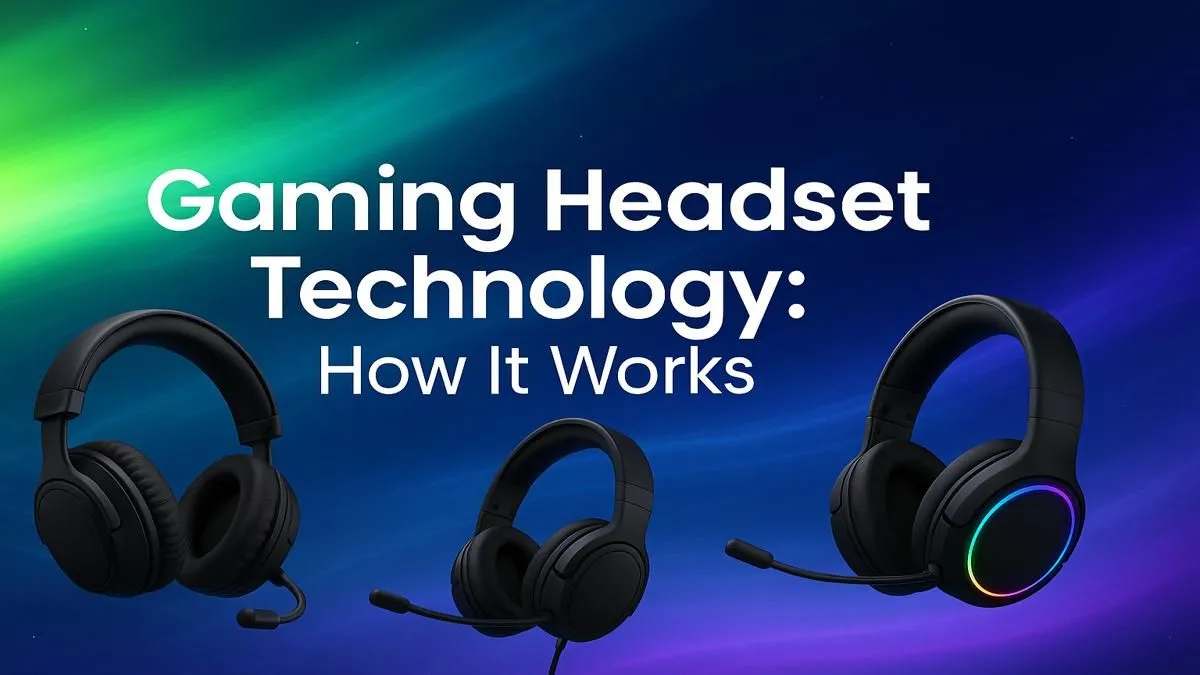
You’re the last one standing. The circle is closing in. You hear faint footsteps… to your left, behind the rock. You spin, aim, and fire for the win. That clutch moment wasn't just skill; it was audio. But have you ever stopped to wonder how do gaming headsets work to deliver that pinpoint accuracy? It’s not magic, but it’s close. Let's dive into the incredible audio tech that gives you the edge. 🎧
At its core, a gaming headset is a combination of headphones and a microphone, but the technology inside is specifically tuned for gaming. Understanding these components helps you know what you're paying for.
Think of drivers as miniature speakers inside your earcups. They are responsible for converting electrical signals into the sound you hear. The size of the driver, measured in millimetres (mm), often indicates its potential.
While size matters, the quality of the tuning and materials is just as important. This is why two headsets with 50mm drivers can sound completely different. The variety of headphone and headset components available today means there's a perfect fit for every ear and budget.
A headset's microphone is your link to your squad. Modern gaming headset technology focuses on clarity and noise isolation. A cardioid or unidirectional mic primarily picks up sound from directly in front of it (your mouth), actively filtering out background noise like your keyboard or a barking dog. This ensures your callouts are crystal clear.
This is where the real magic happens. The way a gaming headset processes audio is what separates a good one from a great one, transforming flat audio into a 3D battlefield.
Standard stereo provides two channels of audio: left and right. It’s effective, but it can be hard to tell if a sound is in front of or behind you.
This is where Virtual 7.1 Surround Sound comes in. Using clever software algorithms, the headset takes a stereo signal and processes it to simulate a seven-speaker-and-subwoofer setup. It creates subtle delays and reverb to trick your brain into perceiving sound from all directions. This is how you can hear that enemy reloading behind you. Many modern consoles also have their own proprietary audio tech, like the incredible Tempest 3D AudioTech found in many top-tier PlayStation headsets.
The debate between wired and wireless is as old as the tech itself. The truth is, both are excellent choices in 2024, but they serve different needs.
A reliable wired headset offers a pure, uncompressed audio signal with zero latency. You just plug it in and play, never worrying about battery life. It's the choice for many pro gamers who demand absolute reliability.
On the other hand, the freedom of a modern wireless headset is undeniable. 2.4GHz wireless technology has made latency a non-issue for most gamers, and battery life can often exceed 24 hours. The convenience of grabbing a snack between rounds without taking your headset off is a huge plus.
Before buying a wireless headset, check its dongle connection! A USB-A dongle is standard for most PCs and the PS4, but a more compact USB-C dongle is needed for devices like the Nintendo Switch in handheld mode or some modern ultrabooks. Many new headsets come with an adapter, but it's always best to confirm!
Beyond the core audio tech, several features contribute to how a gaming headset works for you.
Ultimately, understanding how gaming headsets work empowers you to look past the marketing hype. You can focus on the drivers, the surround sound tech, and the comfort features that will genuinely improve your experience, giving you the competitive advantage and immersion you crave.
Ready to Hear the Difference? Understanding the tech is the first step. The next is finding the headset that fits your playstyle and budget. Explore our best gaming headset deals and give yourself the audio advantage you deserve.
Gaming headsets are specifically engineered for gaming with features like integrated microphones, virtual surround sound for positional audio, and designs built for long-term comfort.
Yes, virtual 7.1 surround sound uses software to create a 3D soundscape, helping you pinpoint enemy locations from footsteps and gunfire, offering a clear competitive advantage.
Noise-cancelling microphone technology uses a secondary mic to identify and electronically filter out ambient background noise, ensuring your voice is transmitted with crystal clarity.
Closed-back headsets isolate sound, blocking outside noise for better immersion. Open-back designs offer a more natural, wider soundstage but allow sound to leak in and out.
Modern wireless headsets use low-latency 2.4GHz connections to make audio delay (latency) virtually imperceptible, making them perfectly suitable for high-stakes competitive gaming.
Drivers are the speaker components inside the earcups that create sound. Larger, higher-quality drivers can produce a richer, more detailed, and powerful audio experience.
IPS vs VA for strategy and sim games should be judged by fit, not a single winner. Compare compatibility, latency, capacity, upgrade path, cost planning, and South African setup needs.
Read more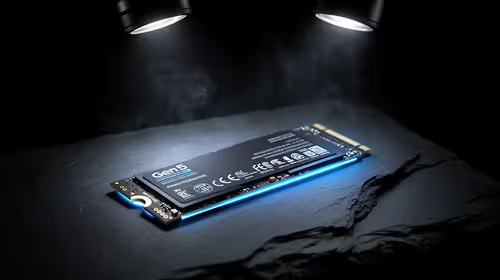
Gen 5 NVMe SSD guide for Bloemfontein gamers should be shortlisted around the job it must do. South African buyers should compare capacity, speed, thermals, and motherboard support, warranty path, and upgrade room before treating any pick as best.
Read more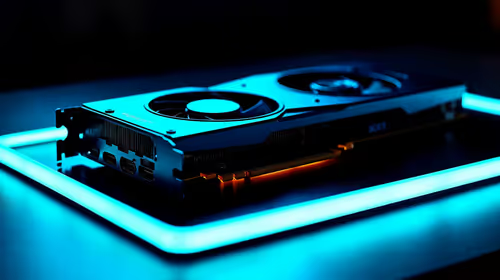
Skip the RTX 5070 if your first-time builder budget needs better balance. Better SA picks can free room for the right CPU, PSU, case, monitor, storage, and cooling while still giving a strong first gaming PC experience this year in South Africa.
Read more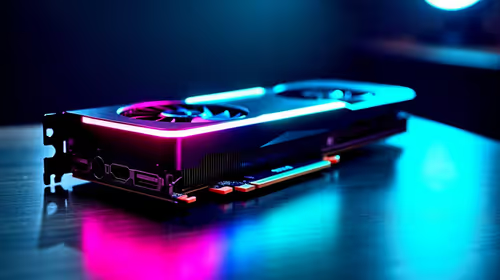
RTX 5080: weighing the pros and cons for SA should be shortlisted around the job it must do. South African buyers should compare GPU tier, VRAM, cooling, and PSU headroom, warranty path, and upgrade room before treating any pick as best.
Read more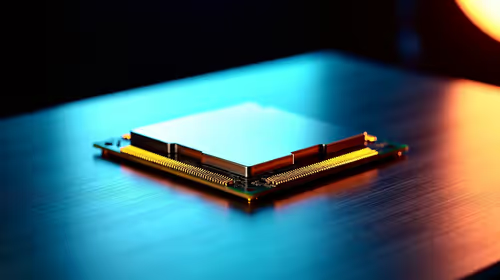
Core i5-13400F gives South African PC builders a capable mid-range CPU choice with clear limits. Check its gaming fit, discrete GPU requirement, LGA1700 platform costs, and upgrade path before locking in your parts list.
Read more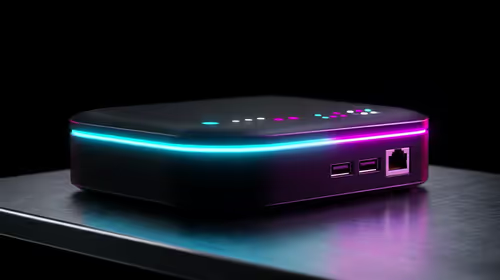
Pros and cons of the Wi-Fi 7 routers for SA should be shortlisted around the job it must do. South African buyers should compare WiFi standard, coverage, latency, and device support, warranty path, and upgrade room before treating any pick as best.
Read more
Steam content servers unreachable needs a download-path check, not an immediate reinstall of every game. Restart the client, inspect download settings and compare another connection when practical. Clearing the download cache is separate from deleting installed games.

Keychron G6 HE has built-in and swappable battery versions with different weights. The product brief lists 42g and 46g respectively, each with a 3g tolerance. Choose by grip and battery preference before treating one headline weight as universal.

Corsair HS80 v2 MAX supports 2.4GHz wireless and Bluetooth. Its maximum battery figures use RGB-off conditions and differ by connection. Check microphone routing, comfort and the exact device support before assuming every wireless mode behaves alike.

Windows taskbar notification badges can be shown or hidden in Taskbar behaviours. This changes the small app indicators, not the underlying messages. Choose a calmer desktop while keeping a deliberate routine for checking important conversations and app updates.

Windows title bar window shake can minimise other open windows when you shake the active window by its title bar. Inspect the Multitasking setting and switch it off if that gesture interrupts your work. The preference costs R0 and does not require new hardware.

Windows Print Screen opens Snipping Tool when its keyboard preference is enabled. Change the option under Accessibility, Keyboard to choose another workflow. Test whether you need a clipboard image or a saved file.

Windows desktop icons missing may be a visibility setting. Right-click the desktop, choose View and inspect Show desktop icons. If only system icons are absent, use Desktop icon settings. Check the Desktop folder before assuming files were deleted.

Windows set time zone automatically greyed out calls for a location and device-policy check. Automatic time-zone selection relies on location services. A manual time-zone choice is separate from synchronising the clock; check both before replacing hardware.
Windows title bar window shake can minimise other open windows when you shake the active window by its title bar. Inspect the Multitasking setting and switch it off if that gesture interrupts your work. The preference costs R0 and does not require new hardware.
Windows Print Screen opens Snipping Tool when its keyboard preference is enabled. Change the option under Accessibility, Keyboard to choose another workflow. Test whether you need a clipboard image or a saved file.
Windows desktop icons missing may be a visibility setting. Right-click the desktop, choose View and inspect Show desktop icons. If only system icons are absent, use Desktop icon settings. Check the Desktop folder before assuming files were deleted.
Windows set time zone automatically greyed out calls for a location and device-policy check. Automatic time-zone selection relies on location services. A manual time-zone choice is separate from synchronising the clock; check both before replacing hardware.