

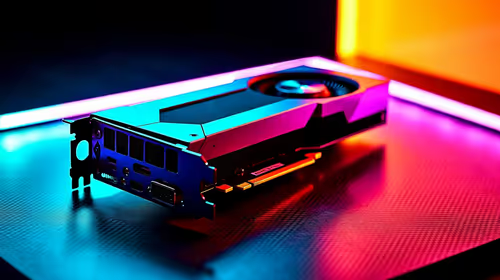
GTA 6 Max Settings on RTX 5070: Complete Guide
GTA 6 Max Settings on RTX 5070. Tested & verified settings for best FPS and visual quality on SA hardware budgets.
Read moreConfigure Dual BIOS Modes for Silent vs Performance GPU Operation: real-world performance, SA pricing, power draw and which one delivers better value for your build. The clear answer — without.

South African summers are unforgiving on gaming hardware. When room temperatures spike, your graphics card fans often sound like a jet engine taking off. But what if you could choose between peace and quiet or maximum framerates with a simple flick of a switch? Learning how to configure dual BIOS modes for silent vs performance GPU operation is the ultimate trick for PC enthusiasts.
Many modern high-end graphics cards feature a tiny physical switch located near the power connectors. This switch holds two separate BIOS profiles. Manufacturers usually label them as 'OC' (Performance) and 'Silent' (Quiet). Having two profiles means you have a built-in safety net if a firmware update fails... but it also gives you complete control over your hardware's acoustic and thermal behaviour. 🔧
When you select the Performance mode, your card prioritises raw speed. It runs an aggressive fan curve to keep temperatures low while boosting clock speeds to the absolute limit. This is ideal if you are chasing every last frame in competitive shooters.
Switching to the Silent profile lowers the fan speeds. The card will run slightly warmer and might drop a few megahertz in boost clocks. However, the noise reduction is massive. If you are playing a single-player RPG and want an immersive experience without fan drone, this mode is perfect. If you are upgrading your rig to achieve this balance, exploring the latest NVIDIA GeForce graphics cards is a great starting point.
Always power down your PC completely before flipping the BIOS switch. Changing the toggle while the system is running can cause instability or even corrupt the active BIOS profile.
Flipping the switch is incredibly easy. First, shut down your PC and switch off your power supply. Locate the small toggle switch on the edge of your GPU PCB. Gently flick it to your desired position... usually marked as 'P' for Performance or 'Q' for Quiet. Once set, turn your system back on.
If you are hunting for best graphics card deals to get a dual-BIOS model, look out for premium cooler designs from brands like ASUS, MSI, or Gigabyte. Even if you prefer buying pre-built gaming PCs, you can still open the side panel and tweak this setting yourself. 🚀
Your choice depends entirely on your setup and preferences. If your PC sits right next to your ear on the desk, the Silent mode will save your sanity. If you wear a noise-cancelling headset and want maximum performance to justify every ZAR spent on your rig, leave it in Performance mode.
Remember to monitor your temperatures. A cooler card generally lasts longer. If you are looking to optimise your entire setup for better airflow, keep an eye on our weekly tech specials for case fans and cooling upgrades. ✨
Ready to Upgrade Your Visuals? Finding the perfect balance between noise and performance is key to a great gaming experience. If your current card is struggling to keep up, explore our massive range of graphics cards and find the perfect GPU to conquer your favourite titles.
Configure Dual BIOS Modes for Silent vs Performance GPU Operation is available at Evetech.co.za with local SA warranty, Rand pricing and nationwide delivery. Stock and pricing is updated in real time on the product page.
It depends on your workload and budget. We break down the key performance differences, SA pricing gap and the scenarios where each one is the smarter buy.
Real-world gaming performance varies by title and settings. The article covers head-to-head FPS benchmarks and the resolutions where the gap actually shows up.
We compare current Rand pricing from trusted SA retailers and show which option delivers more performance per Rand for your build tier.
Each option has clear wins and compromises covered in the article — from power draw and thermals to platform cost, upgrade path and feature set.
GTA 6 Max Settings on RTX 5070. Tested & verified settings for best FPS and visual quality on SA hardware budgets.
Read more
Cyberpunk 2077 Max Settings on RTX 5080. Tested & verified settings for best FPS and visual quality on SA hardware budgets.
Read more
Starfield Max Settings on RTX 5070 Ti. Tested & verified settings for best FPS and visual quality on SA hardware budgets.
Read more
AMD RX 9050 XT: Rumoured Specs, Price & Release. SA-focused analysis with local pricing data, real-world insights & actionable buying advice.
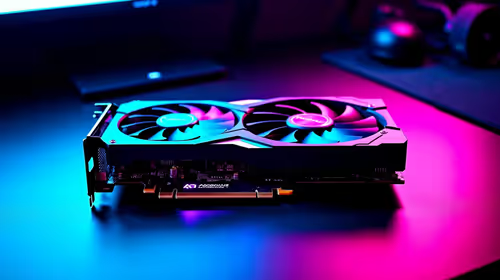
Can RTX 4080 Super Run AI Workloads for SA Developers Detailed answer with SA data, expert analysis & practical recommendations for local buyers.
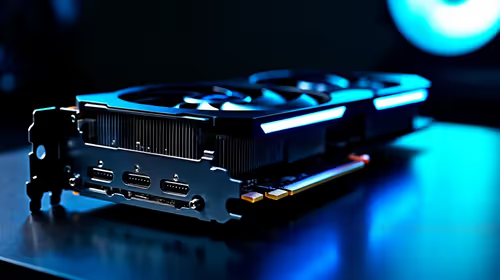
Can RTX 4090 Run AI Workloads for SA Developers Detailed answer with SA data, expert analysis & practical recommendations for local buyers.
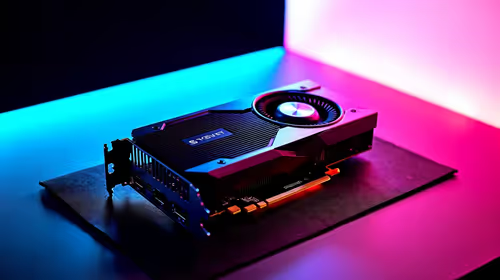
Top Settings for Intel Arc B580 at Ultrawide 1440p picks evaluated on performance, value & SA availability with current Rand pricing from Evetech.
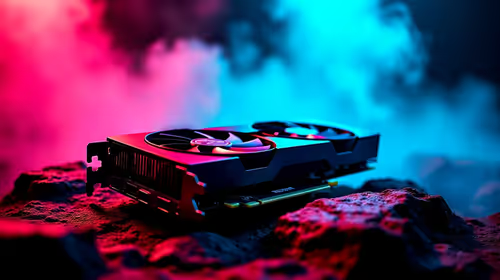
RTX 4060 CS2 Low Settings at 1080p: FPS Results. Real-world benchmark data, FPS numbers & performance analysis. What SA gamers can actually expect.
Visual Artifacts: Possible GPU Issue Issue #1. Diagnosis steps, proven fixes & when to seek professional help. SA-specific support info included.
Can the RTX 4090 Handle 1440p 144Hz Gaming. Performance testing verdict with real data & practical recommendations for SA buyers.
Top ASUS GPU Under R15000 picks evaluated on performance, value & SA availability with current Rand pricing from Evetech.
GTA 6 Max Settings on RTX 5070. Tested & verified settings for best FPS and visual quality on SA hardware budgets.
Cyberpunk 2077 Max Settings on RTX 5080. Tested & verified settings for best FPS and visual quality on SA hardware budgets.
Starfield Max Settings on RTX 5070 Ti. Tested & verified settings for best FPS and visual quality on SA hardware budgets.
Top RTX 5090 Under R5000 picks evaluated on performance, value & SA availability with current Rand pricing from Evetech.