

Humidity Damage to PC Components: Recovery Guide
Humidity Damage to PC Components: Recovery Guide. Everything you need to know with SA pricing, step-by-step instructions & expert recommendations.
Read moreDiscover the superior IPS monitor color accuracy that professionals demand. Learn why consistent, vibrant colors and wide viewing angles make IPS panels the top choice for graphic design, photo editing, and immersive gaming. Ready to see the difference? 🎨✨
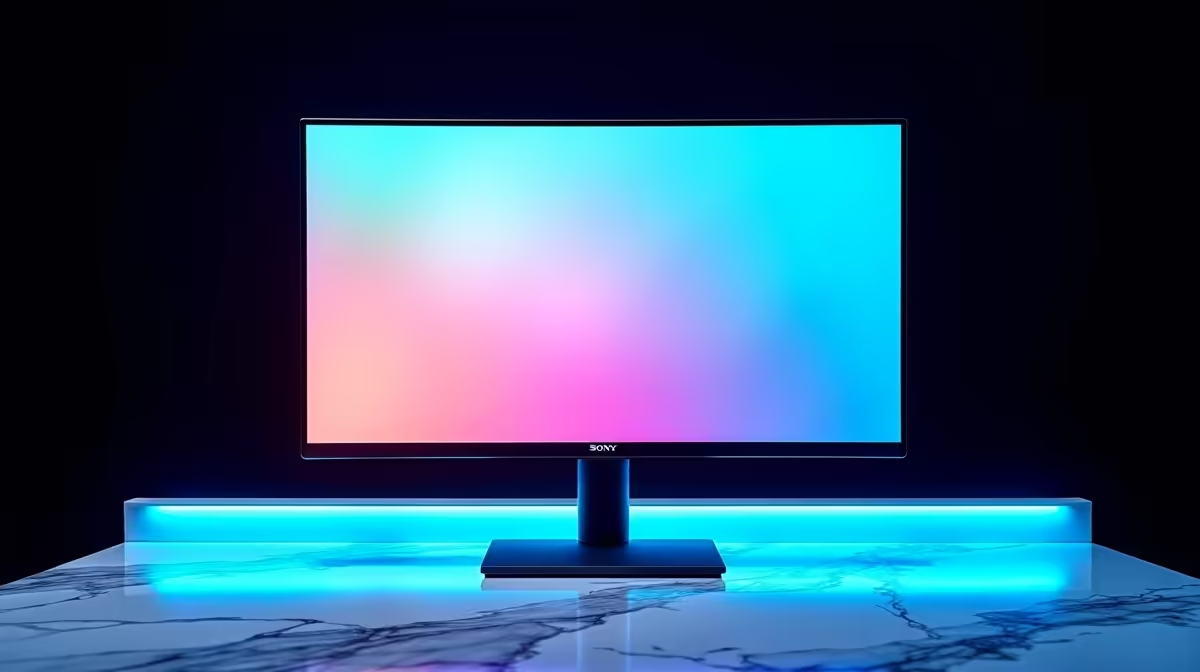
Ever spent hours editing a photo, only for it to look dull and lifeless on your phone? Or felt the neon-drenched streets of Night City in Cyberpunk 2077 lacked their intended punch? The culprit is often your screen. Your monitor is your window to the digital world, and if its colours are off, your entire experience suffers. This is where the brilliant science behind IPS monitor colour accuracy comes in, ensuring what you see is what you get.
Let's get straight to it. IPS stands for In-Plane Switching. It’s a type of screen technology that arranges and controls the liquid crystals inside your display differently from older panel types like TN (Twisted Nematic) or VA (Vertical Alignment).
In simple terms, IPS panels allow for more precise control over the light passing through each pixel. This results in two massive benefits:
This technology is the foundation for any display where seeing the right colour is non-negotiable.
You might think refresh rate and response time are all that matter for gaming, but true IPS monitor colour accuracy is a massive tactical and immersive advantage. In a game like Call of Duty: Warzone, the ability to distinguish between subtle shades of green and brown can be the difference between spotting a camouflaged enemy and getting sent to the Gulag.
Beyond the competitive edge, it’s about experiencing the game as the artists intended. The breathtaking vistas of Elden Ring or the rich, atmospheric lighting of Alan Wake 2 are brought to life with a colour-accurate display. It ensures that deep reds look like deep reds, not a washed-out orange. This visual fidelity, especially on specialised gaming monitors that pair great colour with high refresh rates, is transformative. For maximum immersion, many South African gamers are finding that immersive curved monitors create a panoramic experience that truly pulls you in.
If you're a photographer, graphic designer, or video editor in South Africa, IPS monitor colour accuracy isn't a luxury... it's a necessity. Your work depends on precision. A slight colour shift on your screen can lead to printed materials or digital assets that look completely wrong to the client.
This is where colour gamuts come in. A monitor's gamut is the range of colours it can produce.
Working on a display with poor colour coverage is like painting in a dimly lit room. You can't trust what you see. That’s why professionals gravitate towards displays that guarantee accuracy, often pairing them with the incredible detail of high-resolution 4K monitors. Even for those with a mobile workflow, today's versatile portable monitors offer fantastic colour performance for on-the-go editing.
Even the best IPS monitors benefit from calibration. While factory calibration is good, your room's lighting conditions can affect perception. For professional-grade IPS colour accuracy, consider a hardware calibrator. It's a small investment to guarantee your work looks perfect on every device, every time.
When you're ready to upgrade, don't just look at the size and price. Dig into the specs to find a monitor that delivers the colour performance you need. Look for:
Finding the right balance of features is key, and you can explore these specs across our full range of PC monitors to find your perfect fit. And once you have your screen, don't forget that the right monitor accessories, like a quality monitor arm, can perfect your setup's ergonomics.
Ready to See True Colour? Investing in a display with excellent IPS monitor colour accuracy is one of the best upgrades you can make. Explore our best PC monitor deals and find the perfect screen to bring your world to life in vibrant, accurate detail.
For creative professionals, accurate color ensures that on-screen visuals translate perfectly to print or digital formats. IPS panels deliver this consistency reliably.
Yes, IPS panels generally offer the best color reproduction and the widest viewing angles, ensuring colors appear vibrant and consistent no matter your perspective.
The primary benefits of an IPS display are superior color accuracy, excellent color consistency across wide viewing angles, and increasingly fast response times for gaming.
Absolutely. Modern IPS monitors combine fantastic color vibrancy with low response times and high refresh rates, making them an excellent choice for immersive gaming experiences.
Yes, on TN and some VA panels, colors can shift when viewed from an angle. IPS monitor viewing angles are much wider, maintaining exceptional color and contrast integrity.
IPS glow is a faint light visible in the corners of a dark screen. While a characteristic of the technology, it typically does not impact color accuracy in normal use.
Humidity Damage to PC Components: Recovery Guide. Everything you need to know with SA pricing, step-by-step instructions & expert recommendations.
Read more
Gamer Spending Trends April : Complete Setups. Clear setup instructions with SA-specific considerations, troubleshooting tips & recommended components.
Read more
Setting Up DDR5 32GB Kit. Tested & verified settings for best FPS and visual quality on SA hardware budgets.
Read more
Tech Setup Guide for SPU Res Students. Clear setup instructions with SA-specific considerations, troubleshooting tips & recommended components.
Read more
Monster Hunter Wilds Ultrawide Support: 21:9 and. Clear setup instructions with SA-specific considerations, troubleshooting tips & recommended components.
Read more
Apple iPad Durability Guide: Cases, Screen. Practical breakdown of costs, regulations & whether it makes financial sense for SA buyers.
Read more
AMD RX 9050 XT: Rumoured Specs, Price & Release. SA-focused analysis with local pricing data, real-world insights & actionable buying advice.
Can RTX 4080 Super Run AI Workloads for SA Developers Detailed answer with SA data, expert analysis & practical recommendations for local buyers.
Can RTX 4090 Run AI Workloads for SA Developers Detailed answer with SA data, expert analysis & practical recommendations for local buyers.
Top Settings for Intel Arc B580 at Ultrawide 1440p picks evaluated on performance, value & SA availability with current Rand pricing from Evetech.
RTX 4060 CS2 Low Settings at 1080p: FPS Results. Real-world benchmark data, FPS numbers & performance analysis. What SA gamers can actually expect.
Visual Artifacts: Possible GPU Issue Issue #1. Diagnosis steps, proven fixes & when to seek professional help. SA-specific support info included.
Can the RTX 4090 Handle 1440p 144Hz Gaming. Performance testing verdict with real data & practical recommendations for SA buyers.
Top ASUS GPU Under R15000 picks evaluated on performance, value & SA availability with current Rand pricing from Evetech.
GTA 6 Max Settings on RTX 5070. Tested & verified settings for best FPS and visual quality on SA hardware budgets.
Cyberpunk 2077 Max Settings on RTX 5080. Tested & verified settings for best FPS and visual quality on SA hardware budgets.
Starfield Max Settings on RTX 5070 Ti. Tested & verified settings for best FPS and visual quality on SA hardware budgets.
Top RTX 5090 Under R5000 picks evaluated on performance, value & SA availability with current Rand pricing from Evetech.