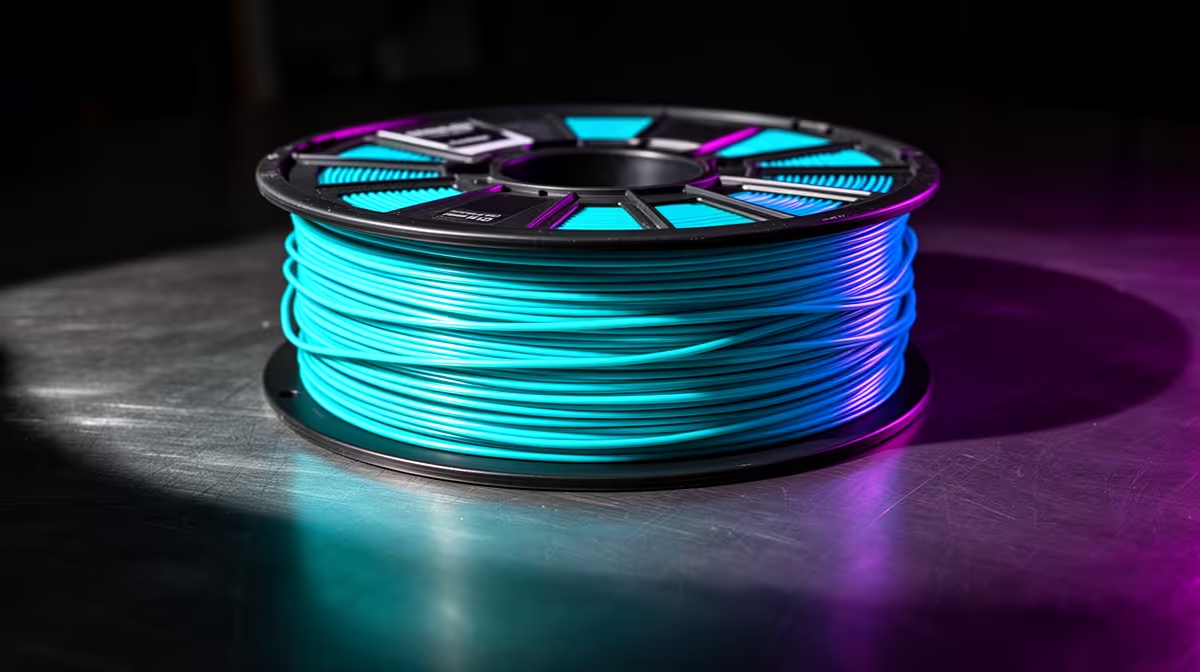
When a printed part needs to survive a hot car, a load-bearing bracket, or the outdoors, PLA quietly fails and Bambu PETG is what you reach for instead. It prints tougher, shrugs off heat and UV that would warp PLA, and on a Bambu machine it carries an RFID tag that loads the correct settings into the AMS automatically. For a Bambu owner who has outgrown PLA's limits, PETG is the obvious next material, and the auto-calibration removes most of the friction that scares people off it.
Quick Answer
Yes, Bambu PETG is the right choice for stronger prints if you have a Bambu printer with an AMS, because the RFID tag auto-loads the correct profile and it prints in roughly the 230 to 260 degree range for parts far tougher and more heat-resistant than PLA. The main trade-off is that PETG must be kept dry, so you store and handle it with a little more care than PLA.
Why PETG over PLA for strong parts
PLA is the easiest material to print and the worst at staying strong in the real world. It is brittle, softens at temperatures a parked car easily reaches, and degrades outdoors. PETG fixes the exact weaknesses that matter for functional parts. It is tougher and more impact-resistant, holds up to higher temperatures, and resists water and UV well enough for outdoor use. A bracket, a clip, an enclosure, or anything that takes stress or heat is a far better candidate for PETG than PLA.
The cost of that durability is a slightly fussier print. PETG runs hotter, is more prone to stringing, and is far less forgiving of moisture. Those are real considerations, but on a Bambu system the auto-settings and a sensible storage habit handle most of them for you, which is what makes PETG approachable here rather than intimidating.
How the RFID and AMS make it easy
This is the heart of the appeal. Bambu's own PETG ships with an RFID tag that the AMS reads on load, pulling in the temperature, flow, and other parameters Bambu has already dialled in. You do not hunt for a profile or guess at settings, the printer simply knows what is loaded and prints accordingly. For a material that is genuinely harder to tune than PLA, having the manufacturer's tested settings applied automatically removes the single biggest barrier for newcomers.
That auto-calibration is why a Bambu owner gets so much more out of Bambu-branded PETG than a generic roll. A third-party spool with no RFID means manual profiles and trial-and-error temperature towers. The branded roll just works, slots into the AMS, and is recognised, which for most people is worth the convenience even if a generic spool costs a little less. The Bambu 3D printer range at Evetech covers the machines and AMS units that make this seamless.
The temperature story
PETG prints meaningfully hotter than PLA, roughly in the 230 to 260 degree band depending on the exact product and speed, against PLA's gentler temperatures. That higher nozzle heat is part of why the finished part resists heat better in use: the material itself has a higher softening point. The auto-profile sets this for you, but it is worth understanding, because it explains both why PETG is stronger in a hot environment and why you should not just reuse a PLA profile on it.
Bed adhesion and stringing
PETG sticks to a bed aggressively, sometimes too well, so the right surface and a little release agent matter to avoid damaging the plate. It is also more prone to fine stringing between travel moves. Both are well-understood and the Bambu profiles account for them, but they are the two quirks new PETG users notice first. A clean, dry spool and the correct plate go a long way.
Keeping it dry
This is the one rule you cannot ignore. PETG absorbs moisture from the air, and wet PETG prints badly, with popping, stringing, and weak layers. Store it sealed with desiccant, and for long prints in a humid stretch, dry it beforehand. This is more demanding than PLA, which tolerates a bit of neglect, but it is a simple habit rather than a hardship. Treat the spool with the same care you would any engineering filament and it rewards you with clean, strong parts. Replacement desiccant, sealed storage, and printer consumables sit in the accessories best sellers.
Where PETG fits among the materials
It helps to place PETG on the ladder of common filaments. PLA sits at the bottom for ease: easiest to print, finest detail, weakest in the real world. PETG is the next rung up, the first genuinely functional material most people reach, trading a little print-ease for real toughness and heat resistance. Above it sit harder engineering materials like ABS and nylon, which are stronger again but far fussier, often needing an enclosure and producing fumes you must ventilate.
What makes PETG the sweet spot is that it delivers most of the durability people actually need without demanding the controlled environment those harder materials require. You get water resistance, UV resistance, impact toughness, and useful heat resistance, while still printing on an open Bambu machine with minimal fuss. For the vast majority of functional home and hobby parts, PETG is as far up the ladder as anyone needs to climb, which is why it is the default upgrade from PLA rather than a jump to something exotic.
Who PETG is for
PETG is the right pick the moment a part needs to do a job rather than just look good. Functional brackets, outdoor fittings, parts exposed to warmth, anything that flexes or takes a knock, all favour PETG over PLA. If you are printing decorative models, miniatures, or prototypes that live indoors and never bear load, PLA remains easier and cheaper and there is no reason to switch.
For a Bambu owner specifically, the auto-settings tilt the decision further toward PETG, because the usual reason people avoid it, the tuning hassle, is largely removed. You get stronger, more durable parts with little more effort than PLA once the spool is dry and loaded. The practical upshot is that PETG should be on the shelf next to your PLA, not treated as an advanced material you graduate to one day, because the AMS does the hard part for you.
Frequently Asked Questions
Does Bambu PETG really auto-configure in the AMS?
Yes. Bambu's PETG carries an RFID tag the AMS reads on load, which applies the tested temperature, flow, and other settings automatically. You avoid the manual tuning that PETG normally demands, which is the main reason it is so approachable on a Bambu system.
Is PETG actually stronger than PLA?
For functional use, yes. PETG is tougher, more impact-resistant, and holds up to higher temperatures and outdoor conditions far better than PLA. PLA can print at higher detail for display pieces, but PETG wins clearly on durability and heat resistance.
What temperature does Bambu PETG print at?
Roughly the 230 to 260 degree range depending on the exact product and print speed, noticeably hotter than PLA. The RFID profile sets this for you, so you do not need to dial it in manually on a Bambu machine.
Why does PETG have to be kept dry?
PETG readily absorbs moisture from the air, and damp filament prints poorly with popping, stringing, and weak layers. Sealed storage with desiccant, and drying before long prints in humid weather, keeps it printing cleanly.
Should I buy Bambu-branded PETG or a generic spool?
On a Bambu printer the branded roll's RFID auto-settings are a real convenience, since generic spools need manual profiles and tuning. If you value the seamless AMS recognition, the branded roll is usually worth it even at a small premium.
Ready to print parts that survive the real world, not just the shelf? Explore the Bambu 3D printer range at Evetech and pair your machine with PETG for stronger, more durable prints straight out of the AMS.