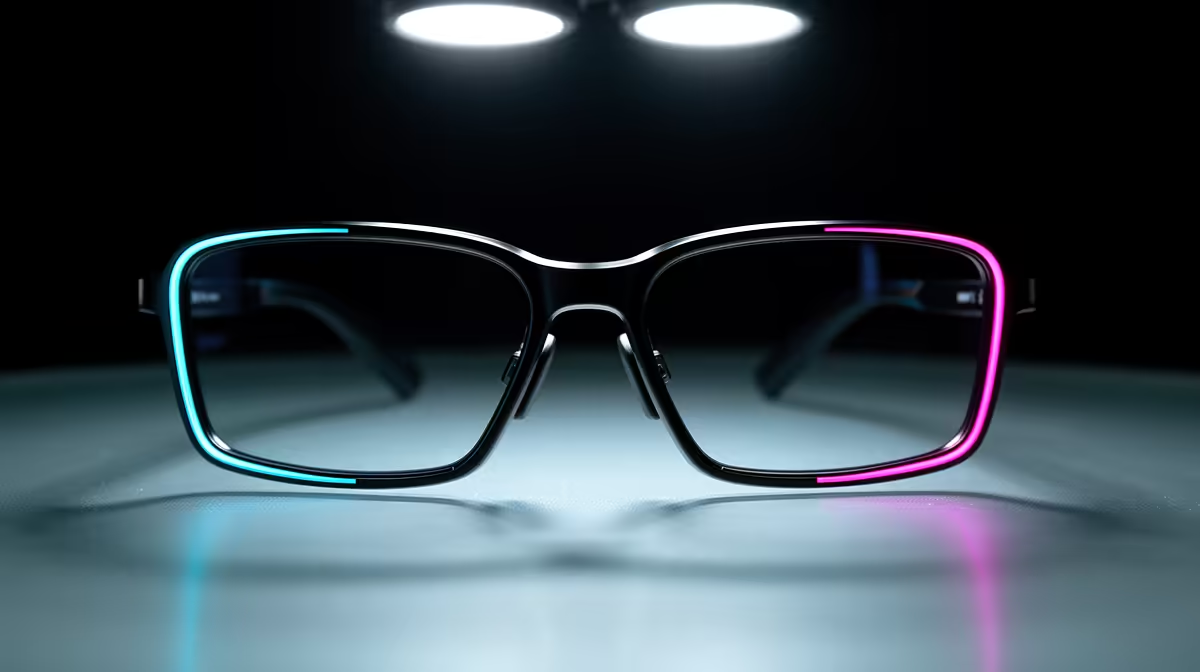
Buying smart glasses in 2026 is less a hardware decision than a bet on whose assistant lives on your face for the next few years. Ray-Ban Meta is shipping now, mature, and running Meta's AI. Google's Android XR glasses, powered by Gemini and built with Warby Parker and Gentle Monster, are due later this fall and arrive with one detail that changes the maths for a lot of people: they work with iPhones out of the box. Which ecosystem you back shapes what your glasses can actually do, and how that grows over time.
Quick Answer
If you want glasses today and live inside Meta's apps, Ray-Ban Meta is the safe pick, with one model that even adds an in-lens display. If you can wait for fall 2026 and lean on Google services, or you own an iPhone and want a Gemini agent that runs errands on your phone, the Android XR glasses are the more future-facing bet. Both are excellent capture and audio devices; the difference is the assistant and the platform behind it.
The two ecosystems, plainly
Ray-Ban Meta runs on Meta's Llama-based AI and ties tightly into Instagram, WhatsApp, Facebook, and Messenger. It is a known quantity. It can take a photo or video hands-free, read out a notification, identify a building you are looking at, and route a call to your phone. Meta has sold this category harder than anyone, shifting more than seven million AI glasses in 2025 and holding roughly 82 percent of global smart-glasses shipments. That scale matters, because it funds the software updates that keep the glasses useful after you buy them.
Google's entry runs Android XR with Gemini as the assistant. Google is positioning Gemini as more context-aware for real-world tasks, and the early framing is telling: where Meta's glasses can identify and summarise, Google demonstrated glasses that can actually order you a coffee through a third-party app like DoorDash. Gemini also handles turn-by-turn navigation, real-time translation and live photo editing in ways Meta's current glasses cannot. The first devices ship without an in-lens display, focusing on cameras, speakers, and microphones, with Warby Parker and Gentle Monster handling the frames.
The iPhone factor changes the calculus
For years the assumption was that Android-branded wearables favoured Android phones. Google broke that here. The Android XR glasses pair with both Android and iOS, making them the first Android XR glasses to work cross-platform out of the box. A Gemini agent can run a task on your phone while you stay heads-up, regardless of whether that phone is a Pixel or an iPhone.
That is significant in South Africa, where iPhone ownership is strong among the kind of buyer who spends on premium eyewear. It means an iPhone owner is no longer choosing between Meta's glasses and nothing; Google is now a genuine option for them. You can see where this category is heading in the AR glasses range at Evetech, which tracks the head-worn devices as they arrive.
Display or no display
This is the cleanest dividing line right now. Meta's Ray-Ban Display is the only option currently shipping with an in-lens screen, so it can show you turn-by-turn prompts, captions, and notifications in your field of view. Google's first Android XR glasses skip the display entirely and lean on audio and the assistant. If a heads-up visual layer is what you want, Meta has it today; if you would rather have a discreet audio-and-camera device with a smarter agent, Google's approach fits.
Agentic tasks: the real frontier
The sharpest distinction between the two platforms is not hardware, it is what the assistant can actually do without you intervening. Meta's AI excels at identification, summarising what it sees, captioning photos and managing within the Meta ecosystem. Google's Gemini is being built as an agentic model, meaning it can take actions across third-party apps on your phone, DoorDash, Uber, Google Maps, not just describe them. That gap in functionality is likely to widen as Android XR matures, because Gemini has access to the Android app layer in a way Meta's assistant does not. For buyers who want AI that genuinely completes tasks rather than only informing, the Google platform has more headroom.
Platform timing and launch risk
Meta's Ray-Ban glasses are a shipping, proven product with multiple generations behind them. Bugs have been ironed out, the ecosystem is mature, and software updates arrive regularly. Google's Android XR glasses are a first-generation product launching fall 2026, which means early adopters are accepting that first-gen polish will not match a three-year-old platform. Features may be incomplete at launch, third-party app integrations may take months to stabilise, and frame availability will be limited initially to Warby Parker and Gentle Monster styles.
How to actually choose
Think about where your day already lives. Heavy WhatsApp and Instagram users get the most from Ray-Ban Meta because the glasses slot straight into apps they already open dozens of times a day. People who run their lives through Gmail, Google Calendar, Maps, and Search will find Gemini's integration far more natural, and the agentic tasks more genuinely useful.
Then weigh timing and risk. Ray-Ban Meta is proven, in stock, and supported now. Android XR is newer, arriving fall 2026, and as a first-generation product it carries the usual early-adopter caveats around polish and app maturity. The best-selling accessories list is a reasonable place to gauge what wearable tech is moving locally while the two platforms settle. Whichever way you lean, you are not buying a finished story; you are buying into a roadmap, so back the company whose services you already use most.
Frequently Asked Questions
Do Google's Gemini glasses work with an iPhone?
Yes. Google confirmed the Android XR glasses pair with both Android and iOS, making them the first Android XR glasses to support iPhone out of the box. A Gemini agent can act on your phone whether it runs Android or iOS.
When do the Google Gemini smart glasses launch?
Google confirmed a fall 2026 launch window, unveiled at Google I/O 2026. The first frames come from Warby Parker and Gentle Monster and arrive later in the season, after Ray-Ban Meta has already been on sale.
Which glasses have a built-in display?
The Ray-Ban Meta Display is currently the only model shipping with an in-lens screen for notifications and prompts. Google's first Android XR glasses launch without a display and rely on audio, cameras, and the Gemini assistant instead.
Which AI is more capable for real-world tasks?
Meta's Llama-based assistant handles identification, summaries, and photo capture well. Google positions Gemini as more context-aware and demonstrated agentic tasks like placing an order, which Meta's glasses cannot yet do. For action-oriented use, Gemini looks ahead.
Is it better to buy now or wait?
If you want a proven device and live in Meta's apps, buying Ray-Ban Meta now makes sense. If you use Google services heavily or own an iPhone and want cross-platform Gemini support, waiting for the fall 2026 Android XR glasses is the stronger long-term call.
Deciding which assistant deserves a spot on your face? Keep an eye on the AR glasses range at Evetech as both ecosystems land, and match the glasses to the services you already use every day.