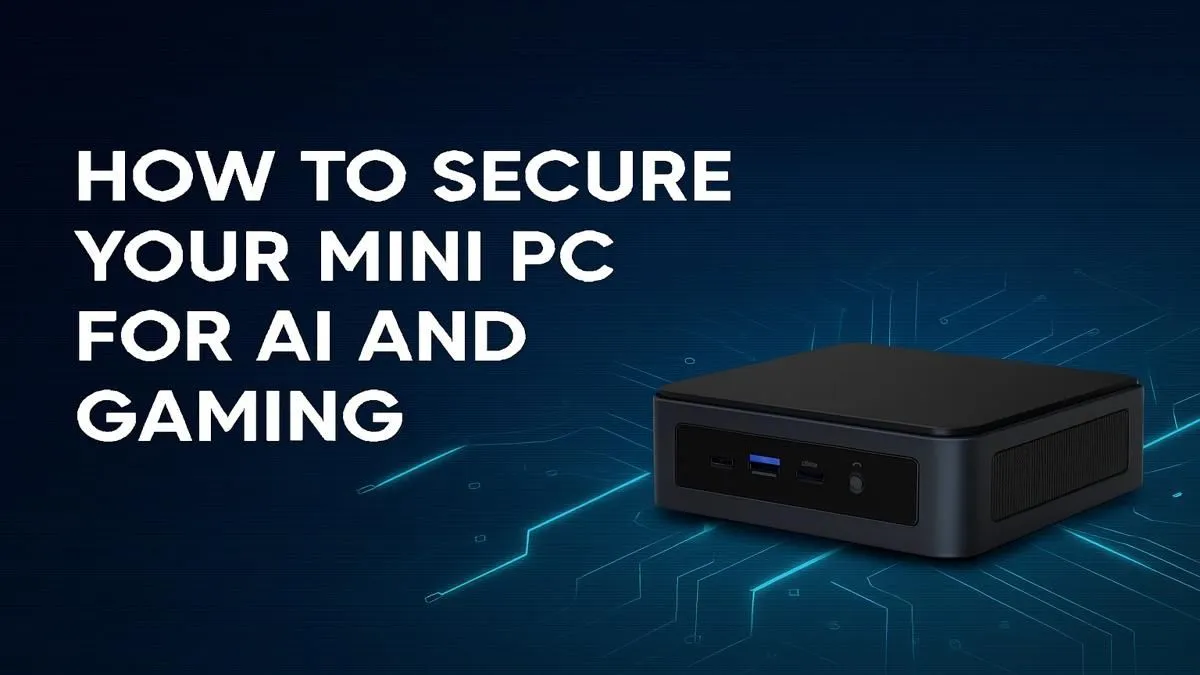
You’ve just unboxed a tiny beast. A mini PC, ready to crunch AI data or dominate your favourite game lobbies from a desk corner. But in the excitement, a crucial step is often missed: security. These compact powerhouses are just as vulnerable as their bigger siblings, and securing them is non-negotiable. Proper mini PC security isn't just about antivirus… it’s about building a digital fortress for your gaming accounts and personal data.
Why Focus on Mini PC Security?
It's easy to see a small box and underestimate the risk. But whether it's running a Plex server, training a local AI model, or serving as your primary gaming rig, your mini PC is a gateway to your digital life. Unlike a tower you might tinker with often, these devices can become "set and forget," making them a prime target for automated attacks that scan for unpatched or poorly configured systems.
The stakes are high. A breach could mean losing your Steam library, having your AI projects stolen, or worse. That’s why a proactive approach to mini PC security is essential from day one. The good news? Locking down one of these powerful mini PCs is straightforward once you know the core principles.
Essential Steps to Secure Your Mini PC
Think of security in layers. You don't need to be a cybersecurity guru to implement strong, effective protections. Start with these foundational steps to create a solid defence for your compact rig. 🔒
Start with a Clean, Updated OS
The moment you first boot up, your top priority is the operating system.
- Run All Updates: Before installing anything else, connect to the internet and run Windows Update (or your Linux distro's equivalent) until it reports that you are completely up-to-date. This patches known vulnerabilities.
- Remove Bloatware: Pre-installed software can sometimes introduce security holes. Uninstall any applications you don’t recognise or need. A clean system is a safer system.
Lock Down Your BIOS/UEFI
The BIOS/UEFI is the first thing that loads when your PC starts, and securing it prevents unauthorised physical access.
- Set an Administrator Password: This stops anyone from changing critical hardware settings without your permission.
- Enable Secure Boot: This feature ensures that your PC only boots using trusted software from the manufacturer, which helps protect against certain types of malware.
Firmware Pro Tip 💡
Many modern mini PCs come with a feature called TPM (Trusted Platform Module). Make sure it's enabled in your BIOS UEFI. It’s a hardware-based security feature that Windows 11 uses for things like BitLocker drive encryption, providing a much stronger level of protection for your stored data.
Master Your Network Settings
Your network connection is the main door for potential threats. Make sure it's properly bolted.
- Configure Your Firewall: The built-in Windows Defender Firewall is quite robust. Ensure it's active and review its rules, especially if you plan on running server applications.
- Use a Strong Wi-Fi Password: This is a basic but critical step. Use WPA3 encryption if your router supports it, or WPA2 at a minimum. Forgetting to secure your home network is a common mistake that undermines all your other efforts to secure your mini PC.
Investing a few minutes in these settings makes these versatile little powerhouses significantly more resilient against common threats.
Advanced Mini PC Security for Power Users
If you're pushing your rig with specialised tasks like AI development or competitive gaming, you need to add a few more layers to your mini PC security strategy. These machines, especially those from performance-focused brands like Minisforum, are capable of handling sensitive workloads that demand extra protection. 🚀
Protecting Your AI Projects
Running local AI models means you're handling potentially large datasets and valuable code.
- Isolate Your Workloads: Use tools like Docker or Windows Sandbox to run your AI projects in contained environments. If one environment is compromised, the rest of your system remains safe.
- Encrypt Your Data: Use BitLocker (on Windows Pro) or a similar tool to encrypt the entire drive. If your mini PC is ever lost or stolen, your data will be unreadable.
Fortifying Your Gaming Experience
Your gaming accounts are valuable targets, filled with purchased games and personal information.
- Enable Two-Factor Authentication (2FA): Turn on 2FA for all your gaming accounts—Steam, Epic Games, Battle.net, and others. This is the single most effective way to prevent account takeovers.
- Be Skeptical of Downloads: Be extremely cautious when downloading mods, trainers, or third-party tools. Only use reputable sources and scan every file before running it. Malware disguised as a "game enhancement" is a classic trap.
By taking these extra steps, you ensure your compact rig is not just powerful, but also a secure and reliable hub for all your projects and entertainment.
Ready to Build Your Compact Powerhouse?
A secure mini PC is the perfect foundation for your next gaming or AI adventure. With the right setup, you get incredible performance in a tiny package. Explore our massive range of mini PCs and find the perfect rig to conquer your world.