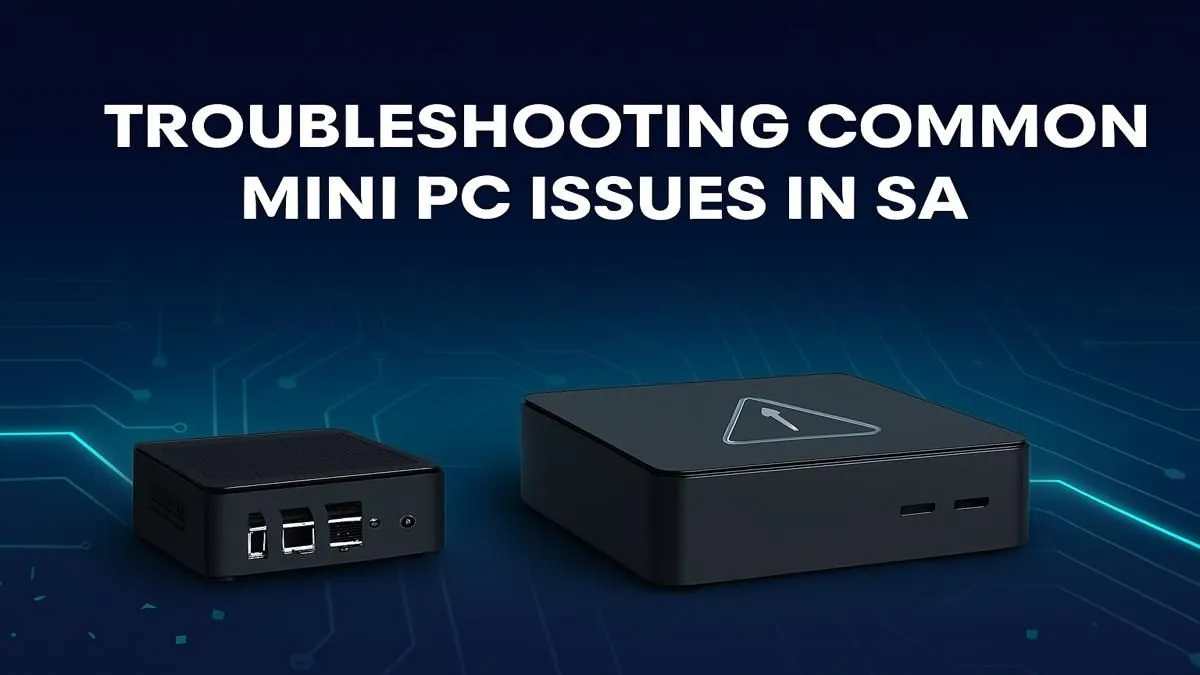
So, your Mini PC—the sleek, space-saving heart of your setup—has decided to throw a tantrum. Before you start dreading a trip to the repair shop, take a breath. Whether you're in Cape Town or Polokwane, most glitches are surprisingly easy to fix yourself. This guide is your first stop for practical Mini PC troubleshooting, designed to solve common issues and get your compact powerhouse running smoothly again. Let's get that machine back online. 🚀
First Steps: The Universal Troubleshooting Checklist
Before diving into complex fixes, always start with the basics. It’s amazing how often the simplest oversight is the culprit. This initial Mini PC troubleshooting checklist resolves more problems than you’d think.
- Check All Cables: Is the power cord firmly plugged into both the Mini PC and the wall socket? Is your HDMI or DisplayPort cable secure at both ends?
- Confirm Monitor Input: Ensure your monitor is set to the correct input source (e.g., HDMI 1, DisplayPort 2).
- Power Brick Check: Many Mini PCs use an external power brick. Does it have an indicator light? If it’s not lit, the brick itself might be the issue.
- "Have You Tried Turning It Off and On Again?": The oldest trick in the book works for a reason. Perform a full shutdown (not just sleep or hibernate) and restart the device.
Solving Common Mini PC Problems
If the basics didn't do the trick, it's time to investigate specific symptoms. From sudden slowdowns to a complete failure to boot, here’s how to tackle the most frequent Mini PC issues we see in South Africa.
Issue 1: No Power or Failure to Boot 🔌
A machine that won't turn on is terrifying, but the cause is often a simple hardware seating problem. Because the internal components of these powerful little machines are so compact, a small bump during shipping or moving can sometimes dislodge a component.
What to do:
- Unplug Everything: Disconnect the power cord and all peripherals.
- Open the Case: Most Mini PCs have a simple mechanism for opening the chassis—usually a few screws on the bottom panel.
- Reseat RAM & SSD: Gently unclip and remove the RAM stick(s). Then, carefully re-insert them until they click firmly into place. Do the same for the M.2 SSD if it's user-accessible.
- Reconnect and Test: Put the case back on, plug in only the power and monitor, and try to boot up.
Issue 2: Sluggish Performance & Overheating
Is your Mini PC suddenly running slower than a dial-up connection? The most likely cause is heat. These compact devices have less room for air to circulate, making them prone to thermal throttling, where the system intentionally slows down to prevent overheating.
What to do:
- Give It Room to Breathe: Ensure the ventilation grilles aren't blocked by books, papers, or pushed right up against a wall.
- Clean the Vents: Dust is a PC's worst enemy. Use a can of compressed air to blow dust out of the vents. Do this outside if you can!
- Check Background Processes: Open the Task Manager (Ctrl+Shift+Esc on Windows) to see if any application is hogging your CPU or RAM resources.
Performance Pro Tip ⚡
Many unnecessary apps launch when your PC starts, slowing it down. In Windows, open Task Manager, click the "Startup" tab, and disable any non-essential programs from running on boot. This can dramatically improve your startup time and overall system responsiveness.
If performance remains a constant battle, your machine might be struggling with modern software demands. Browsing a wide selection of modern mini PCs can reveal just how much faster and more efficient the latest models have become.
Issue 3: Wi-Fi or Bluetooth Headaches
Spotty Wi-Fi or a Bluetooth mouse that keeps disconnecting can ruin your workflow. This is almost always a driver issue.
What to do:
- Update Your Drivers: Go to your Mini PC manufacturer’s website (you can often find specific guides for popular brands like Minisforum) and download the latest wireless and Bluetooth drivers for your specific model.
- Reposition the PC: Avoid placing your Mini PC inside a metal cabinet or right next to other high-powered electronics, which can cause signal interference.
- Check the Antenna: Some models have small, screw-on external antennas. Make sure they are fastened securely.
These Mini PC troubleshooting steps will resolve the vast majority of day-to-day problems. By being methodical, you can often save yourself time, money, and a lot of frustration.
Ready for a Hassle-Free Upgrade? These troubleshooting tips can breathe new life into your machine. But if you're tired of battling an older model, upgrading to a new Mini PC offers more power, better efficiency, and warranty peace of mind. Explore South Africa's top Mini PC deals and find the perfect compact rig for your setup.