Ever stared at your GPU, wondering what makes it tick? Beyond the fans and fancy RGB, it’s all about the software… the drivers. For many South African tech enthusiasts, the idea of tinkering with this code seems out of reach. But what if you could? The world of open source GPU projects in South Africa is more accessible than you think, offering a unique chance to learn, contribute, and join a global community of developers right from your PC.
This isn't just for elite coders. It's for the curious, the problem-solvers, and anyone who wants to understand their hardware on a deeper level. Let's dive in.
Why Bother with Open Source GPU Projects?
Let’s be honest, most of us just want to install a driver and jump straight into a game. So, why would anyone in South Africa dedicate their time to developing them? The reasons are surprisingly compelling.
For starters, it’s one of the best ways to learn how modern computers work. You get a front-row seat to the complex dance between hardware and software. This experience is invaluable, building skills in C/C++, systems programming, and debugging that are highly sought after in the tech industry.
Beyond personal growth, you're helping the community. Open source drivers, particularly on Linux, are crucial for performance, stability, and enabling new features on the graphics hardware itself. By contributing, you could be the person who fixes a flickering bug in a popular game or helps get a brand-new GPU working on an open platform. That's a powerful feeling. 🚀
Understanding the Landscape: Major Players & Their Drivers
The world of GPUs is dominated by a few key players, and each has a different approach to open source development. Understanding this is key to finding where you can contribute.
AMD: The Open Source Champion
For years, AMD has been praised for its commitment to open source. Their AMDGPU driver for Linux is a core part of the Mesa 3D graphics library. This makes working with AMD's Radeon GPUs one of the most straightforward entry points for aspiring developers. The code is out there, the community is active, and the documentation is constantly improving.
NVIDIA: A Changing Tide
Historically, NVIDIA has kept its driver code proprietary. However, the community-driven "Nouveau" project has long provided a reverse-engineered open source alternative. More recently, NVIDIA has started open-sourcing parts of its kernel modules, a massive step forward. This new chapter creates exciting opportunities for developers to work with NVIDIA's GeForce lineup in a more open environment.
Intel: Open from the Start
Intel has a long and solid history of providing open source drivers for its graphics hardware. From their older integrated graphics to the new lineup of Intel Arc graphics cards, their development process is largely transparent, making it another fantastic place to learn and contribute. The same principles apply to the drivers that power many professional workstation graphics cards, where stability is paramount.
Your Starting Point: How to Get Involved from Mzansi 🇿🇦
Ready to jump in? Contributing to open source GPU projects from South Africa is a marathon, not a sprint. Here’s a practical path to get you started.
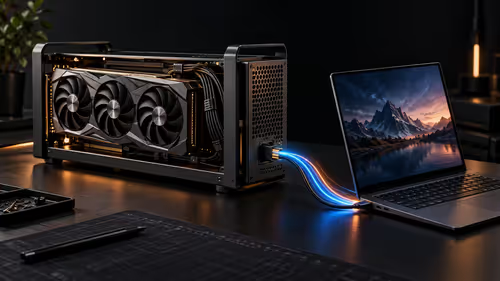
- Get the Hardware: You don't need a top-tier card. In fact, an older or mid-range card can be a perfect learning tool. Keep an eye out for great graphics card deals to get a dedicated piece of hardware for your experiments.
- Embrace Linux: The vast majority of open source driver development happens on Linux. Install a user-friendly distribution like Ubuntu, Fedora, or Pop!_OS on a separate drive or partition. This will be your development playground.
- Find a Community: Join the mailing lists and IRC/Discord channels for projects that interest you. The Mesa 3D project is the central hub for most AMD and Intel development. Lurk, listen, and learn the culture.
- Start Small: Your first contribution doesn't have to be a complex performance optimisation. Reporting a bug with detailed, reproducible steps is incredibly valuable. From there, you can try testing patches submitted by other developers or fixing a typo in the documentation.
Developer Pro Tip 🔧
Most open source projects use Git for version control and platforms like GitLab or GitHub to manage code. A fantastic way to start is by searching the project's issue tracker for tags like "good first issue" or "easyfix". These are bugs specifically marked by experienced developers as great entry points for newcomers.
Essential Gear for Your Open Source Journey
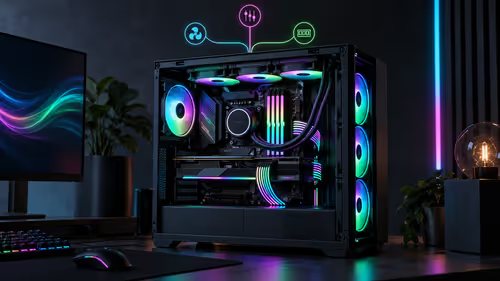
While your passion is the main driver, having the right setup makes the journey smoother. A powerful GPU is obviously central, but don't neglect the rest of your system. A multi-core CPU helps with compiling large codebases, and plenty of RAM is essential for running virtual machines or containers.
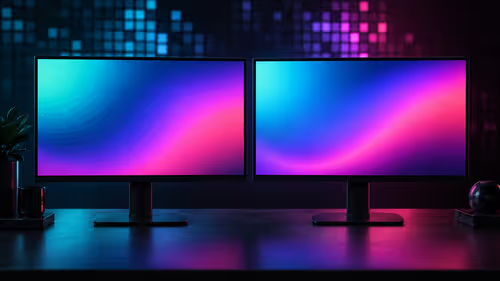
Even simple upgrades can make a huge difference. Think about a second monitor to view code and documentation simultaneously, or a reliable power supply to ensure system stability during long testing sessions. Investing in quality GPU accessories and components builds a solid foundation for both gaming and serious development work. ✨
Joining an open source GPU project is a challenging but deeply rewarding path. It’s a way to transform your passion for gaming and tech into a tangible skill, connecting you with a global community and putting you at the cutting edge of graphics technology... all from right here in South Africa.
Ready to Power Your Next Project?
Whether you're coding the next big driver or just want to dominate the latest AAA title, the right hardware is everything. For the best performance, choice, and value in South Africa, a powerful GPU is non-negotiable. Explore our massive range of graphics card deals and find the perfect engine for your passion.