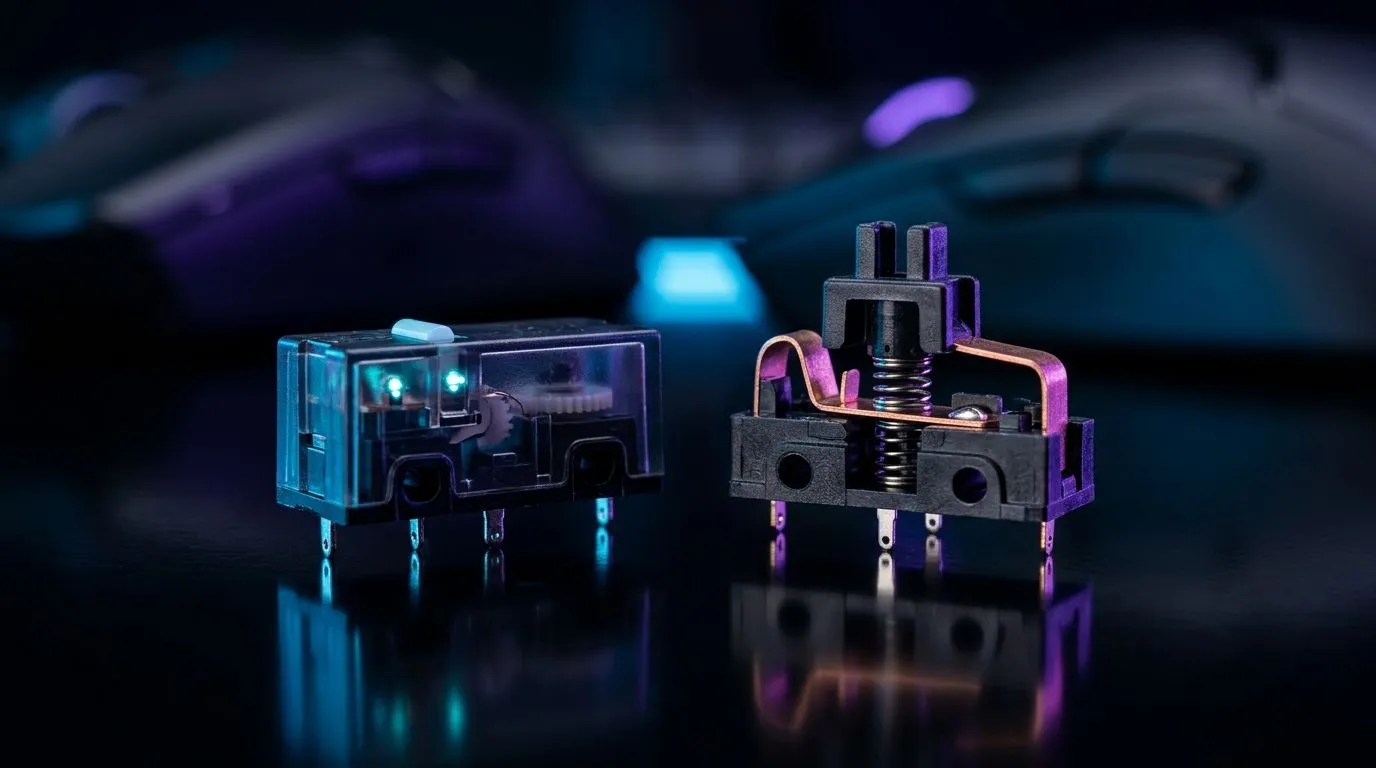
Understanding Optical Switches vs Mechanical Mouse Switches
South African gamers, if you've ever wondered why your mouse clicks feel just a tad slower during crucial moments, you’re not alone. Optical switches and mechanical mouse switches each offer distinct experiences in speed and latency that can affect gameplay precision. Choosing the right mouse switch can improve reaction times, giving you the edge in fast-paced games. Let’s dive into what differentiates these switches and why it matters for your setup ⚡.
What Are Optical Switches and How Do They Enhance Speed?
Optical switches use light to register clicks. When pressed, an infrared beam gets interrupted—this near-instant communication reduces input delay dramatically. Because there are no physical metal contacts that debounce, optical switches can deliver faster, more consistent click responses.
In contrast, mechanical mouse switches rely on physical metal contact points. When clicked, these points close a circuit and register input. This mechanical action inherently carries a tiny delay due to debounce — the time to ensure the contact settles without error.
The result? Optical switches generally boast lower latency and faster actuation compared to traditional mechanical ones, which is especially noticeable in competitive FPS and MOBAs.
Mechanical Mouse Switches: Why They Still Matter
Despite optical switches’ speed advantage, mechanical mouse switches haven’t lost their appeal. Gamers often prefer their tactile feedback, audible “clicky” sensation, and durability. Mechanical switches from well-known brands like Omron can endure tens of millions of clicks, suited for gamers who prioritise feel over ultra-low latency.
Durability and Feel in Mechanical Switches 🔧
Mechanical switches offer a variety of actuation forces and travel distances, allowing users to select their preferred click resistance and sound level. This customisation is something optical switches don’t typically provide yet, making mechanical mice a reliable choice for gamers who want that classic click feel.
Real-World Performance: Which Should You Choose?
If your priority is ultra-responsive clicks for rapid-fire scenarios, an optical switch mouse offers a clear benefit. However, if you value a satisfying tactile response and a variety of switch options, mechanical switches remain highly competitive.
Going beyond switches, your mouse’s sensor quality and polling rate also contribute to overall responsiveness. For example, checking out Evetech’s top gaming mice reveals many models equipped with either switch type but paired with cutting-edge sensors for flawless tracking.
Choosing Your Gaming Mouse Switch
what games you play most often: FPS titles benefit from optical switches’ speed, while RPGs might be more enjoyable with mechanical feel. Testing different models at local retailers can help you find your perfect match.
Latency in the Bigger Picture: Network and System Factors
While optical switches reduce mouse click latency, remember that your internet connection and PC setup also affect your overall gaming responsiveness. South African gamers can optimise fibre connections for stable ping and minimal packet loss to complement hardware improvements.
For instance, if you’re building a system tuned for low latency eSports play, explore Evetech’s range of custom gaming PCs designed to squeeze every millisecond out of your experience.
Conclusion: Make the Switch That Suits Your Playstyle
Both optical and mechanical mouse switches have distinct strengths centred on speed versus feel. Understanding how each impacts latency and response lets you make an informed choice tailored to your gaming style. Fast-paced shooters often get the edge with optical switches, while lifelong gamers appreciate mechanical’s tactile charm.
Exploring the range of gaming peripherals at Evetech will help you find the mouse with the perfect switch technology for your setup.
Find Your Perfect Gaming Mouse Switch Today Elevate your gameplay with unbeatable response times and tailored comfort. Shop now at Evetech for performance that leaves lag in the dust.