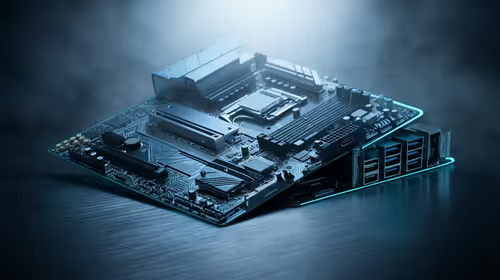
Building a new PC in South Africa? You’re likely staring at two options: a motherboard with PCIe 5.0 or one with the trusty PCIe 4.0. While the new standard promises double the speed, the real story is hidden in the motherboard’s design. It’s a complex engineering challenge where tiny details make a huge difference. Before you spend your hard-earned Rands, let’s unpack the critical differences in PCIe 5.0 vs 4.0 motherboard design and what it means for your rig’s performance.
The Raw Speed and the Hidden Hurdle
On paper, the leap is massive. PCIe 5.0 boasts a blistering data transfer rate of 32 GT/s (gigatransfers per second) per lane, doubling the 16 GT/s of PCIe 4.0. For you, this means the potential for next-generation NVMe SSDs to load games and transfer files at speeds we've only dreamed of. 🚀
But doubling the speed isn't as simple as flipping a switch. At these frequencies, the electrical signals carrying your data become incredibly fragile. Any tiny imperfection on the motherboard can corrupt them, leading to instability or data loss. This is the challenge of signal integrity.
Why Signal Integrity is Key in Motherboard Design
Think of signal integrity as trying to have a clear conversation. PCIe 4.0 is like chatting in a quiet library—the signal (your voice) travels easily. PCIe 5.0, however, is like shouting across a packed stadium during a vuvuzela concert. The signal needs to be much stronger, cleaner, and travel a perfect path to be understood.
To achieve this, the PCIe 5.0 vs 4.0 motherboard design philosophy is fundamentally different:
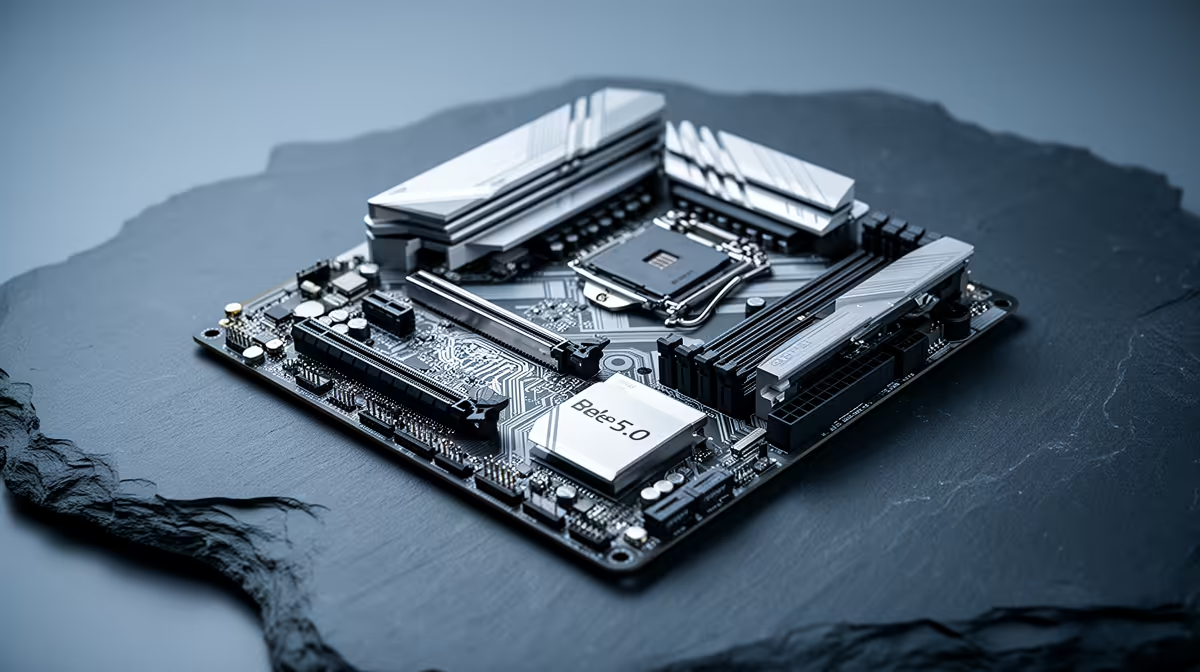
- Thicker PCBs: Boards are often built with more layers and higher-quality materials (like improved glass-weave composites) that don't interfere with high-frequency signals.
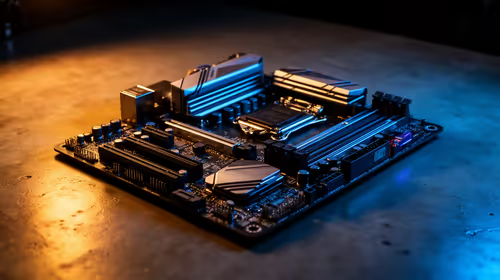
- Shorter Signal Paths: The physical distance between your CPU and the PCIe slot is minimised. You'll notice many PCIe 5.0 M.2 slots are now located right next to the CPU socket for this reason.
- Re-drivers and Re-timers: These are tiny chips on the motherboard that act like signal boosters, cleaning up and re-broadcasting the signal to ensure it arrives intact.
These engineering requirements are why PCIe 5.0 motherboards carry a premium price tag. The materials and extra components simply cost more to produce.
Check Your QVL! 🔧
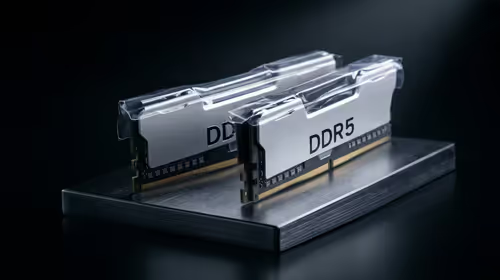
Before buying RAM for your new motherboard, always check the manufacturer's Qualified Vendor List (QVL) on their support page. This list confirms which specific RAM kits have been tested and are guaranteed to work at their advertised speeds. This is especially important for high-speed DDR5 on new platforms, as it ensures stability and optimal performance.
Comparing the Boards: A Practical Look
So, what does this mean when you're browsing for parts?
The Case for PCIe 4.0
For most gamers and creators today, a PCIe 4.0 motherboard is the smart choice. The technology is mature, reliable, and offers more than enough bandwidth for current-gen graphics cards and speedy NVMe SSDs. You can find excellent value motherboard options that deliver fantastic performance without breaking the bank, letting you invest more in your GPU or CPU. ✨
The Case for PCIe 5.0
If you're an enthusiast who demands the absolute cutting edge or someone who wants to future-proof their build for the next five years, PCIe 5.0 is for you. These boards are built to handle the fastest components of tomorrow. Both the latest Intel motherboards and cutting-edge AMD motherboards on the AM5 platform offer PCIe 5.0 support, giving you a direct pipeline to future performance gains. The superior signal integrity of a PCIe 5.0 board is an investment in your rig's longevity.
The Verdict: Which Design is Right for Your Build?
Ultimately, the choice depends on your budget and goals.
- Building for today's value? Stick with PCIe 4.0. It provides all the performance you need for a fantastic gaming experience right now, and the cost savings are significant.
- Building for tomorrow's performance? Invest in PCIe 5.0. You're buying a premium, robustly engineered platform ready for the next wave of ultra-fast SSDs and other high-bandwidth components.
The debate over PCIe 5.0 vs 4.0 motherboard design isn't just about a number on a box; it’s about the physical engineering that delivers stable, next-level performance. Choose wisely, and you'll have a solid foundation for your PC for years to come. ⚡
Ready to Build Your Next-Gen Rig?
The choice between PCIe 5.0 and 4.0 motherboard design comes down to your needs and budget. Whether you're optimising for today's value or future-proofing for tomorrow's tech, the right foundation is crucial. Explore our full range of PC Components and find the perfect parts to power your South African gaming setup.