Building a new PC in South Africa? The jump to PCIe Gen 5 is tempting, with mind-blowing speeds for SSDs and future-proofing for graphics cards. But with Eskom's unpredictability and rising electricity costs, a critical question pops up: what’s the deal with PCIe Gen 5 vs Gen 4 power consumption? Does bleeding-edge speed mean a bleeding-wallet on your power bill? Let's dive into the efficiency of these standards and see what it means for your next rig.
Understanding PCIe Power Fundamentals
Before we compare generations, let's quickly recap what PCI Express (PCIe) does. Think of it as the super-highway inside your computer, connecting your most important components—like your graphics card and NVMe SSD—to your CPU. Each new generation doubles the speed of the one before it.
Gen 4 was already incredibly fast, but Gen 5 is a true leap, enabling transfer speeds that can make game loading screens practically disappear. This speed, however, doesn't come from magic; it comes from more advanced electrical engineering, which directly impacts power usage.
The Core Difference in Power Draw: Gen 5 vs Gen 4
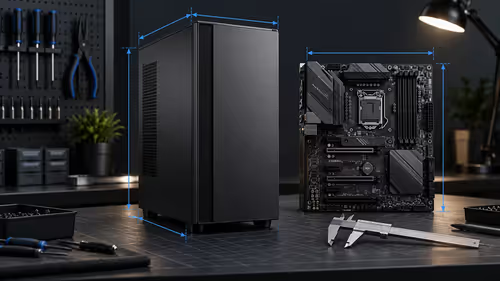
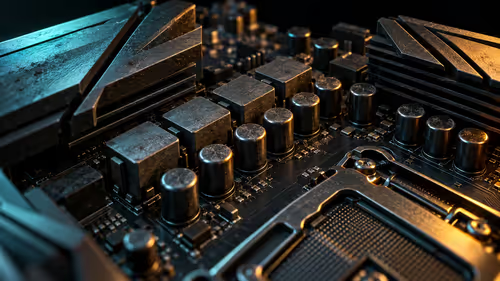
The main reason for the difference in PCIe Gen 5 vs Gen 4 power consumption lies in the complexity of the signal. To achieve double the data rate, Gen 5 requires a cleaner, stronger electrical signal. This often means motherboard manufacturers must use thicker circuit boards, better materials, and more robust power delivery components (VRMs) to maintain signal integrity.
While a PCIe slot itself has a standard power delivery capability (up to 75W), the devices and the motherboard chipset supporting them are where the real changes are.
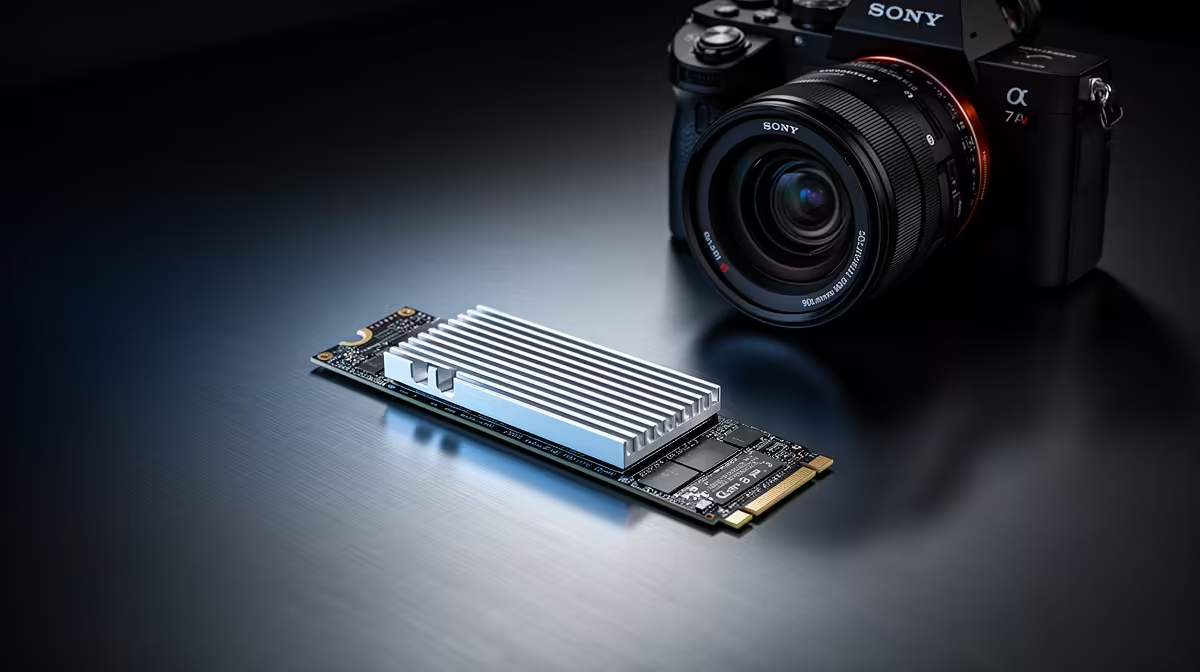
- At Idle: A Gen 5 SSD and a Gen 4 SSD will have very similar power draw when your PC is just sitting on the desktop.
- Under Load: This is where the difference shows. When you're hammering a Gen 5 SSD with a massive file transfer or loading a huge open-world game, its controller works harder and draws more peak power than its Gen 4 counterpart.
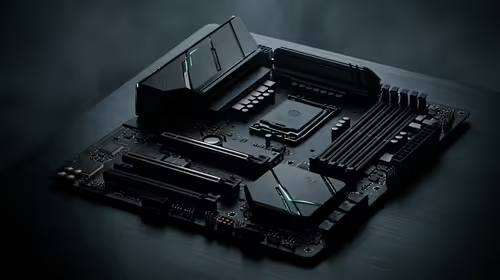
This increased power requirement is a key consideration when you're looking at the latest Intel and AMD based motherboards, as a quality board is essential for stability.
Check Your BIOS/UEFI 🔧
Modern motherboards have settings to control PCIe power management, like ASPM (Active State Power Management). Enabling these can help reduce power consumption when your PCIe devices are idle. It's a small tweak that can contribute to a more efficient system, especially if your PC is on all day.
Is Higher Power Consumption Less Efficient? ⚡
Here’s where it gets interesting. More power doesn't automatically mean worse efficiency. Efficiency is about the amount of work done for the energy consumed (performance-per-watt).
Think about it this way: a Gen 5 SSD might draw 10W for 5 seconds to load a game level, consuming a total of 50 watt-seconds of energy. A Gen 4 drive might only draw 7W, but takes 8 seconds to do the same job, consuming 56 watt-seconds.
In this scenario, the "more powerful" Gen 5 drive was actually more energy-efficient for that specific task because it finished faster and returned to a low-power idle state sooner. So, while the peak Gen 5 power usage is higher, its incredible speed can make it more efficient for burst-heavy workloads. This is a design philosophy seen across many modern Intel motherboards, which are built to handle these high-speed, high-power components.
What This Means for Your South African PC Build 🚀
So, should you worry about the extra power draw? For the average gamer or user, the answer is likely no. The difference in your total system's electricity bill will be negligible. Your GPU and CPU remain the biggest power consumers by a massive margin.
The real consideration is ensuring your core components can handle it. A cheap, low-quality power supply or motherboard might struggle with the demands of a fully kitted-out Gen 5 system. Stability is king. Ensuring your platform is solid is just as important on Team Red, where top-tier AMD motherboards are also engineered to deliver clean, stable power.
Ultimately, the debate over PCIe Gen 5 vs Gen 4 power consumption is less about your monthly bill and more about building a balanced, high-quality system. Gen 4 remains a fantastic, efficient, and cost-effective choice for most gamers in South Africa today. Gen 5 is for those who demand absolute maximum performance and are building a premium rig to support it.
Ready to Build Your Ultimate Rig?
Understanding PCIe power is key to a balanced build. Whether you're chasing top-tier speed or maximum efficiency, the right motherboard is your foundation. Explore our massive range of PC components and find the perfect parts for your next PC.