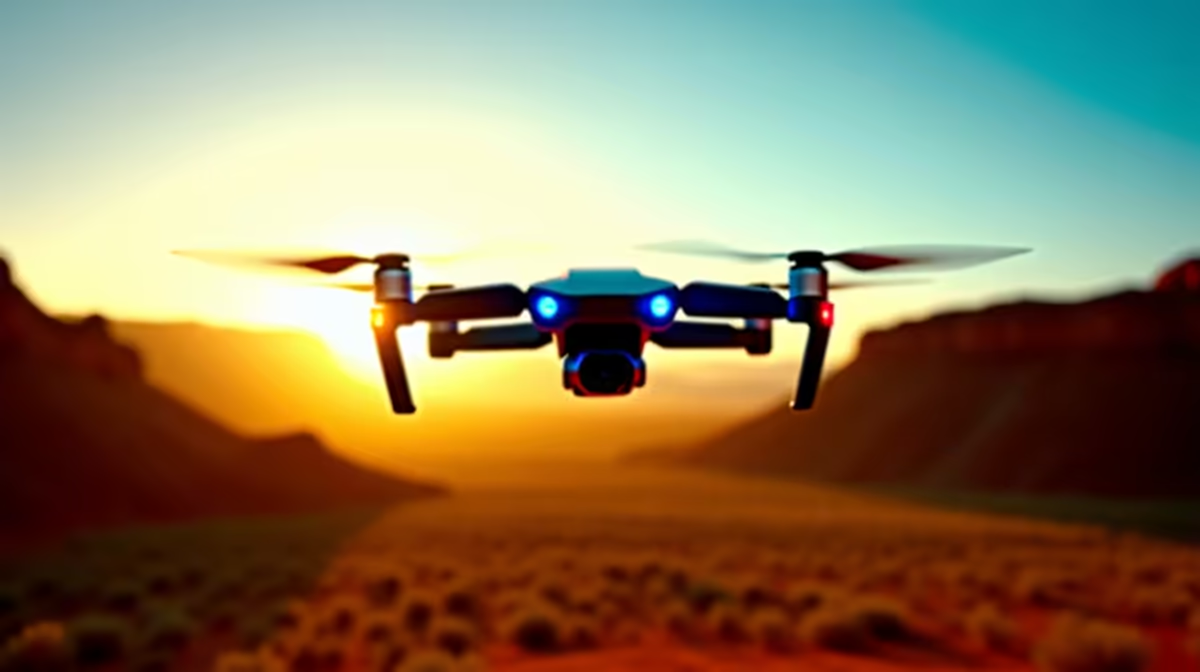
The moment a drone flight earns money, even a single paid photo, South African law treats it as a different activity entirely. Private versus commercial drone use is the line that decides whether you can simply fly or whether you need a stack of certificates from the South African Civil Aviation Authority. The same machine, flown for fun on Saturday and for a paying client on Monday, sits under two very different rule books.
Quick Answer
In South Africa, recreational drone flying needs no Remote Pilot Licence. The moment you fly commercially, for any payment or business benefit, you must hold an RPL, your operation must have an RPAS Operator's Certificate (ROC), and the drone must be individually registered, regardless of its weight. Private use is light-touch; commercial use is tightly regulated.
What Counts As Private Use
Private, or recreational, flying means you operate the drone for your own enjoyment with no commercial gain. Under SACAA rules this carries no licensing requirement, but it is not a free-for-all. You are still bound by the conduct rules in the regulations: keep the drone within your line of sight, do not fly above 120 metres, stay clear of airports and controlled airspace, keep well away from people, property and roads you do not have permission to overfly, and respect privacy.
These limits exist whether you have a licence or not. The freedom of private flying is the absence of paperwork, not the absence of rules. Plenty of capable consumer drones sit in the smart home and gadgets section at Evetech for exactly this kind of recreational flying.
What Triggers Commercial Status
The trigger is benefit, not intent. If the flight produces footage, photos, survey data or inspection results that you sell, that supports a business, or that you are paid for in any way, it is commercial. This catches more people than they expect: a property agent shooting their own listings, a farmer mapping their own land for the farm business, or a wedding videographer adding aerial shots all cross into commercial territory.
Crucially, weight does not save you. A tiny sub-250-gram drone that escapes some recreational registration rules still requires the full commercial framework the instant it is flown for gain. The size of the drone is irrelevant to whether the operation is commercial.
The Three Things Commercial Operators Need
Commercial drone work in South Africa rests on three separate approvals, and you need all of them.
A Remote Pilot Licence (RPL)
The RPL is the pilot's qualification. Earning it involves theory exams, a skills test with an accredited training organisation, a medical assessment and a radio certificate. It certifies you, the person at the controls, as competent to fly commercially.
An RPAS Operator's Certificate (ROC)
The ROC certifies the operation, not the pilot. It is held by the operating entity and requires operations manuals, safety procedures and SACAA approval of how you will run flights. A freelancer typically needs either their own ROC or to fly under a company that holds one.
Drone Registration
Each aircraft used commercially must be individually registered with SACAA and carry its registration mark. This applies to every commercial drone irrespective of weight, which is the point recreational pilots most often miss when they go pro.
The Practical Cost Of Crossing The Line
Going commercial is a real undertaking. Training, exams, the medical, the ROC paperwork and registration take time and money, and the ROC in particular is not a quick form. That is why many people start recreational and only pursue full certification once paid work is genuinely on the table.
It also means you cannot quietly monetise a hobby. Selling a few aerial shots from your recreational drone, with no RPL or ROC, is operating illegally and exposes you to penalties. If money or business benefit is involved, the full framework applies. Before investing in either path, it is worth seeing what current camera drones can do, and the gadget best sellers list is a useful starting point through the accessories best sellers page.
How Long Does Going Commercial Take?
The RPL is not a weekend course. Training through a SACAA-accredited organisation typically takes six to eight weeks, covering the theory syllabus, practical flying, an exam, a skills test, and a medical assessment. You also need a radiotelephony certificate. All up, budget for roughly two to three months from starting training to holding a valid RPL, depending on your pace and the ATO's schedule. The RPL is valid for two years and must be revalidated before renewal.
The ROC is a longer project. SACAA approval of the operations manual and safety procedures that a ROC requires typically takes around twelve months, depending on documentation readiness and the current SACAA processing load. That timeline is why many operators choose to fly under an established company that already holds a ROC when starting out, rather than pursuing their own certificate from day one.
Why the Timeline Matters Before You Price a Job
Knowing how long the process takes changes how you plan commercially. If you quote a client for aerial footage next month, you need a ROC holder in the picture today if you do not hold one yourself. The regulatory framework is not designed to move quickly, and SACAA does not grant emergency certifications. Build the timeline into your business planning, not your emergency response.
What Recreational Pilots Often Miss
The biggest misunderstanding is the weight exemption myth. A recreational pilot with a 249g sub-250g drone learns that this category carries lighter registration rules for private use. Then they start selling footage and assume the same light-touch rules apply to their tiny aircraft. They do not. The commercial trigger is the payment or business benefit, full stop. The instant a sub-250g drone generates income, all three commercial requirements apply: RPL, ROC, and individual registration. Size has no bearing on commercial status.
A second common mistake is confusing "documenting my own business" with private use. A restaurant owner filming their premises for their own social media, a real estate agent shooting their own listings, or a farmer mapping their own land for farm management are all operating commercially in SACAA's view, because a business benefit flows from the flight.
Frequently Asked Questions
Do I need a licence to fly a drone for fun in South Africa?
No. Recreational flying needs no Remote Pilot Licence, but you must still obey conduct rules: stay within line of sight, below 120 metres, away from airports, and clear of people and property you lack permission to overfly.
When does drone use become commercial?
The instant the flight produces any payment or business benefit, including selling footage, supporting your own business, or paid client work. Intent and the drone's size do not matter; the benefit is what counts.
Does a small drone avoid commercial rules?
No. Even a sub-250-gram drone requires the full commercial framework, an RPL, an ROC and registration, the moment it is flown for gain. Weight does not exempt a commercial operation.
What exactly does a commercial drone operator need?
Three things: a Remote Pilot Licence for the pilot, an RPAS Operator's Certificate for the operation, and individual SACAA registration for each drone used commercially.
Can I sell photos from my recreational drone?
Not legally without certification. Selling images makes the flight commercial, which requires the RPL, ROC and registration. Doing so without them is operating outside the law.
Thinking about flying, for fun or for work? Browse camera-capable drones in the smart home and gadgets range at Evetech (https://www.evetech.co.za/PC-Components/smart-home-appliances-344) and match the machine to the path you plan to take.