That dreaded buffering wheel... just as you’re about to clutch the final round. Or maybe the Wi-Fi signal dies the second you step onto the patio for a braai. In South Africa, a stable connection is non-negotiable. If you're battling dead zones, you’ve likely stumbled upon the great debate: range extender vs mesh. But which system is actually the best for your home? Let's break it down, no jargon allowed. 📶
What is a Wi-Fi Range Extender and How Does It Work?
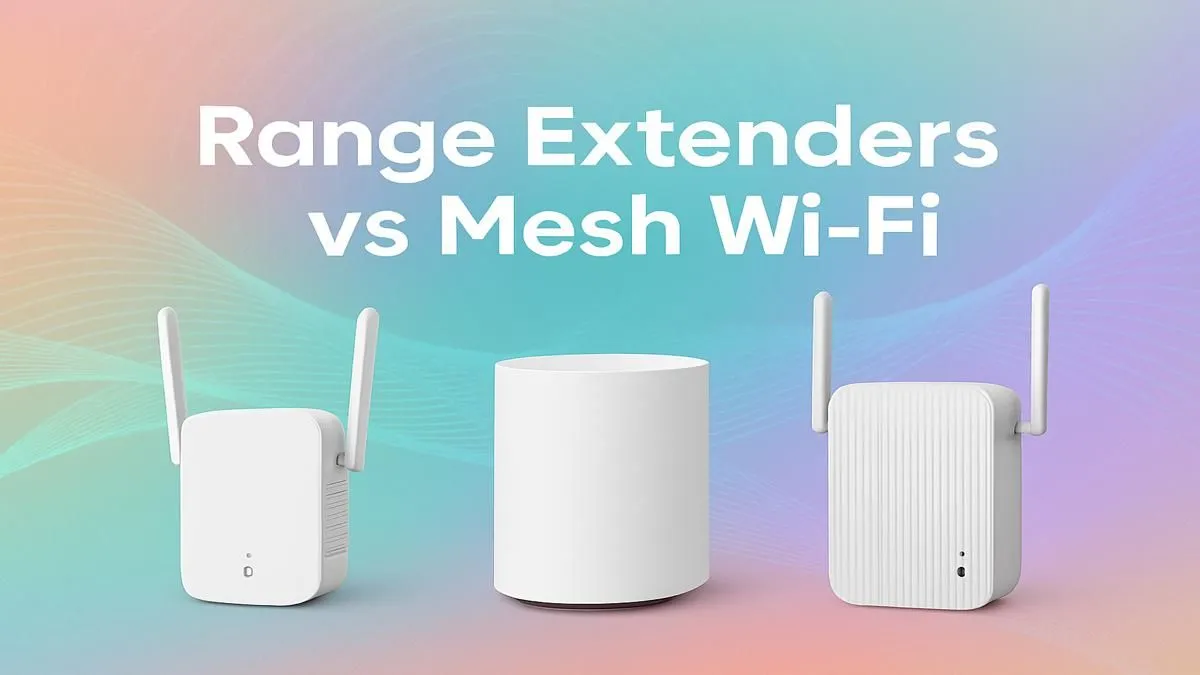
Think of a Wi-Fi range extender as a simple signal booster. It’s a small, plug-in device that captures the existing Wi-Fi signal from your router and rebroadcasts it to cover a specific dead zone, like a home office or a distant bedroom.
They are often the first port of call for many South Africans because they are incredibly budget-friendly. For a relatively small investment, you can get a signal where there was none before. The setup is usually straightforward, often just involving a button press to pair with your main router.
However, there's a catch. Most simple Wi-Fi range extenders create a new network (e.g., "MyWiFi_EXT"). This means you have to manually switch between networks as you move around your house. More importantly, they can effectively halve your potential internet speed on that extended network, which can be a real problem for gaming or 4K streaming.
How is a Mesh Wi-Fi System Different?
A mesh Wi-Fi system is a more modern and comprehensive solution. Instead of one device boosting a signal, a mesh system is a team of "nodes" that you place around your home. The main node connects to your modem, and the other "satellite" nodes communicate with each other to blanket your entire property in a single, seamless Wi-Fi network. 🚀
The magic of mesh is its intelligence. You get one network name (SSID) everywhere. As you walk from the lounge to the garden, your phone or laptop automatically and seamlessly connects to the strongest node without any dropouts. Because the nodes talk to each other, they can intelligently route internet traffic, ensuring you get much better speeds than an extender, even far from the primary router. While they work with your existing setup, the foundation of any good network is powerful wireless routers that can handle the demand.
Range Extender vs Mesh in a South African Context
So, when it comes to the range extender vs mesh South Africa showdown, which one should you choose? It really depends on your home and your needs. 🏡
Performance & Speed
A range extender is like shouting a message from one person to another... some of it gets lost. A mesh system is like a perfectly coordinated relay team. For high-speed fibre connections, a mesh system will do a much better job of delivering those speeds throughout your home. An extender will always be a bottleneck.
Coverage & Home Layout
For a small flat or a single-storey house with just one annoying dead spot, an extender is a perfectly fine and cost-effective fix. But for larger, double-storey homes or houses with thick brick walls (a classic South African feature!), a mesh system is vastly superior. It’s designed to navigate these complex layouts and deliver consistent coverage. Remember, even with the best network, your PC needs a solid connection; sometimes upgrading your PC's wireless adapter is a crucial first step.
Cost 💰
There’s no contest here. A range extender can cost you a few hundred Rand. A good 2- or 3-pack mesh system is a bigger investment, often starting in the low thousands. You're paying for superior technology, performance, and convenience.
Placement Pro Tip ⚡
Whether you choose an extender or a mesh node, placement is key. Don't put it in the dead zone! Place it roughly halfway between your main router and the area with poor signal. It needs to receive a strong signal to be able to rebroadcast one effectively.
So, Which Wi-Fi Solution is Best for You?
Let's make it simple.
Go for a Range Extender if:
- You live in a small-to-medium apartment or house.
- You only have one or two specific dead zones to cover.
- Your budget is the primary concern.
- You mostly browse the web and stream in standard definition.
Go for a Mesh System if:
- You have a large, multi-storey home with thick walls.
- You want seamless, uninterrupted coverage everywhere.
- You're a gamer, a 4K streamer, or work from home and demand top performance.
- You value convenience and are willing to invest in a long-term solution.
Ultimately, choosing between a range extender and a mesh system is about deciding if you need a quick patch or a complete foundation for your home network.
Ready to Banish Buffering for Good?
The range extender vs mesh debate comes down to your space and your needs. Whether you need a quick fix or a total home overhaul, the right gear makes all the difference. Explore our massive range of wireless networking solutions and find the perfect setup to conquer lag.