




IPS vs VA for Strategy and Sim Games in SA
IPS vs VA for strategy and sim games should be judged by fit, not a single winner. Compare compatibility, latency, capacity, upgrade path, cost planning, and South African setup needs.
Read moreReverse blade fans show how intake airflow can sport an exhaust-style look. Learn benefits, performance tips, noise tradeoffs, and best 2025 picks. 🔁🌀
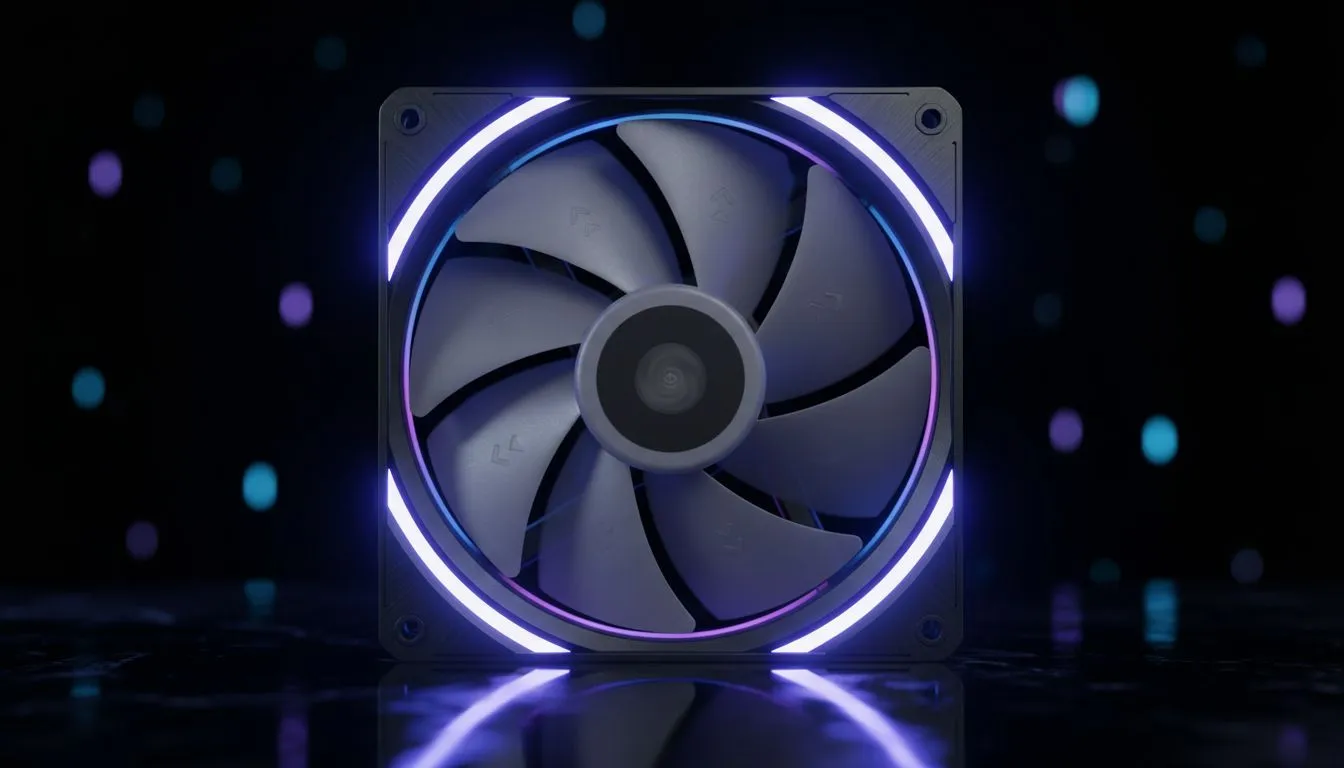
You’ve spent thousands on a beast of a PC. The RGB is synced, the cables are managed to perfection... but something’s off. Those bottom intake fans show their ugly side—the plastic frame and motor hub. It’s the classic PC builder’s dilemma: aesthetics or optimal airflow? What if you didn’t have to choose? Enter reverse blade fans, the simple solution for a flawless look without sacrificing performance. Let's dive in. ✨
Let's get the basics down first. A standard PC fan pulls air from its open, "pretty" side and pushes it out through the back, where the frame and motor hub live. This means if you want to use it as an intake fan (pulling cool air into your case), you're forced to look at its less attractive side.
Reverse blade fans flip this entire concept on its head. 💨
They are engineered with blades that are mirrored and pitched in the opposite direction. This clever design allows them to pull air from the motor-hub side and exhaust it through the open frame side. The result? You can now mount your fans as intakes while displaying the clean, unobstructed view of the spinning RGB blades. It’s the same intake function, just with a much better view.
Picture this: you've just built your dream PC in a stunning glass-panel case like a Lian Li O11 Dynamic or HYTE Y60. You want intake fans at the bottom and side to feed your GPU and CPU with fresh, cool air. With normal fans, you’d be staring at a wall of plastic frames, ruining the clean aesthetic.
This is where reverse flow fans become essential. They allow you to create a visually uniform look where every fan inside your case appears identical, whether it's set to intake or exhaust. This is particularly important for modern builds where aesthetics are just as important as performance. A clean-looking setup isn't just for show; it reflects a well-thought-out build, where every component works in harmony. And proper airflow is the foundation that allows all your other high-performance CPU coolers to work efficiently.
This is the big question for many builders: is there a performance penalty for that perfect look?
Thankfully, the answer is generally no. Reputable manufacturers have invested heavily in R&D to ensure their reverse blade models perform nearly identically to their standard counterparts. While you might see a tiny variance of 1-5% in airflow (CFM) or static pressure (mmH2O) in technical reviews, it’s a difference you will not notice in real-world use.
This makes them an excellent choice for mounting on radiators, where static pressure is key. If you're running a powerful Liquid Cooler (AIO), you can use reverse blade fans to pull cool air through the fins without sacrificing looks or thermal performance. This is especially true for larger, high-performance 360mm radiator setups that demand strong, consistent airflow.
For a balanced build, aim for slightly positive air pressure (more intake than exhaust). This helps reduce dust buildup as air is forced out of unfiltered cracks and vents. Reverse blade fans make it easier to achieve this, as you no longer have to hide your intake fans, giving you more placement options without compromising the look of your rig.
Before you fill your cart, keep a few things in mind:
Most RGB fans with reverse blades are designed to work within a specific ecosystem (like Corsair's iCUE or Lian Li's L-Connect). Mixing and matching brands can lead to software headaches. If you're already invested in a system, it's best to stick with that brand. For example, if you have a Corsair CPU cooler, getting their reverse blade fans will ensure seamless integration.
Reverse blade fans are specifically for intake applications where you want the aesthetic side facing into the case. Common placements include the bottom, side, or front of the chassis. For your top and rear exhaust ports, traditional fans are still the perfect tool for the job, as their "pretty" side will naturally face inwards. This isn't a replacement for all fans, but rather a specialised tool, much like how a hefty Air Cooler is the right choice for some builds over an AIO.
They can sometimes cost a little more than their standard counterparts due to the specialised design. Also, be aware of naming conventions. Brands might call them "Reverse," "Link," "RX," or have a specific model number to differentiate them, so always double-check the product description to ensure you're buying the right type.
Ready to Perfect Your PC's Airflow & Aesthetics? Reverse blade fans are the key to a visually stunning build that runs cool under pressure. Whether you're upgrading your case fans or planning a brand new rig, getting your cooling right is crucial. Explore our massive range of PC cooling solutions and find the perfect components to build your masterpiece.
Reverse blade fans invert blade geometry to create intake airflow while mimicking an exhaust-style appearance for unique case aesthetics.
They can improve directed intake flow in certain setups; performance depends on blade design, RPM, and case airflow paths.
Noise varies by model; some reverse blade fans produce similar noise to standard fans, while aggressive blades can increase noise levels.
Tight GPU/CPU layouts and front-panel filtered intakes benefit most—reverse blade airflow helps guide air where components need it.
Mount them as intake with clear unobstructed inlets, match static pressure needs, and balance with exhaust fans for optimal case airflow.
Yes—when chosen for airflow and noise targets, reverse blade fans can lower component temps and deliver a distinctive exhaust look.
Check reputable retailers and Evetech listings for tested reverse blade designs and reviews to compare performance and noise specs.
IPS vs VA for strategy and sim games should be judged by fit, not a single winner. Compare compatibility, latency, capacity, upgrade path, cost planning, and South African setup needs.
Read more
Gen 5 NVMe SSD guide for Bloemfontein gamers should be shortlisted around the job it must do. South African buyers should compare capacity, speed, thermals, and motherboard support, warranty path, and upgrade room before treating any pick as best.
Read more
Skip the RTX 5070 if your first-time builder budget needs better balance. Better SA picks can free room for the right CPU, PSU, case, monitor, storage, and cooling while still giving a strong first gaming PC experience this year in South Africa.
Read more
RTX 5080: weighing the pros and cons for SA should be shortlisted around the job it must do. South African buyers should compare GPU tier, VRAM, cooling, and PSU headroom, warranty path, and upgrade room before treating any pick as best.
Read more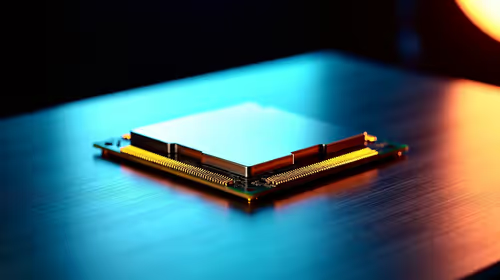
Core i5-13400F gives South African PC builders a capable mid-range CPU choice with clear limits. Check its gaming fit, discrete GPU requirement, LGA1700 platform costs, and upgrade path before locking in your parts list.
Read more
Pros and cons of the Wi-Fi 7 routers for SA should be shortlisted around the job it must do. South African buyers should compare WiFi standard, coverage, latency, and device support, warranty path, and upgrade room before treating any pick as best.
Read more
Steam content servers unreachable needs a download-path check, not an immediate reinstall of every game. Restart the client, inspect download settings and compare another connection when practical. Clearing the download cache is separate from deleting installed games.

Keychron G6 HE has built-in and swappable battery versions with different weights. The product brief lists 42g and 46g respectively, each with a 3g tolerance. Choose by grip and battery preference before treating one headline weight as universal.

Corsair HS80 v2 MAX supports 2.4GHz wireless and Bluetooth. Its maximum battery figures use RGB-off conditions and differ by connection. Check microphone routing, comfort and the exact device support before assuming every wireless mode behaves alike.

Windows taskbar notification badges can be shown or hidden in Taskbar behaviours. This changes the small app indicators, not the underlying messages. Choose a calmer desktop while keeping a deliberate routine for checking important conversations and app updates.
Windows taskbar notification badges can be shown or hidden in Taskbar behaviours. This changes the small app indicators, not the underlying messages. Choose a calmer desktop while keeping a deliberate routine for checking important conversations and app updates.

Windows USB device in use can mean a program still has the drive open. Finish transfers and close files before retrying ejection. Better performance caching requires safe removal; a replacement drive is not the first fix for an open-file warning.

Windows Nearby Sharing not working starts with feature, Bluetooth and visibility checks on both PCs. My devices only depends on matching Microsoft accounts. Test a small harmless file before buying networking hardware or changing your home router.
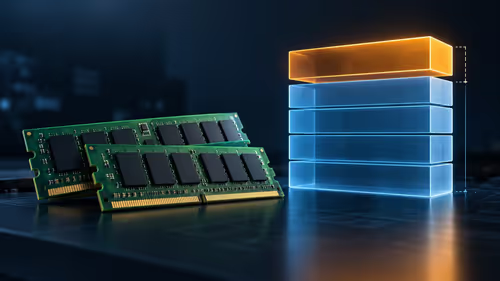
Windows hardware reserved RAM is different from memory used by applications. Compare installed memory with firmware detection and the usable amount before buying modules. Reservations and reporting limits vary by system; no universal setting restores every byte.

Windows title bar window shake can minimise other open windows when you shake the active window by its title bar. Inspect the Multitasking setting and switch it off if that gesture interrupts your work. The preference costs R0 and does not require new hardware.

Windows Print Screen opens Snipping Tool when its keyboard preference is enabled. Change the option under Accessibility, Keyboard to choose another workflow. Test whether you need a clipboard image or a saved file.

Windows desktop icons missing may be a visibility setting. Right-click the desktop, choose View and inspect Show desktop icons. If only system icons are absent, use Desktop icon settings. Check the Desktop folder before assuming files were deleted.

Windows set time zone automatically greyed out calls for a location and device-policy check. Automatic time-zone selection relies on location services. A manual time-zone choice is separate from synchronising the clock; check both before replacing hardware.