So, you’ve just unboxed a beastly AMD Ryzen CPU, ready to dominate in your favourite games. But hang on... will your motherboard buckle under the pressure? The secret to stable power and peak performance isn't just the chipset; it's a tiny, often-overlooked circuit. Understanding your Ryzen motherboard VRM is crucial for unlocking your CPU's true potential, especially here in South Africa where every component needs to pull its weight. Let's dive in. 🚀
What Exactly is a Motherboard VRM?
VRM stands for Voltage Regulator Module. Think of it as your PC's sophisticated power converter. The power supply unit (PSU) delivers a steady 12-volt stream, but your delicate Ryzen CPU needs a much lower, incredibly precise voltage—often around 1.3V—that changes hundreds of times per second.
The VRM’s job is to take that rough 12V and convert it into clean, stable, low-voltage power for the processor. A good Ryzen motherboard VRM does this efficiently, without overheating, ensuring your R50,000 rig doesn't crash mid-match.
Why Your Ryzen CPU Cares Deeply About VRM Quality
Modern Ryzen processors, especially the Ryzen 7 and Ryzen 9 series, are power-hungry beasts with many cores. When they boost to high clock speeds under load, they demand a massive, instantaneous surge of clean power.
A weak or poorly cooled VRM can't keep up. This leads to:
- Throttling: The motherboard intentionally slows down your CPU to prevent the VRM from overheating. You paid for performance you can't even use!
- Instability: Voltage drops (known as "Vdroop") can cause system crashes, especially when overclocking.
- Reduced Lifespan: Constantly running hot can degrade components over time.
For enthusiasts looking to push their hardware to the absolute limit, a motherboard with a robust VRM isn't a luxury... it's a necessity. That's why high-end boards like the new AMD X870 motherboards are built with premium power delivery systems designed for serious overclocking.
Quick Heatsink Check 🌡️
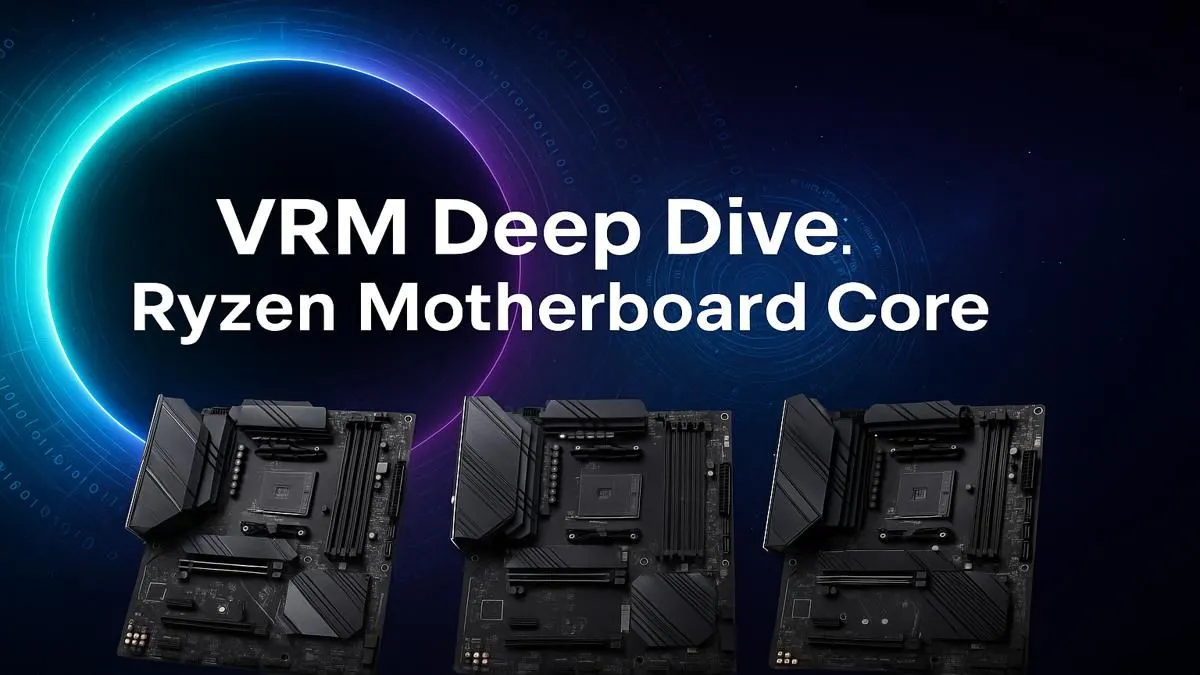
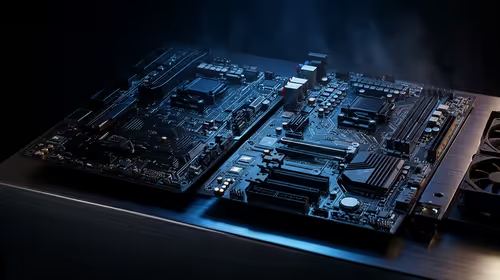
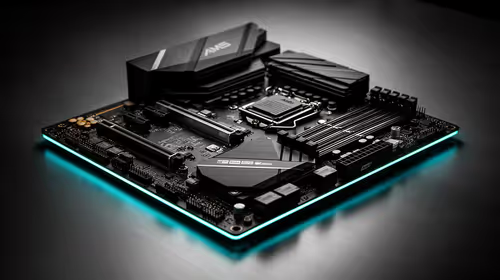
Before you buy, look at pictures of the motherboard online. A good VRM setup will have chunky, substantial metal heatsinks around the CPU socket. If you see bare components or tiny, flimsy-looking metal pieces, it's a sign the board is designed for lower-power CPUs and might struggle with a high-end Ryzen chip under heavy load.
Decoding VRM Specs: Phases and Heatsinks
When you look at motherboard specs, you'll see terms like "12+2+1 phase power design." What does this mean? In simple terms, a "phase" is like a single lane on a highway for power. More phases mean the workload is spread out, allowing for cleaner power delivery and lower temperatures for each component. ⚡
- For a Ryzen 5: A solid 6 or 8-phase VRM is plenty for gaming and general use.
- For a Ryzen 7 or 9: Look for 10 phases or more, especially if you plan to overclock.
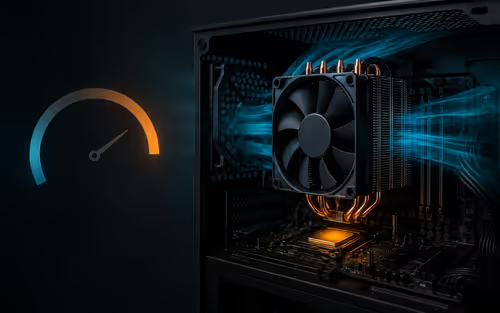
Heatsinks are just as important. These metal blocks draw heat away from the VRM components. In the South African climate, good cooling is non-negotiable. A board with beefy heatsinks will maintain stable performance even during a summer heatwave. Many gamers find a sweet spot for value and performance with the tried-and-tested range of AMD B550 motherboards, which often feature great VRM cooling for their price.
Choosing the Right Ryzen Motherboard VRM for Your Build
Matching the VRM to your CPU is key. You don't need a ZAR 15,000 motherboard for a Ryzen 5, but you shouldn't pair a Ryzen 9 with a budget board either.
Your Quick Guide:
- Entry-Level & Mid-Range Gaming (Ryzen 5): A quality B-series board is your best bet. It offers a fantastic balance of features, performance, and a capable VRM for stock speeds and light overclocking. As new platforms emerge, options like the upcoming AMD B850 motherboards will continue this trend for next-gen builds.
- High-Performance Gaming & Content Creation (Ryzen 7): Step up to a premium B-series or an entry-level X-series board. These feature more robust VRMs with better cooling, ensuring your CPU can maintain its boost clocks for longer.
- Enthusiast Overclocking & Pro-Level Workloads (Ryzen 9): Don't compromise. An X-series motherboard is essential. These are engineered with top-tier VRMs designed to handle the extreme power draw of an overclocked, high-core-count CPU.
Ultimately, the VRM is the unsung hero of your PC. It’s the foundation that allows your powerful Ryzen processor to shine. Choosing wisely from a trusted selection of AMD motherboards ensures you get a stable, reliable, and high-performing machine from day one. ✨
Ready to Build Your Foundation?
The world of motherboard specs can be complex, but getting the VRM right is your ticket to a stable, high-performance rig. Explore our huge range of AMD motherboards and find the perfect board to power your Ryzen beast.