Ever had that heart-stopping moment? You’re camping a corner in Valorant, totally still. An enemy peeks, you flick your mouse to react… and nothing. For a split second, your aim is frozen. That, my friend, is sensor sleep latency, and that tiny delay can be the difference between a clutch win and a frustrating loss. It’s a ghost in the machine for many gamers, but we’re here to shed some light on it. ⚡
Understanding Sensor Sleep and Ramp Latency
So, what’s actually happening when your mouse takes a moment to wake up? To save battery life, especially in wireless models, a mouse's sensor powers down into a "sleep" mode after a period of inactivity. Sensor sleep ramp latency is the technical term for the time it takes for that sensor to wake up fully and start tracking your movements accurately again.
Think of it as the mouse's grogginess after a nap. It’s not instant. This delay, while often just milliseconds, can feel like an eternity in a fast-paced shooter. Our comprehensive sensor sleep ramp latency test was designed to measure this exact phenomenon across a range of popular peripherals, helping you understand what goes into a truly responsive gaming mouse.
The Key Findings from Our Latency Tests
We put a variety of mice through their paces using specialised equipment to get objective data. The goal wasn't to crown a single winner, but to understand the patterns and help you make an informed choice for your playstyle. Here’s what our gaming mouse latency test revealed.
Wireless vs. Wired: Closing the Gap
The age-old debate continues, but the lines are blurring. Our results showed that premium, modern wireless mice from top brands have incredibly low wake-up times, almost indistinguishable from their wired counterparts for most users. However, some budget wireless models exhibited noticeable ramp latency.
For pure, uninterrupted signal integrity, a good wired mouse is still the king of consistency, eliminating battery management and any potential for wireless interference. The choice really comes down to your tolerance for cable drag versus the freedom of going wireless. 🚀
Pro Tip: Dongle Placement Matters
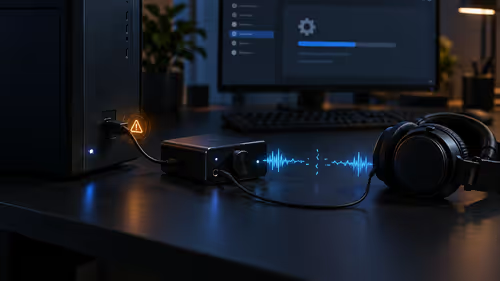
For wireless mice, don't just plug the USB dongle into the back of your PC tower. Use the included extension cable to place the dongle on your desk, about 20cm from your mousepad. This ensures a clear, strong signal and can significantly reduce latency and interference.
Does It Really Affect Your Gameplay?
For the average gamer enjoying a session of Helldivers 2 or a single-player epic, a few extra milliseconds of wake-up latency is unlikely to be noticed. But if you’re a competitive player in Johannesburg grinding for rank in CS2 or Apex Legends, it absolutely can matter.
In scenarios requiring micro-adjustments from a stationary position (like AWPing), eliminating that initial stutter gives you a more predictable and reliable aiming experience. It’s about removing variables so that the only thing determining the shot is your skill.
How to Minimise Latency on Your Own Rig 🔧
While our sensor sleep ramp latency test highlights hardware differences, you can take steps to optimise your own setup.
- Update Firmware: Always use the manufacturer's software (e.g., Logitech G Hub, Razer Synapse) to keep your mouse's firmware up to date. These updates often include performance improvements and bug fixes related to sensor behaviour.
- Check Power Settings: Some mouse software has adjustable power-saving or "low-power" modes. For competitive gaming, ensure you're in a "high-performance" mode.
- Invest in a Good Surface: A high-quality mousepad ensures your sensor can track consistently from the very first movement. It's one of the most crucial mouse accessories for performance.
Ultimately, understanding sensor sleep latency is another tool in your arsenal for building the perfect gaming setup. It’s a small detail, but in the world of competitive gaming, victory is often decided by the smallest of margins.