You’ve just built your dream rig, but under load, the temps are creeping up. While browsing for an upgrade, you see manufacturers boasting about their extra-thick copper base plates. It sounds impressive… surely a beefier plate means better cooling, right? In the world of PC thermals, the answer is a bit more complex than "bigger is better."
Let's unpack the science behind thicker base plate CPU cooling and see if it genuinely improves thermal performance. 🔧
The Base Plate's Critical Role in CPU Cooling
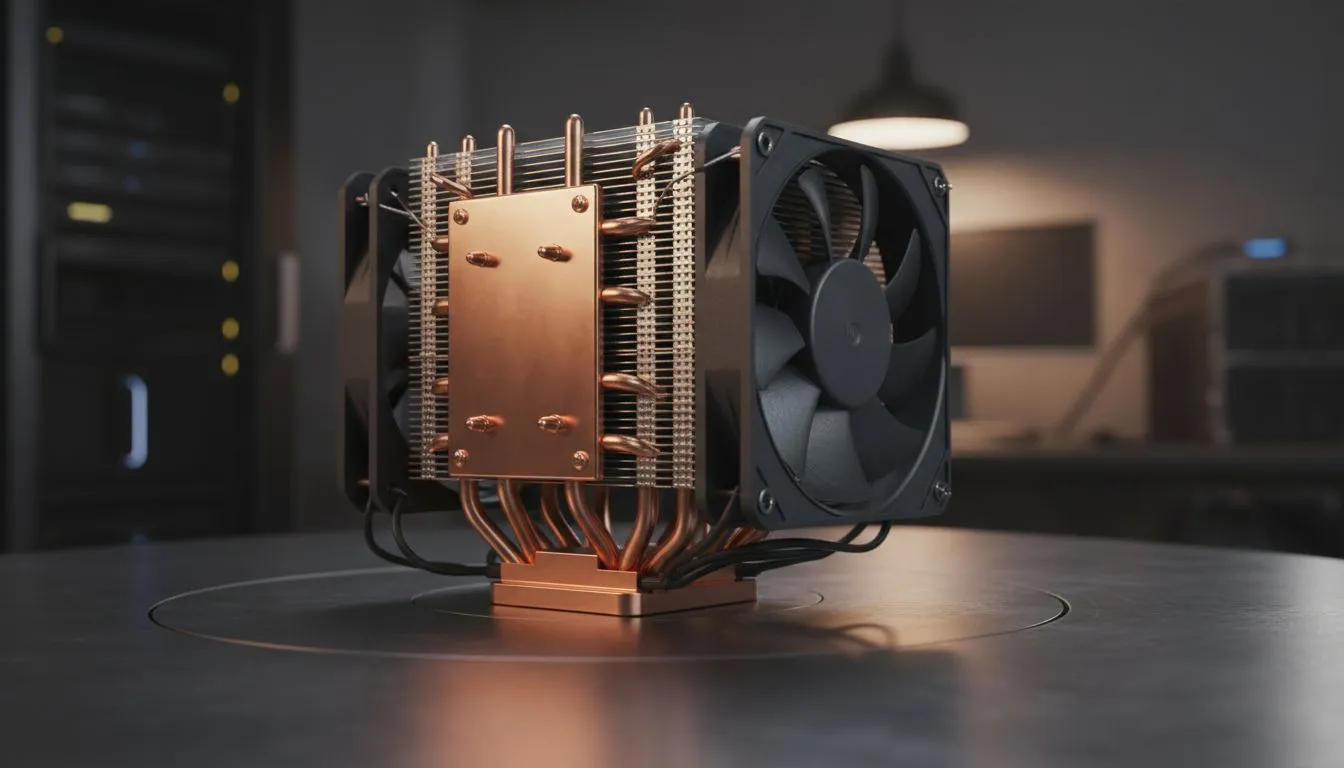
Before we talk thickness, what does the base plate even do? Think of it as the first responder in your PC's cooling system. It’s the solid piece of metal (usually copper) that makes direct contact with your CPU's Integrated Heat Spreader (IHS).
Its one job is to absorb heat from the CPU as quickly as possible and transfer it to the heat pipes. The heat pipes then whisk that thermal energy away to the fin stack, where fans dissipate it. A poor connection here bottlenecks the entire process, regardless of how massive the rest of the CPU cooler is.
Does a Thicker Base Plate Actually Improve Thermals?
Here’s where intuition can be misleading. A thicker base plate does have more thermal mass, which can help absorb sudden spikes in temperature, like when you launch a game or start a render. It can also, in theory, help spread heat more evenly across a larger number of heat pipes.
However, the goal of a high-performance cooler isn't to store heat; it's to transfer it away as fast as possible. After a certain point, excessive thickness can actually slow this transfer down. The heat has a longer journey to travel from the CPU to the heat pipes. This is the law of diminishing returns in action. Most modern air coolers have found a sweet spot, making extreme thickness more of a marketing point than a practical advantage. ✨
Thermal Paste is Non-Negotiable ⚡
When installing any cooler, the quality of your thermal paste application is crucial. Don't use too much or too little. A pea-sized dot in the centre of the CPU is the classic, reliable method. This ensures there are no air gaps between the CPU and the base plate, guaranteeing optimal heat transfer.
What Matters More Than Base Plate Thickness?
If a super-thick plate isn't the secret sauce, what should you be looking for? The overall engineering of the cooler is far more important.
Key Factors for Superior Cooling:
- Contact Quality: Is the base plate perfectly flat and smooth? A mirror-finish, well-machined surface ensures maximum contact with the CPU. Some high-end coolers even have a slightly convex shape to apply optimal pressure to the centre of the CPU die.
- Heat Pipe Integration: How are the heat pipes connected to the base? Are they soldered securely for efficient transfer, or are they "Direct Contact" style, where the pipes themselves are milled flat to touch the CPU?
- Overall Cooler Design: The number and quality of heat pipes, the density of the fin stack, and the static pressure of the fans are the real heroes. A well-balanced design, like those found on many popular 120mm fan air coolers, will always outperform a cooler that just focuses on one gimmick.
Brands like Deepcool and emerging names like EINAREX spend immense resources balancing these elements to deliver top-tier performance.
The Verdict on Thicker Base Plate CPU Cooling
So, does thickness improve thermals? Yes, but only up to a point. A flimsy, thin base plate is bad, but an overly thick one offers no real-world advantage and can even be a slight negative. 🚀
Don't get fixated on this single specification. Instead, focus on the cooler's holistic design: its surface finish, heat pipe count, fin design, and fan quality. That’s how you’ll find a cooler that keeps your temps low and your frames high.
Ready to Find Your Perfect Cooler? The debate over thicker base plate CPU cooling is nuanced, but choosing a well-engineered product is always the right move. Explore our massive range of CPU coolers and find the perfect match to keep your system frosty.