

Humidity Damage to PC Components: Recovery Guide
Humidity Damage to PC Components: Recovery Guide. Everything you need to know with SA pricing, step-by-step instructions & expert recommendations.
Read moreA head-to-head look at Thunderbolt 4: real-world performance, ZAR pricing and which option delivers better value for SA builders. The clear answer — no fluff.

You just unpacked your new Mac mini. You look at the back and see identical oval ports. The Thunderbolt 4 vs USB-C confusion is real... and making the wrong choice could bottleneck your entire setup. Whether you are editing heavy video files or building a home office, understanding which Mac mini port handles your gear is crucial. Let us clear up the confusion.
They might share the same physical connector, but the tech inside is worlds apart. USB-C is simply the shape of the plug. Thunderbolt 4 is the supercharged protocol running through it.
A standard USB-C port might max out at 10Gbps. Thunderbolt 4 guarantees a massive 40Gbps bandwidth. That speed dictates how quickly you can move files. It also affects how many pixels you can push to your screen. When you are spending upwards of R15,000 on a workstation, you want every ounce of performance. Apple designs the Mac mini to be a powerhouse. However... that power is useless if your data cannot flow freely. Knowing the difference saves you time and frustration.
If you want to run multiple screens, your port choice matters immensely. Thunderbolt 4 can easily drive dual 4K displays at a smooth 60Hz. If you are shopping for premium visual gear, you will want to browse the best 4K and 5K monitors to take full advantage of this bandwidth.
A standard USB-C port might struggle to handle a complex dock. Multiple video outputs and peripherals will quickly saturate a basic connection. For a general office setup, standard USB-C is completely fine. You can easily connect a single 1080p or 1440p screen without issues. Check out our wide range of monitors in South Africa if you need a reliable secondary display.
Always check the logo on your cable. A cheap R150 USB-C cable from the local shop will not support Thunderbolt 4 speeds. Look for the lightning bolt icon with a number 4 to guarantee full 40Gbps performance for your Mac mini.
Moving massive files requires serious speed. If you plug a high-end NVMe drive into a basic USB-C port, speeds might cap at 1,000MB/s. Plug that same drive into a Thunderbolt 4 port, and speeds can skyrocket up to 3,000MB/s. That is the difference between waiting minutes or seconds. Gamers and video editors alike know the pain of slow load times. Maximising your port speeds ensures you optimise your workflow and remain completely uninterrupted.
Of course... not everyone needs a Mac mini for their daily grind. If you prefer the raw power and upgrade paths of a Windows machine, you might want to explore the best gaming PC deals available right now. Windows desktops offer incredible flexibility for storage and port expansion.
For basic accessories like keyboards or webcams, standard USB-C is perfect. Save your high-speed Thunderbolt 4 ports for the heavy lifters. And if you are looking to upgrade your entire setup on a budget, keep an eye on our latest tech specials to stretch your ZAR further.
Ready to Find Your Perfect Match? ✨ The Mac vs Windows debate is complex, but for maximum power, choice, and value in South Africa, Windows is hard to beat. Explore our massive range of desktop specials and find the perfect machine to conquer your world.
Thunderbolt 4 is available at Evetech.co.za with local SA warranty, Rand pricing and nationwide delivery. Stock and pricing is updated in real time on the product page.
It depends on your workload and budget. We break down the key performance differences, SA pricing gap and the scenarios where each one is the smarter buy.
Real-world gaming performance varies by title and settings. The article covers head-to-head FPS benchmarks and the resolutions where the gap actually shows up.
We compare current Rand pricing from trusted SA retailers and show which option delivers more performance per Rand for your build tier.
Each option has clear wins and compromises covered in the article — from power draw and thermals to platform cost, upgrade path and feature set.
Humidity Damage to PC Components: Recovery Guide. Everything you need to know with SA pricing, step-by-step instructions & expert recommendations.
Read more
Gamer Spending Trends April : Complete Setups. Clear setup instructions with SA-specific considerations, troubleshooting tips & recommended components.
Read more
Setting Up DDR5 32GB Kit. Tested & verified settings for best FPS and visual quality on SA hardware budgets.
Read more
Tech Setup Guide for SPU Res Students. Clear setup instructions with SA-specific considerations, troubleshooting tips & recommended components.
Read more
Monster Hunter Wilds Ultrawide Support: 21:9 and. Clear setup instructions with SA-specific considerations, troubleshooting tips & recommended components.
Read more
Apple iPad Durability Guide: Cases, Screen. Practical breakdown of costs, regulations & whether it makes financial sense for SA buyers.
Read more
AMD RX 9050 XT: Rumoured Specs, Price & Release. SA-focused analysis with local pricing data, real-world insights & actionable buying advice.
Can RTX 4080 Super Run AI Workloads for SA Developers Detailed answer with SA data, expert analysis & practical recommendations for local buyers.
Can RTX 4090 Run AI Workloads for SA Developers Detailed answer with SA data, expert analysis & practical recommendations for local buyers.
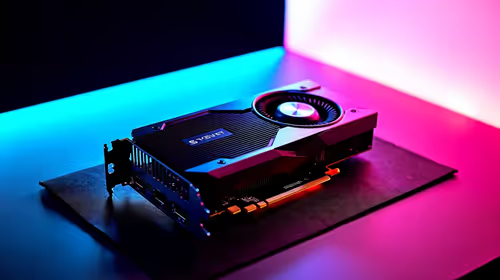
Top Settings for Intel Arc B580 at Ultrawide 1440p picks evaluated on performance, value & SA availability with current Rand pricing from Evetech.

RTX 4060 CS2 Low Settings at 1080p: FPS Results. Real-world benchmark data, FPS numbers & performance analysis. What SA gamers can actually expect.
Visual Artifacts: Possible GPU Issue Issue #1. Diagnosis steps, proven fixes & when to seek professional help. SA-specific support info included.
Can the RTX 4090 Handle 1440p 144Hz Gaming. Performance testing verdict with real data & practical recommendations for SA buyers.

Top ASUS GPU Under R15000 picks evaluated on performance, value & SA availability with current Rand pricing from Evetech.
GTA 6 Max Settings on RTX 5070. Tested & verified settings for best FPS and visual quality on SA hardware budgets.
Cyberpunk 2077 Max Settings on RTX 5080. Tested & verified settings for best FPS and visual quality on SA hardware budgets.
Starfield Max Settings on RTX 5070 Ti. Tested & verified settings for best FPS and visual quality on SA hardware budgets.
Top RTX 5090 Under R5000 picks evaluated on performance, value & SA availability with current Rand pricing from Evetech.