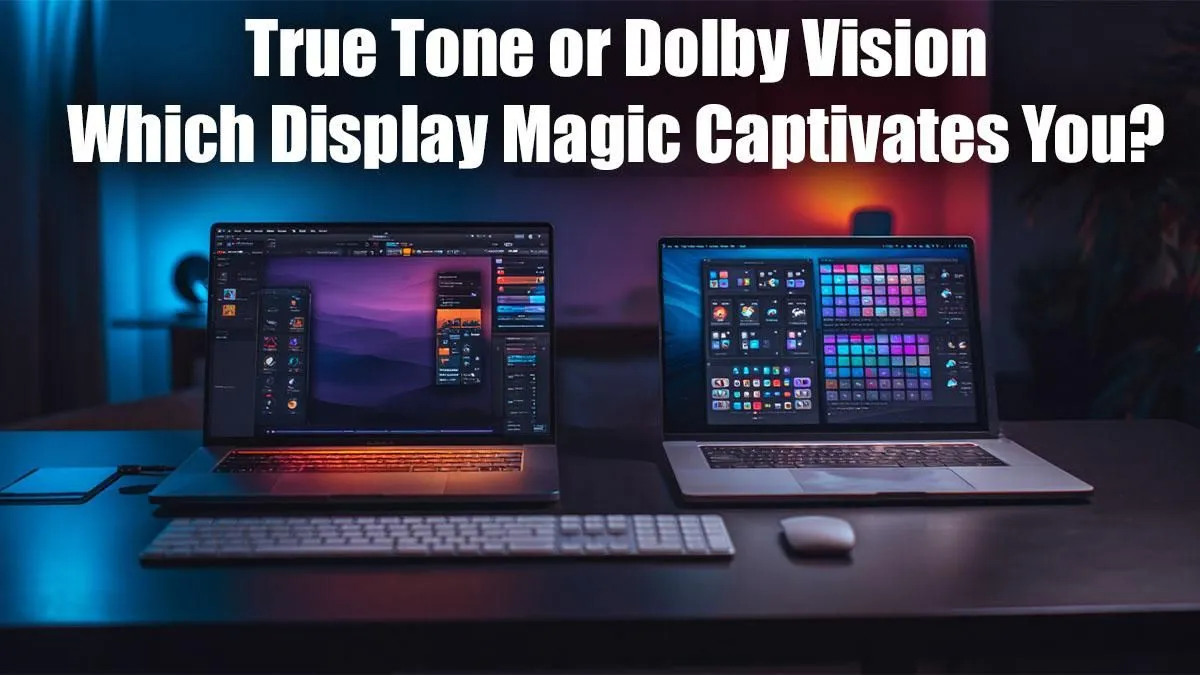
Staring at your screen, but does the colour look… right? You’ve seen the labels: True Tone and Dolby Vision. They both promise incredible visuals, but they aren't the same. One cleverly adjusts to your room’s lighting for comfort, while the other makes movies and games pop with cinematic flair. Understanding this visual tech comparison is key to choosing your next powerhouse laptop. Let's break down which tech matters more for your setup. 💻
What is True Tone? The Eye-Comfort Expert
Think of True Tone as smart lighting for your display. Found primarily on Apple devices, it uses advanced ambient light sensors to automatically adjust the colour and intensity of your screen to match the light around you. If you're reading in a warmly lit room, your screen will look warmer and softer. Move into a cooler, fluorescent-lit office, and the display will adjust accordingly.
The main goal? To make the screen behave more like a piece of paper, reducing eye strain and making images appear more natural. It’s not about making colours more vibrant; it’s about making them look correct for your environment. It’s a subtle but brilliant feature for anyone who spends hours working or browsing on their device.
What is Dolby Vision? The HDR Powerhouse 🎬
Dolby Vision, on the other hand, is all about the content. It’s a premium form of High Dynamic Range (HDR) that takes visuals to a new level. Unlike standard HDR10, Dolby Vision uses "dynamic metadata" to optimise the picture on a scene-by-scene, or even frame-by-frame, basis.
What does that mean for you?
- Incredible Brightness & Contrast: Highlights are brighter, and shadows are deeper and more detailed.
- Stunning Colour: It supports a wider colour gamut, delivering visuals that are more vibrant and true to life.
When you’re watching a Netflix show or playing a compatible game on one of the best gaming laptops in South Africa, Dolby Vision ensures you’re seeing the picture exactly as the creator intended. It’s the tech that delivers that "wow" factor.
True Tone vs Dolby Vision: The Final Showdown
So, how do these two technologies stack up in a direct True Tone vs Dolby Vision comparison? The simplest way to think about it is this: True Tone adapts your screen to your world, while Dolby Vision adapts the content to your screen's maximum potential. They aren't really competitors… they’re teammates!
Purpose: Comfort vs. Content
- True Tone is for viewing comfort. Its job is to make looking at your screen easier on the eyes, no matter where you are.
- Dolby Vision is for content quality. Its job is to deliver the most dynamic, colourful, and impactful image possible from the source material.
Many high-end laptops, especially those with powerful Intel laptop specials, now offer screens that support incredible HDR standards.
Pro Tip for Creators ✨
For colour-critical work like photo editing or graphic design, temporarily disable True Tone. This ensures you're seeing the absolute true colours of your project, not colours adjusted for your room's lighting. You can easily toggle it back on when you're done!
Which One Matters More for Gamers? 🤔
For South African gamers, Dolby Vision is arguably the more impactful technology. It can make the world of Cyberpunk 2077 or the landscapes of Elden Ring look breathtakingly realistic. However, for those long gaming sessions or when using your laptop for work, the eye-saving comfort of True Tone is a massive benefit. The ideal machine, whether it's one of our top-tier AMD laptops on special, would ideally have both.
Ultimately, the choice depends on your primary use. If you value cinematic gaming and movie experiences, prioritise a Dolby Vision display. If you spend more time on productivity and browsing, True Tone is a feature you'll quickly learn to love.
Find Your Perfect Display at Evetech
Ready to see the difference for yourself? Explore our massive range of notebooks with cutting-edge screen technology. Shop all laptop specials in South Africa for performance and visuals that will blow you away.