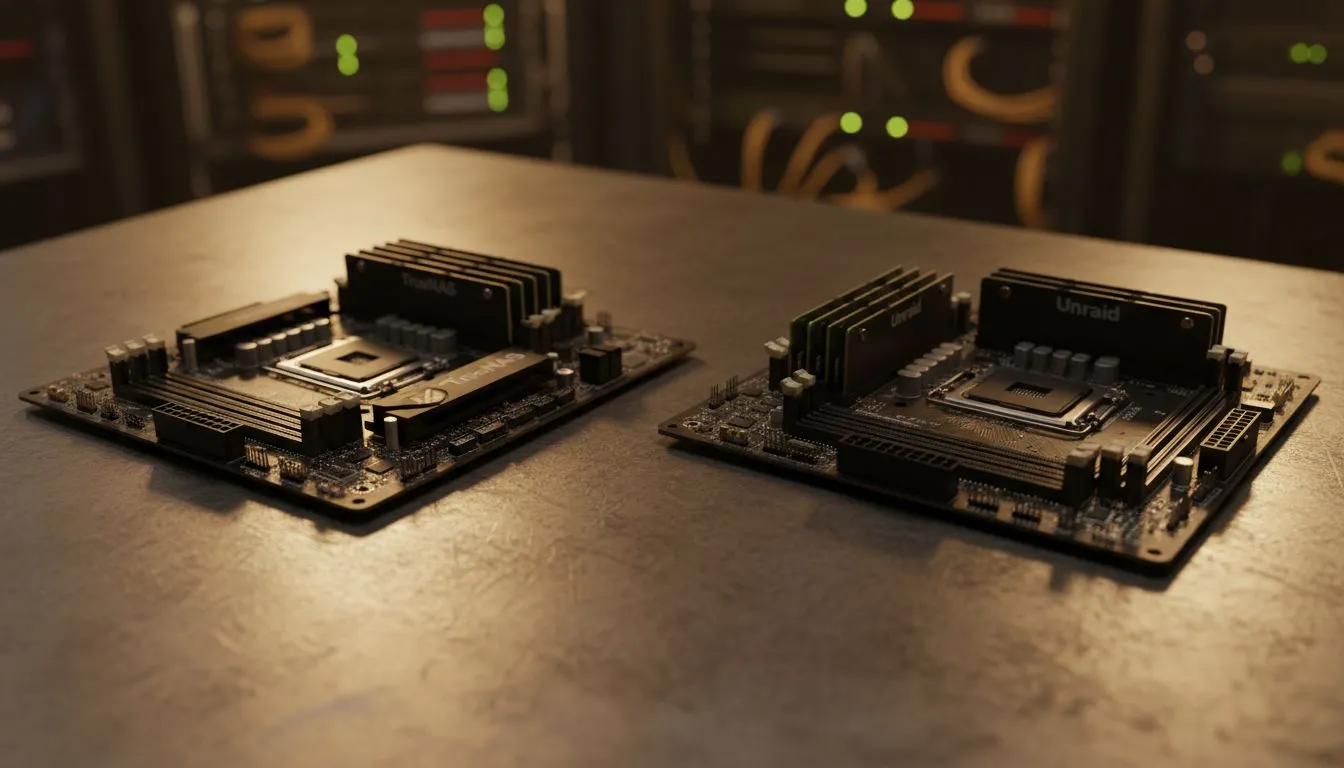
Building a home server in South Africa usually starts with an old PC. But when you move into high-core territory, the software choice becomes critical. Choosing the right OS for your high-core server is vital. It determines how you manage data and Docker containers. It even helps handle power outages. Let's look at TrueNAS Scale vs Unraid: Best OS for High-Core Servers. 🚀
Why Core Counts Matter for Modern Storage
Modern CPUs like the Ryzen 9 or Intel Core i9 offer massive thread counts. You need an operating system that can actually use them. Most users start their journey by looking for diskless NAS storage to house their growing media collections. But once you have the hardware, the software path diverges.
TrueNAS Scale is built on Debian Linux. It is designed to scale across many cores. It uses the ZFS file system... a powerhouse for data integrity. ZFS loves high-core count servers because tasks like compression and encryption are multi-threaded. If you are running 10GbE networking in your home office, TrueNAS Scale will use those extra cores to keep your transfer speeds maxed out.
The Flexibility of Unraid for Growing Arrays
Unraid takes a different approach. It is the king of the "spare parts" build. It allows you to mix and match different drive sizes. This is a massive advantage in South Africa where drive prices can fluctuate. You can start with a 4TB drive and add a 12TB drive later without any issues.
Unraid is also incredibly efficient with its core management for virtualisation. If you want to run a dedicated gaming server or a Windows VM alongside your storage, Unraid makes it simple. For those needing compact expansion, Orico storage solutions provide reliable enclosures for your extra drives.
Storage Pro Tip ⚡
When setting up ZFS on TrueNAS Scale, always ensure you have enough RAM. A good rule of thumb is 1GB of RAM for every 1TB of storage. This ensures the ARC cache can keep your high-core server running smoothly during heavy file transfers.
Performance vs. Versatility
When comparing TrueNAS Scale vs Unraid: Best OS for High-Core Servers, you must consider your workload. TrueNAS Scale is faster. It uses RAM and CPU cores to cache data. This makes it feel snappier when multiple users access the server. ⚡
Unraid is more versatile. It saves power because it doesn't spin up every drive in the array for a single file access. This is a small but welcome benefit during tight load shedding schedules. High-core performance isn't just for big towers anymore. You can even run lightweight storage nodes on Minis Forum hardware to act as dedicated application servers. ✨
Final Verdict for South African Gamers
If you want the absolute best data protection and high-speed performance, TrueNAS Scale is the winner. It treats your hardware like an enterprise machine. If you want a flexible system that grows with your budget, Unraid is the better choice. Both will serve a high-core server well... it just depends on whether you value speed or convenience more.
Ready to Build Your Ultimate Home Server? Choosing between TrueNAS Scale and Unraid depends on your specific needs for data safety and flexibility. For the best hardware to house your drives in South Africa, we have you covered. Explore our range of NAS storage solutions and start your high-core journey today.